Welcome to Journal of Automotive Safety and Energy,

Journal of Automotive Safety and Energy ›› 2026, Vol. 17 ›› Issue (2): 270-277.DOI: 10.3969/j.issn.1674-8484.2026.02.013
• Intelligent Driving and Intelligent Transportation • Previous Articles
XUE Qingyuan1( ), QU Jue2, WANG Wei2, NIU Tianlin2,*(), LI Xing3
Received:2025-12-05
Revised:2026-02-08
Online:2026-04-30
Published:2026-04-30
CLC Number:
XUE Qingyuan, QU Jue, WANG Wei, NIU Tianlin, LI Xing. Human-machine interface design methods in autonomous driving takeover scenarios based on the Trust Theory[J]. Journal of Automotive Safety and Energy, 2026, 17(2): 270-277.
Add to citation manager EndNote|Ris|BibTeX
URL: https://www.journalase.com/EN/10.3969/j.issn.1674-8484.2026.02.013
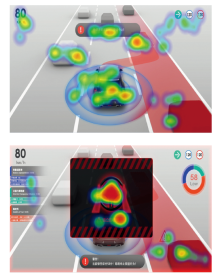
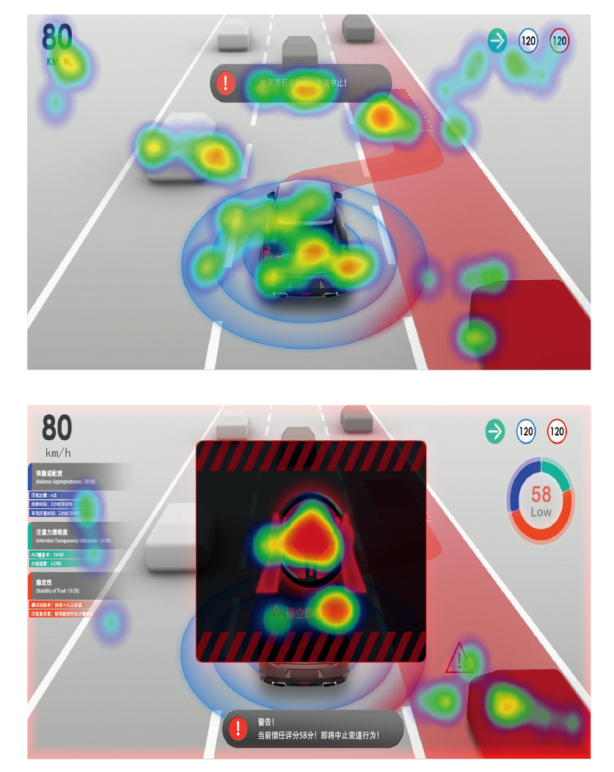
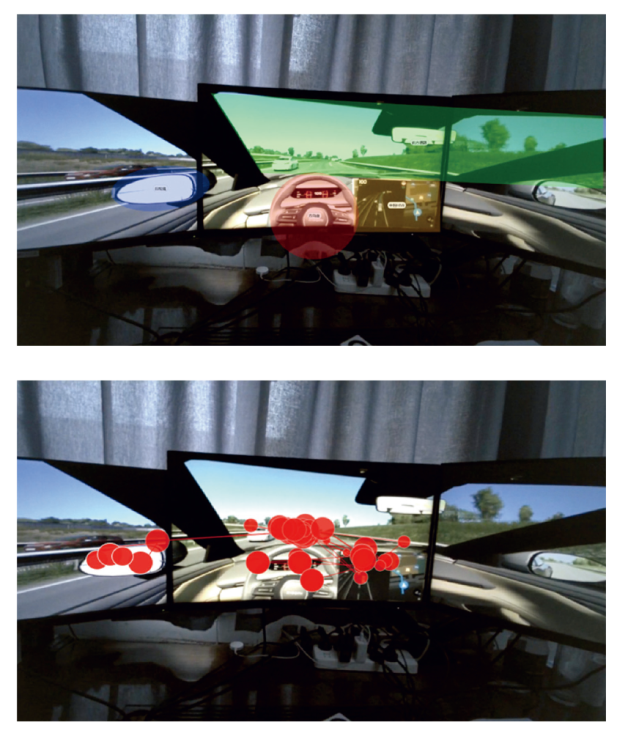
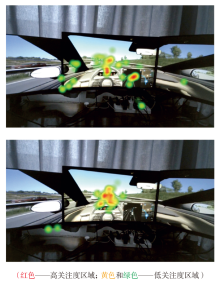
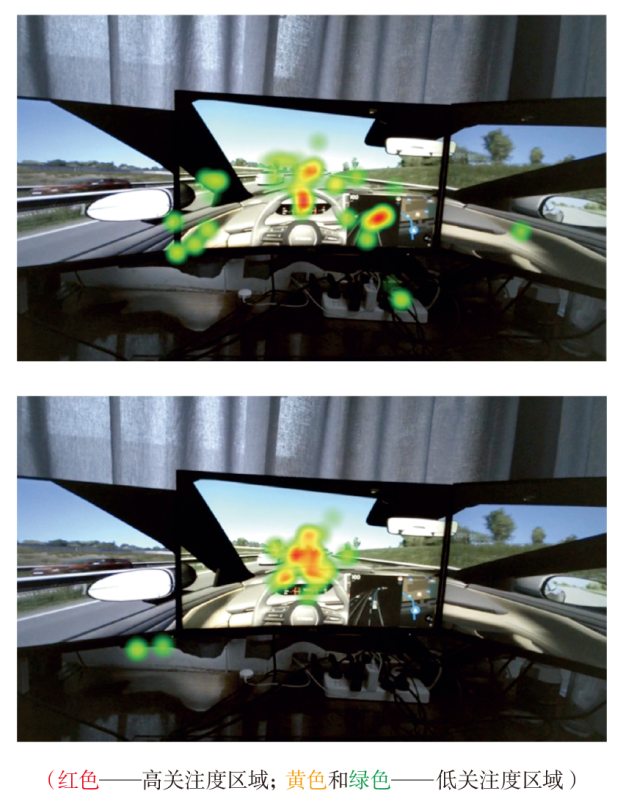
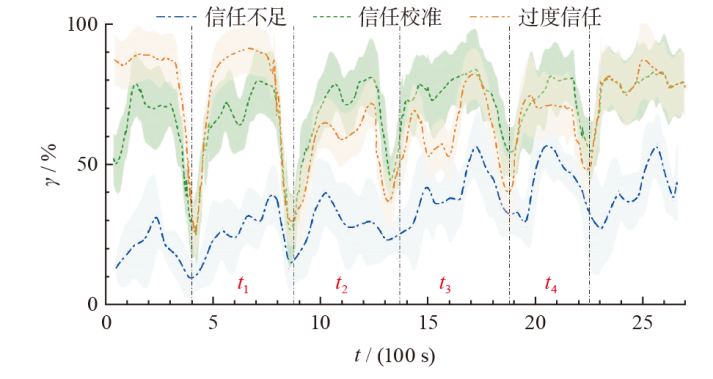
| AOI | 注视频次,F | 注视时间比例,γ | |||
|---|---|---|---|---|---|
| (M±SD) | 95%CI | (M±SD) | 95%CI | ||
| 前方车道 | 92.3±118.1 | [70.9, 113.7] | 62.3±11.5 | [59.0, 65.6] | |
| 目标车道 | 42.0±64.8 | [21.4, 62.6] | 18.7±8.2 | [16.1, 21.3] | |
| 接管提示窗口 | 31.1±41.6 | [17.9, 44.3] | 11.4±6.9 | [9.3, 13.5] | |
| 信任度弹窗 | 12.4±11.8 | [8.6, 16.2] | 7.6±4.8 | [6.1, 9.1] | |
| AOI | 注视频次,F | 注视时间比例,γ | |||
|---|---|---|---|---|---|
| (M±SD) | 95%CI | (M±SD) | 95%CI | ||
| 前方车道 | 92.3±118.1 | [70.9, 113.7] | 62.3±11.5 | [59.0, 65.6] | |
| 目标车道 | 42.0±64.8 | [21.4, 62.6] | 18.7±8.2 | [16.1, 21.3] | |
| 接管提示窗口 | 31.1±41.6 | [17.9, 44.3] | 11.4±6.9 | [9.3, 13.5] | |
| 信任度弹窗 | 12.4±11.8 | [8.6, 16.2] | 7.6±4.8 | [6.1, 9.1] | |
| [1] | 谭征宇, 张瑞佛, 刘芝孜, 等. 智能网联汽车人机交互信任研究现状与展望[J]. 机械工程学报, 2024, 60(10): 366-383. |
| TAN Zhengyu, ZHANG Ruifo, LIU Zhizi, et al. Human-machine interaction trust in intelligent and connected vehicles: overview and perspectives[J]. J Mech Engi, 2024, 60(10): 366-383. (in Chinese) | |
| [2] | SAE International. Taxonomy and definitions for terms related to driving automation systems for on-road motor vehicles: J3016[S]. Warrendale (PA): SAE International, 2018. |
| [3] | 李洋, 杨智元, 陈晓龙. 智能汽车人机协同决策关键技术综述[J]. 中国公路学报, 2024, 37(3): 98-116. |
| LI Yang, YANG Zhiyuan, CHEN Xiaolong, et al. A survey on the human-machine collaborative decision making in intelligent vehicles[J]. Chin J Highw Transport, 2024, 37(3): 98-116. (in Chinese) | |
| [4] | Lee J D, See K A. Trust calibration for adaptive automation[J]. Huma Fact, 2019, 61(5): 728-743. |
| [5] | CHEN Jiexi, Barnes M J. Human-agent teaming for multirobot control: A review of human factors issues[J]. IEEE Trans Human-Mach Syst, 2014, 44(1): 13-29. |
| [6] | Hergeth S, Lorenz L, Vilimek R, et al. Keep your scanners peeled: gaze behavior as a measure of automation trust during highly automated driving[J]. Huma Fact, 2016, 58(3): 509-519. |
| [7] |
高在峰, 李文敏, 梁佳文, 等. 自动驾驶车中的人机信任[J]. 心理科学进展, 2021, 29(12): 2172-2183.
doi: 10.3724/SP.J.1042.2021.02172 |
| GAO Zaifeng, LI Wenmin, LIANG Jiawen, et al. Trust in automated vehicles[J]. Advan Psych Sci, 2021, 29(12): 2172-2183. (in Chinese) | |
| [8] |
解煜彬, 周荣刚. 新型人机关系下的人机双向信任[J]. 心理科学进展, 2025, 33(6): 916-932.
doi: 10.3724/SP.J.1042.2025.0916 |
| XIE Yubin, ZHOU Ronggang. The bidirectional trust in the context of new human-machine relationships[J]. Advan Psych Sci, 2025, 33(6): 916-932. (in Chinese) | |
| [9] | Muir B M. Trust between humans and machines, and the design of decision aids[J]. Int’l J Man-Mach Stud, 1987, 27(5-6): 527-539. |
| [10] | Parasuraman R, Riley V. Humans and automation: use, misuse, disuse, abuse[J]. Huma Fact, 1997, 39(2): 230-253. |
| [11] |
Kim S, van Egmond R, Happee R. How manoeuvre information via auditory (spatial and beep) and visual UI can enhance trust and acceptance in automated driving[J]. Transport Res F: Traf Psych Behav, 2024, 100: 22-36.
doi: 10.1016/j.trf.2023.11.007 URL |
| [12] |
Beggiato M, Krems J F. The evolution of mental model, trust, and acceptance of adaptive cruise control in relation to initial information[J]. Transport Res F: Traf Psych Behav, 2013, 18: 47-57.
doi: 10.1016/j.trf.2012.12.006 URL |
| [13] | 郭烈, 胥林立, 秦增科, 等. 自动驾驶接管影响因素分析与研究进展[J]. 交通运输系统工程与信息, 2022, 22(2): 72-90. |
| GUO Lie, XU Linli, QIN Zengke, et al. Analysis and overview of influencing factors on autonomous driving takeover[J]. J Transport Syst Engi Info Tech, 2022, 22(2): 72-90. (in Chinese) | |
| [14] | 曹莉凌, 刘君丽, 金升烨, 等. 面向自动驾驶的远程多维信息实时交互系统设计[J]. 汽车安全与节能学报, 2024, 15(6): 934-942. |
| CAO Liling, LIU Junli, JIN Shengye, et al. Design of a remote multidimensional information real-time interactive system for automated driving[J]. J Autom Safe Energ, 2024, 15(6): 934-942. (in Chinese) | |
| [15] | 陈发城, 鲁光泉, 林庆峰, 等. 有条件自动驾驶下驾驶人接管行为综述[J]. 吉林大学学报(工学版), 2025, 55(2): 419-433. |
| CHEN Facheng, LU Guangquan, LIN Qingfeng, et al. Review of drivers’ takeover behavior under conditional automated driving[J]. J Jilin Univ (Engi Tech Ed), 2025, 55(2): 419-433. (in Chinese) | |
| [16] | Hoff K A, Bashir M. Trust in automation: theoretical framework for interpersonal and human-automation trust[C]// Proc Human Factors Ergonomics Soc Annu Meeting. Chicago, IL: HFES, 2014: 268-272. |
| [17] | 瞿广跃, 杨澜, 袁梦, 等. 面向自动驾驶汽车的信号交叉口行人多模态轨迹预测方法[J]. 汽车安全与节能学报, 2024, 15(5): 689-701. |
| QU Guangyue, YANG Lan, YUAN Meng, et al. Multimodal pedestrian trajectory prediction method at signalized intersections for autonomous vehicles[J]. J Autom Safe Energ, 2024, 15(5): 689-701. (in Chinese) | |
| [18] | LI Jue, LIU Jiawen, WANG Xiaoshan, et al. The impact of transparency on driver trust and reliance in highly automated driving: presenting appropriate transparency in automotive HMI[J]. Appl Sci, 2024, 14(8): 32-33. |
| [19] | Becker F, Flemisch O, Winner H. Does trust influence the driver’s response to automated vehicle failures?[J]. IEEE Trans Human-Mach Syst, 2022, 52(6): 1119-1128. |
| [20] | HU Chuan, HUANG Siwei, ZHOU Yu, et al. Dynamic and quantitative trust modeling and real-time estimation in human-machine co-driving process[J]. Transport Res F: Traf Psych Behav, 2024, 106: 306-327. |
| [21] | Jouhri A, Sharkawy A, Paksoy H, et al. The influence of a color themed HMI on trust and take-over performance in automated vehicles[J]. Front Psychol, 2023, 14: 25-28. |
| [1] | WEN Jiayan, ZOU Haifeng, ZHONG Wei, GAO Bolin, LU Yanbo. Vehicle speed planning method with the vehicle-road-cloud integration system and incorporating human-vehicle game theory [J]. Journal of Automotive Safety and Energy, 2026, 17(2): 261-269. |
| [2] | YANG Zongru, HU Yunze, LIU Shiqi, GUAN Yang, WU Wei, LIU Chang. Distributed active perception path planning for the estimation of parking occupancy status [J]. Journal of Automotive Safety and Energy, 2026, 17(1): 140-148. |
| [3] | CHEN Xiaofeng, WANG Lanwen, MA Guo, ZHANG Lei, BAO Jiading, JING Hui. Energy and stability aware path planning for autonomous vehicles in off road environments [J]. Journal of Automotive Safety and Energy, 2025, 16(3): 496-503. |
| [4] | LIU Qingchao, WANG Ruihai, CAI Yingfeng, WANG Hai, CHEN Long. Unintended stopping conflict risk prediction for high-level autonomous vehicles based on CatBoost and SHAP [J]. Journal of Automotive Safety and Energy, 2025, 16(1): 170-180. |
| [5] | WU Hequan, LI Yihui, LIU Jin, ZHANG Shenao. Simulation experiments for the passenger injuries with different sitting positions in autonomous vehicle collisions [J]. Journal of Automotive Safety and Energy, 2024, 15(4): 484-491. |
| [6] | LIU Yanwei, HUANG Zhiming, GAO Bolin, ZHONG Wei, CHEN Jiaxing, LIU Jiaxi. Recognition of front vehicle behavior based on visual information from vehicle perspective [J]. Journal of Automotive Safety and Energy, 2023, 14(6): 707-714. |
| [7] | HUANG Xinchao, ZHANG Yi. Prediction of future driving conditions for electrical vehicles based on Baidu maps API [J]. Journal of Automotive Safety and Energy, 2023, 14(6): 715-722. |
| [8] | WANG Chang, WANG Yifei, GE Zhenzhen, ZHAO Xia, LI Zhao. Driver visual load and operating characteristics under a human- machine interface mode with full-touch-screen [J]. Journal of Automotive Safety and Energy, 2023, 14(4): 431-438. |
| [9] | ZHU Bo, ZHANG Jiwei, TAN Dongkui, HU Xudong. End-to-end autonomous driving method based on multi-source sensor and navigation map [J]. Journal of Automotive Safety and Energy, 2022, 13(4): 738-749. |
| [10] | HU Yuanzhi, JIANG Tao, LIU Xi, SHI Youning. Pedestrian-crossing intention-recognition based on dual-stream adaptive graph-convolutional neural-network [J]. Journal of Automotive Safety and Energy, 2022, 13(2): 325-332. |
| [11] | WU Yimin, ZHENG Kaiyuan, GAO Bolin, CHEN Ming, WANG Yifeng. Roadside multi-sensor fusion based on adaptive extended Kalman filter [J]. Journal of Automotive Safety and Energy, 2021, 12(4): 522-527. |
| [12] | LI Yaohua, FAN Jikang, LIU Yang, HE Jie, LI Zetian, PAN Shaofei. Path planning and path tracking control for autonomous vehicle based on MPC with adaptive dual-horizon-parameters [J]. Journal of Automotive Safety and Energy, 2021, 12(4): 528-539. |
| [13] | YANG Jiaxia, LI Xuewei, ZHAO Xiaohua, FENG Xiaofan. Driving distraction of cooperative vehicle infrastructure system in freeway work zone based on driver’s visual characteristics [J]. Journal of Automotive Safety and Energy, 2020, 11(4): 493-502. |
| [14] | LI Lei, LI Jun, ZHANG Shiyi. Trajectory tracking control of autonomous vehicles with optimized sliding mode control [J]. Journal of Automotive Safety and Energy, 2020, 11(4): 503-510. |
| [15] | DAI Rongjian,DING Chuan,LU Yingrong,ZHAO Fuquan . Cooperated control of signal and vehicle trajectory under the autonomous vehicle environment [J]. Journal Of Automotive Safety And Energy, 2019, 10(4): 531-539. |
| Viewed | ||||||
|
Full text |
|
|||||
|
Abstract |
|
|||||
