Welcome to Journal of Automotive Safety and Energy,

Journal of Automotive Safety and Energy ›› 2023, Vol. 14 ›› Issue (5): 609-617.DOI: 10.3969/j.issn.1674-8484.2023.05.010
• Intelligent Driving and Intelligent Transportation • Previous Articles Next Articles
ZHANG Xinfeng1,2( ), WU Lin1, LI Zhiyuan1, LIU Huan1
Received:2023-06-07
Revised:2023-07-16
Online:2023-10-31
Published:2023-10-31
CLC Number:
ZHANG Xinfeng, WU Lin, LI Zhiyuan, LIU Huan. Collaborative decision-making method of high-speed multi-vehicle multi-driving behavior confliction[J]. Journal of Automotive Safety and Energy, 2023, 14(5): 609-617.
Add to citation manager EndNote|Ris|BibTeX
URL: https://www.journalase.com/EN/10.3969/j.issn.1674-8484.2023.05.010
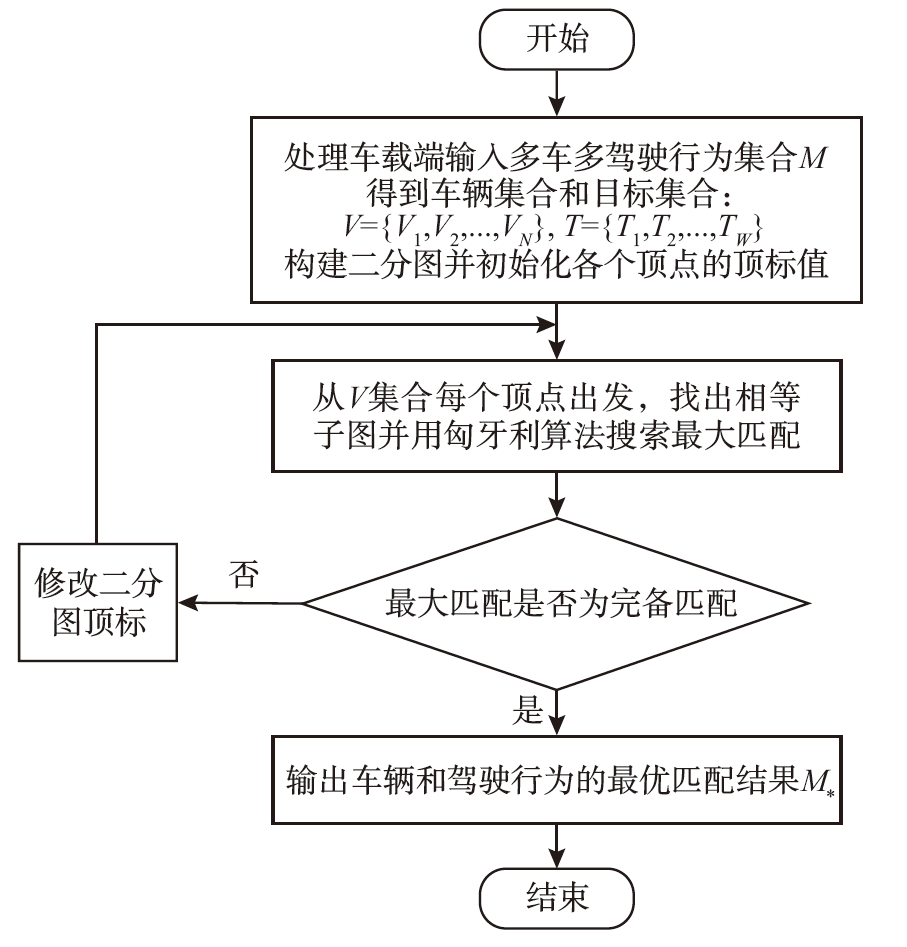
| Lane 1限速 | 110~120 km/h |
|---|---|
| Lane 2限速 | 90~110 km/h |
| Lane 3限速 | 60~100 km/h |
| 观测区域长度 | 200 m |
| 车道宽度 | 3.5 m |
| 车长×车宽 | 6.0 m × 1.8 m |
| 速度评价指标权重, αv | 0.40 |
| 车辆密度评价指标权重, αdens | 0.15 |
| 行进空间评价指标权重,αspa | 0.20 |
| TTC评价指标权重,αTTC | 0.20 |
| 行驶负担评价指标权重, αdirv | 0.05 |
| 车辆最小安全距离,2l | 12 m |
| 驾驶行为持续时间,tdura | 4.0 s |
| 最大行进空间,Smax | 200 m |
| Lane 1限速 | 110~120 km/h |
|---|---|
| Lane 2限速 | 90~110 km/h |
| Lane 3限速 | 60~100 km/h |
| 观测区域长度 | 200 m |
| 车道宽度 | 3.5 m |
| 车长×车宽 | 6.0 m × 1.8 m |
| 速度评价指标权重, αv | 0.40 |
| 车辆密度评价指标权重, αdens | 0.15 |
| 行进空间评价指标权重,αspa | 0.20 |
| TTC评价指标权重,αTTC | 0.20 |
| 行驶负担评价指标权重, αdirv | 0.05 |
| 车辆最小安全距离,2l | 12 m |
| 驾驶行为持续时间,tdura | 4.0 s |
| 最大行进空间,Smax | 200 m |
| 驾驶行为 | 效用值 | 潜在位置区间/ m | 目标车道编号 |
|---|---|---|---|
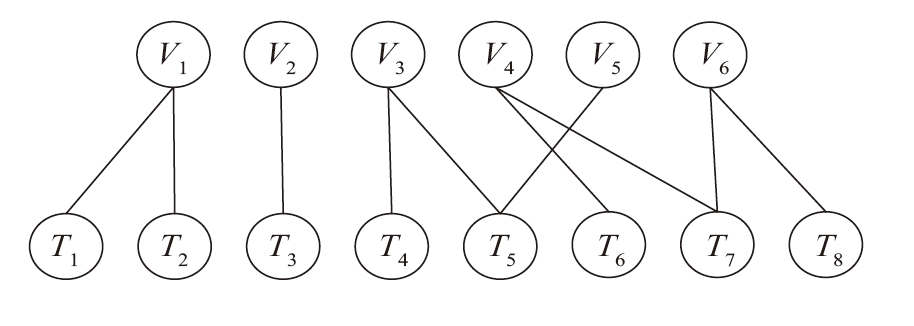
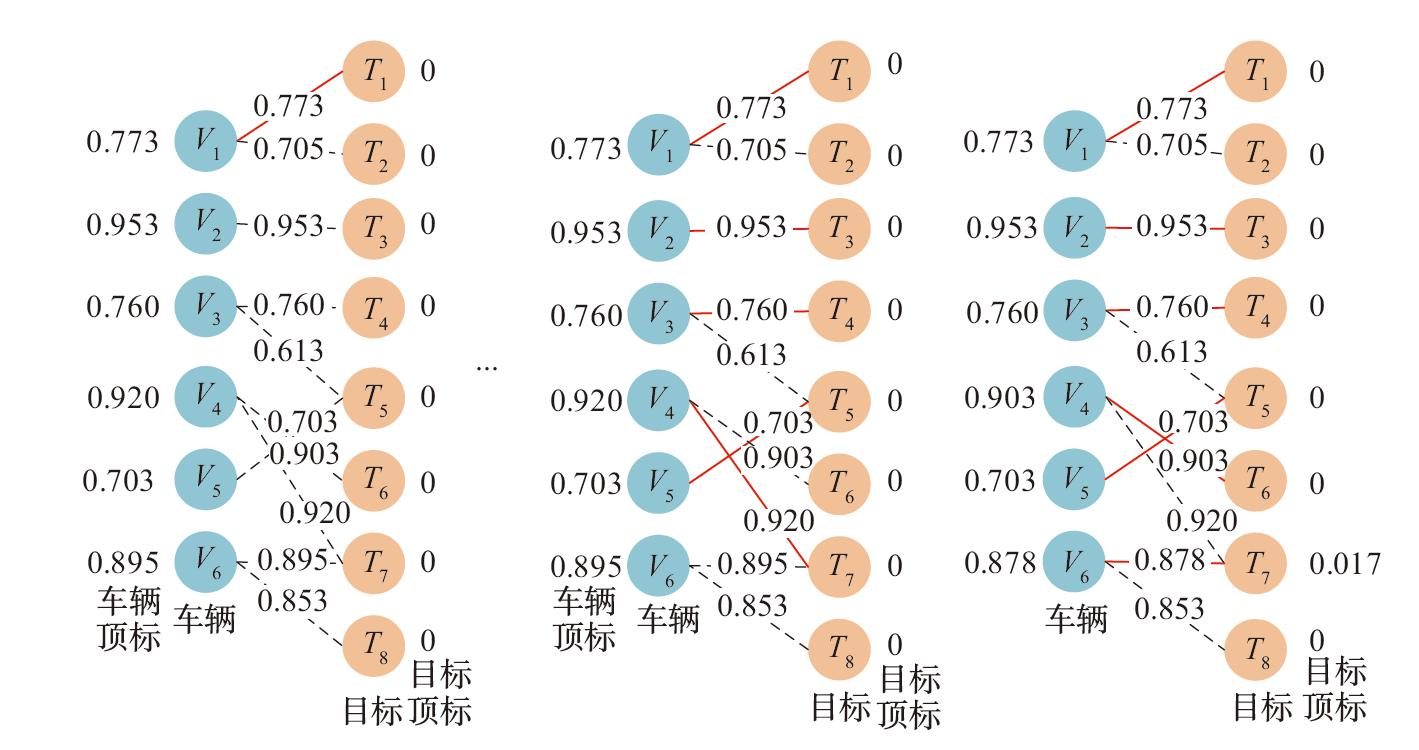
| (m1, n1) | 0.773 | (116.2,134.2) | 1 |
| (m1, n2) | 0.773 | (121.8,139.8) | 1 |
| (m3, n1) | 0.705 | (116.2,134.2) | 2 |
| (m3, n3) | 0.705 | (108.6,126.6) | 2 |
| 驾驶行为 | 效用值 | 潜在位置区间/ m | 目标车道编号 |
|---|---|---|---|
| (m1, n1) | 0.773 | (116.2,134.2) | 1 |
| (m1, n2) | 0.773 | (121.8,139.8) | 1 |
| (m3, n1) | 0.705 | (116.2,134.2) | 2 |
| (m3, n3) | 0.705 | (108.6,126.6) | 2 |
| 目标 | 潜在位置区间/ m | 车道编号 |
|---|---|---|
| T1 | (121.8,139.8) | 1 |
| T2 | (116.2,134.2) | 2 |
| T3 | (147.3,165.3) | 1 |
| T4 | (120.7,138.7) | 2 |
| T5 | (107.9,125.9) | 3 |
| T5 | (108.4,126.4) | 3 |
| T6 | (174.2,192.2) | 1 |
| T7 | (166.2,184.2) | 2 |
| T7 | (171.3,189.3) | 2 |
| T8 | (169.6,187.6) | 3 |
| 目标 | 潜在位置区间/ m | 车道编号 |
|---|---|---|
| T1 | (121.8,139.8) | 1 |
| T2 | (116.2,134.2) | 2 |
| T3 | (147.3,165.3) | 1 |
| T4 | (120.7,138.7) | 2 |
| T5 | (107.9,125.9) | 3 |
| T5 | (108.4,126.4) | 3 |
| T6 | (174.2,192.2) | 1 |
| T7 | (166.2,184.2) | 2 |
| T7 | (171.3,189.3) | 2 |
| T8 | (169.6,187.6) | 3 |
| 车辆编号 | 初始时刻效用值 | 结束时刻效用值 |
|---|---|---|
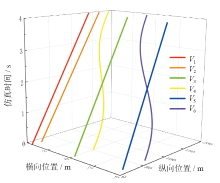
| V1 | 0.773 | 0.775 |
| V2 | 0.953 | 0.776 |
| V3 | 0.760 | 0.765 |
| V4 | 0.920 | 0.955 |
| V5 | 0.703 | 0.885 |
| V6 | 0.853 | 0.920 |
| 总效用值 | 4.962 | 5.076 |
| 平均车速 / (km·h-1) | 101.7 | 110.0 |
| 车辆编号 | 初始时刻效用值 | 结束时刻效用值 |
|---|---|---|
| V1 | 0.773 | 0.775 |
| V2 | 0.953 | 0.776 |
| V3 | 0.760 | 0.765 |
| V4 | 0.920 | 0.955 |
| V5 | 0.703 | 0.885 |
| V6 | 0.853 | 0.920 |
| 总效用值 | 4.962 | 5.076 |
| 平均车速 / (km·h-1) | 101.7 | 110.0 |
| [1] |
YIN Taiqiao, LI Ying, Fan Jiaohao, et al. A novel gated recurrent unit network based on svm and moth-flame optimization algorithm for behavior decision-making of autonomous vehicles[J]. IEEE Access, 2021, 9: 20410-20422.
doi: 10.1109/ACCESS.2021.3054755 URL |
| [2] | Furda A, Vlacic L. Enabling safe autonomous driving in real-world city traffic using multiple criteria decision making[J]. IEEE Intel Transp Syst Maga, 2011, 3(1): 4-17. |
| [3] |
WANG Pengwei, GAO Song, LI Liang, et al. Research on driving behavior decision making system of autonomous driving vehicle vased on benefit evaluation model[J]. Archives Transp, 2020, 53(1): 21-36.
doi: 10.5604/08669546 URL |
| [4] |
杨达, 吕蒙, 戴力源, 等. 车联网环境下自动驾驶车辆车道选择决策模型[J]. 中国公路学报, 2022, 35(4): 243-255.
doi: 10.19721/j.cnki.1001-7372.2022.04.020 |
| YANG Da, LÜ Meng, DAI Liyuan, et al. Decision-making model for the lane selection of automated vehicles in the connected vehicle environment[J]. Chin J Highway Transp, 2022, 35(4): 243-255. (in Chinese) | |
| [5] |
Schmidt M, Wissing C, Nattermann T, et al. A probabilistic model for discretionary lane change proposals in highway driving situations[J]. Forschung im Ingenieurwesen, 2021, 85(2): 485-500.
doi: 10.1007/s10010-021-00439-0 |
| [6] | Düring M, Pascheka P. Cooperative decentralized decision making for conflict resolution among autonomous agents[C]// 2014 IEEE Int’l Symp Inno Intel Syst Appl (INISTA) Proc, 2014: 154-161. |
| [7] | Lovellette E, Hexmoor H. Lane and speed allocation mechanism for autonomous vehicle agents on a multi-lane highway[J]. Internet of Things, 2021, 13: 1-19. |
| [8] | LIU Yingxiang, LI Hao, ZHU Xuefeng. Brainstorming multi-agent reinforcement learning for multi-vehicles games[C]// 2021 Int’l Conf Digi Soc Intell Syst (DSInS), 2021: 357-361. |
| [9] | Kessler T, Knoll A. Cooperative multi-vehicle behavior coordination for autonomous driving[C]// 2019 IEEE Intel Vehi Symp (IV), 2019: 1953-1960. |
| [10] | 李珣, 曲仕茹, 夏余. 车路协同环境下多车道车辆的协同换道规则[J]. 中国公路学报, 2014, 27(8): 97-104. |
| LI Xun, QU Shiru, XIA Yu. Cooperative lane-changing rules on multilane under condition of cooperative vehicle and infrastructure system[J]. Chin J Highway Transp, 2014, 27(8): 97-104. (in Chinese) | |
| [11] | 张毅, 姚丹亚, 李力, 等. 智能车路协同系统关键技术与应用[J]. 交通运输系统工程与信息, 2021, 21(5): 40-51. |
| ZHANG Yi, YAO Danyao, LI Li, et al. Technologies and applications for intelligent vehicle-infrastructure cooperation systems[J]. J Transp Syst Eng Info Tech, 2021, 21(5): 40-51. (in Chinese) | |
| [12] | Barbera A J, Horst J A, SCHLENOFF C I, et al. Task analysis of autonomous on-road driving[C]// Mobile Robots XVII, 2004, 5609: 61-72. |
| [13] |
LU Xinghao, ZHAO Haiyan, GAO Bingzhao, et al. Decision-making method of autonomous vehicles in urban environments considering traffic laws[J]. IEEE Trans Intel Transp Syst, 2022, 23(11): 21641-21652.
doi: 10.1109/TITS.2022.3183229 URL |
| [14] | 彭浩楠, 王伟达, 项昌乐, 等. 自动驾驶汽车双车道换道优化轨迹规划方法[J]. 吉林大学学报(工学版), 2022, 8(2): 1-12. |
| PENG Haonan, WANG Weida, IANG Changle, et al. Optimization-based lane changing trajectory planning approach for autonomous vehicles on two-lane road[J]. J Jilin Univ (Eng Tech Ed), 2022, 8(2): 1-12. (in Chinese) | |
| [15] | 刘思阳, 蒙涛, 雷家坤, 等. 微纳卫星星座的Kuhn-Munkres匹配部署优化方法[J]. 宇航学报, 2021, 42(7): 895-906. |
| LIU Siyang, MENG Tao, LEI Jiakun, et al. Kuhn-Munkres matching deployment optimization method for micro-satellite constellation[J]. J Astronautics, 2021, 42(7): 895-906. (in Chinese) |
| [1] | WU Hangzhe, JIAO Yizhou, LIU Yang, ZHONG Wei, WANG Shuihe, GUO Jinghua, ZHAO Jian. Predictive trajectory tracking control by a linear time-varying model for emergency collision avoidance of autonomous vehicles [J]. Journal of Automotive Safety and Energy, 2025, 16(6): 934-944. |
| [2] | ZHENG Xunjia, CAO Zeyi, CHEN Xing, LIU Hui, GAO Jianjie. Trajectory tracking control based on adaptive prediction time-domain MPC [J]. Journal of Automotive Safety and Energy, 2025, 16(5): 773-783. |
| [3] | PAN Yuheng, REN Chen, LU Weijia, LI Yang. DV-PointPillars 3D object detection model based on dual pooling attention mechanism and vertical feature fusion [J]. Journal of Automotive Safety and Energy, 2025, 16(5): 793-801. |
| [4] | OUYANG Delin, QIU Yifan, WANG Yingchen, YANG Liang, MIN Haigen, WANG Wenjun, LI Guofa. End-to-end decision-making model for multi-task autonomous driving [J]. Journal of Automotive Safety and Energy, 2025, 16(4): 610-619. |
| [5] | LI Guofa, OUYANG Delin, CHEN Chen, NIE Binging, ZHANG Wei, YU Huili, Liu Bin, ZHANG Qiang, WANG Wenjun, CHENG Bo, LI Shengbo. Review on driving risk monitoring and intervention technologies [J]. Journal of Automotive Safety and Energy, 2025, 16(2): 181-196. |
| [6] | HU Zhilong, PEI Xiaofei, ZHOU Honglong, WEI Weiran. Risk-sensitive hierarchical reinforcement learning decision-making for autonomous vehicles [J]. Journal of Automotive Safety and Energy, 2025, 16(2): 326-333. |
| [7] | YANG Junru, ZHENG Sifa, XU Shucai, TIAN Ye, SUN Jian, SUN Chuan, LI Haoran. Design and research of an automated parking evaluation tool based on the OnSite platform [J]. Journal of Automotive Safety and Energy, 2025, 16(2): 334-343. |
| [8] | CAO Liling, LIU Junli, JIN Shengye, CAO Shouqi, ZHOU Guofeng. Design of a remote multidimensional information real time interaction system for autonomous driving [J]. Journal of Automotive Safety and Energy, 2024, 15(6): 934-942. |
| [9] | LIU Yang, ZHAN Jiahao, LI Shen, LI Xiaopeng, CHEN Jun. Future of autonomous driving: Single autonomous driving and intelligent vehicle-infrastructure collaboration systems [J]. Journal of Automotive Safety and Energy, 2024, 15(5): 611-633. |
| [10] | QU Guangyue, YANG Lan, YUAN Meng, FANG Shan, LIU Songyan. A multimodal trajectory prediction method of pedestrians at signalized intersections for autonomous vehicles [J]. Journal of Automotive Safety and Energy, 2024, 15(5): 689-701. |
| [11] | LIU Peng, ZHAO Kegang, LIANG Zhihao, YE Jie. Vehicle longitudinal speed planning based on deep reinforcement learning CLPER-DDPG [J]. Journal of Automotive Safety and Energy, 2024, 15(5): 702-710. |
| [12] | GAO Kai, LIU Jian, LIU Linhong, LIU Xinyu, ZHANG Jinlai, DU Ronghua. Explainable lane change intention prediction based on LSTM-multi-head mixed attention [J]. Journal of Automotive Safety and Energy, 2024, 15(5): 763-773. |
| [13] | ZHENG Xunjia, JIANG Junhao, LI Huilan, CHEN Xing, LIU Hui, WANG Jianqiang, GAO Jianjie. Research on transient driving risk vector modeling method under strong constraints of traffic regulations [J]. Journal of Automotive Safety and Energy, 2024, 15(5): 774-782. |
| [14] | XIE Zhen, ZHOU Guofeng, WU Mingyu, CAO Shouqi. Research on dynamic modeling of port autonomous driving truck [J]. Journal of Automotive Safety and Energy, 2024, 15(5): 783-794. |
| [15] | ZHANG Yongsheng, LI Yizhou, WANG Liang, XU Zhigang. Development status and challenges of vehicle terminals in intelligent and connected environments [J]. Journal of Automotive Safety and Energy, 2024, 15(3): 295-308. |
| Viewed | ||||||
|
Full text |
|
|||||
|
Abstract |
|
|||||