Welcome to Journal of Automotive Safety and Energy,

Journal of Automotive Safety and Energy ›› 2022, Vol. 13 ›› Issue (4): 785-795.DOI: 10.3969/j.issn.1674-8484.2022.04.020
• Automotive Energy Efficiency and Environment Protection • Previous Articles Next Articles
YIN Yanli1,3( ), ZHANG Xinxin1, PAN Xiaoliang2, ZHAN Shen1, HUANG Xuejiang1, WANG Fuzhen1
Received:2022-01-12
Revised:2022-04-25
Online:2022-12-31
Published:2023-01-01
CLC Number:
YIN Yanli, ZHANG Xinxin, PAN Xiaoliang, ZHAN Shen, HUANG Xuejiang, WANG Fuzhen. Equivalent factor of energy management strategy for fuel cell hybrid electric vehicles based on Q-Learning[J]. Journal of Automotive Safety and Energy, 2022, 13(4): 785-795.
Add to citation manager EndNote|Ris|BibTeX
URL: https://www.journalase.com/EN/10.3969/j.issn.1674-8484.2022.04.020
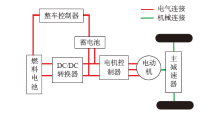
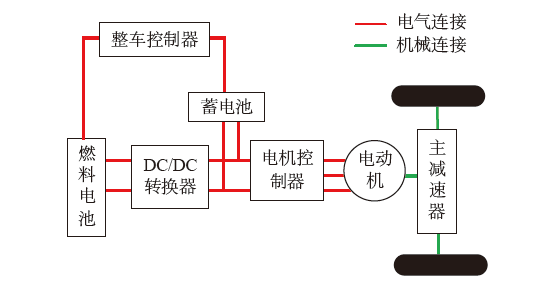
| 整车 | 整车质量 | 1.399 t |
| 迎风面积 | 2.0 m2 | |
| 风阻因数 | 0.335 | |
| 滚动阻力因数 | 0.008 6 | |
| 车轮半径 | 0.282 m | |
| 传动系统 | 主减速器速比 | 8.879 |
| 传动效率 | 0.90 | |
| 燃料电池 | 最大功率 | 50 kW |
| DC/DC转换器效率 | 0.94 | |
| 蓄电池 | 额定容量 | 12 Ah |
| 额定转速 | 104 r/min | |
| 电机 | 最大功率 | 75 kW |
| 最大转矩 | 272 Nm |
| 整车 | 整车质量 | 1.399 t |
| 迎风面积 | 2.0 m2 | |
| 风阻因数 | 0.335 | |
| 滚动阻力因数 | 0.008 6 | |
| 车轮半径 | 0.282 m | |
| 传动系统 | 主减速器速比 | 8.879 |
| 传动效率 | 0.90 | |
| 燃料电池 | 最大功率 | 50 kW |
| DC/DC转换器效率 | 0.94 | |
| 蓄电池 | 额定容量 | 12 Ah |
| 额定转速 | 104 r/min | |
| 电机 | 最大功率 | 75 kW |
| 最大转矩 | 272 Nm |
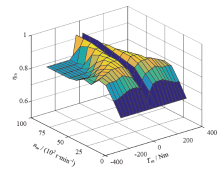
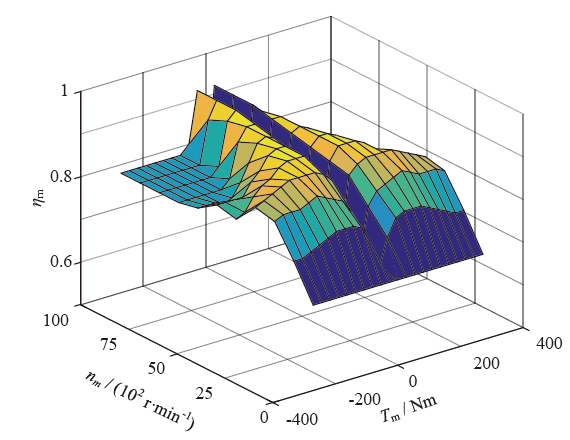
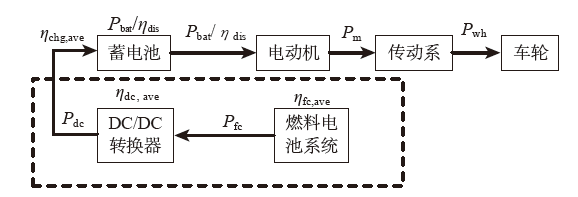
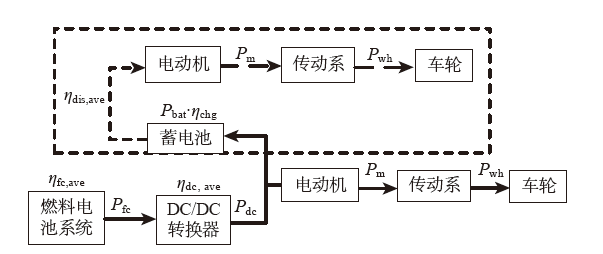
| [1] | Li Siguang, Sharkh S M, Walsh F C, et al. Energy and battery management of a plug-in series hybrid electric vehicle using fuzzy logic[J]. IEEE Trans Vehi Tech, 2011, 60(8): 3571-3585. |
| [2] | 罗国鹏, 罗禹贡, 李克强. 基于最佳电能使用的插电式混合动力客车控制策略[J]. 汽车工程, 2012, 34(6): 475-478. |
| LUO Guopeng, LUO Yugong, LI Keqiang. Control strategy for plug-in hybrid electric bus based on optimal electric energy usage[J]. Autom Engi, 2012, 34(6): 475-478. (in Chinese) | |
| [3] |
高建平, 赵金宝, 杨松, 等. 基于驾驶意图的插电式混合动力公交车控制策略[J]. 机械工程学报, 2016, 52(24): 107-114.
doi: 10.3901/JME.2016.24.107 |
| GAO Jianping, ZHAO Jingbao, YANG Song, et al. Control strategy of plug-in hybrid electric bus based on driving intention[J]. J Mech Engi, 2016, 52(24): 107-114. (in Chinese) | |
| [4] | ZHOU Yuan, HOU Shijie, HAN Erliang, et al. Dynamic programming-based energy management strategy optimization for hybrid electric commercial vehicle[J]. Autom Engi, 2012, 34(08): 663-668 |
| [5] | 巴特, 高印寒, 王庆年, 等. 基于动态规划算法的并联混合动力客车控制策略优化[J]. 汽车工程, 2015, 37(12): 1359-1365. |
| BA Te, GAO Yinghan, WANG Qingnian, et al. Control strategy optimization of parallel hybrid electric bus based on dynamic programming algorithm[J]. Autom Engi, 2015, 37(12): 1359-1365. (in Chinese) | |
| [6] | 解少博, 刘通, 李会灵, 等. 基于马尔科夫链的并联PHEB预测型能量管理策略研究[J]. 汽车工程, 2018, 40(8): 871-877+911. |
| XIE Shaobo, LIU Tong, Li Huiling, et al. Research on predictive energy management strategy for parallel PHEB based on Markov chain[J]. Autom Engi, 2018, 40(8): 871-877+911. (in Chinese) | |
| [7] | ZHENG Chunhua, LI Weimin, LIANG Quan. An energy management strategy of hybrid energy storage systems for electric vehicle applications[J]. IEEE Trans Sustain Energ, 201,89(4): 1180-1188. |
| [8] | SUN Haochen, FU Zhumu, TAO Fazhan, et al. Data-driven reinforcement-learning-based hierarchical energy management strategy for fuel cell/battery/ultracapacitor hybrid electric vehicles[J]. J Power Sources, 2020, 455(C): 227964-227964. |
| [9] |
WANG Yujie, SUN Zhendong, CHEN Zonghai. Rule-based energy management strategy of a lithium-ion battery, supercapacitor and PEM fuel cell system[J]. Energy Procedia, 2019, 158: 2555-2560.
doi: 10.1016/j.egypro.2019.02.003 |
| [10] | XU Liangfei, Mueller C D, LI Jianqiu, et al. Multi-objective component sizing based on optimal energy management strategy of fuel cell electric vehicles[J]. Appl Energ, 2015, 157(1): 664-674. |
| [11] |
WU Xiaohua, HU Xiaosong, LIN Xiaofei, et al. Convex programming energy management and components sizing of a plug-in fuel cell urban logistics vehicle[J]. J Power Sources, 2019, 423: 358-366.
doi: 10.1016/j.jpowsour.2019.03.044 |
| [12] | 林歆悠, 夏玉田, 李雪凡, 等. 燃料电池汽车行驶里程自适应ECMS策略[J]. 汽车工程, 2019(7): 750-756. |
| LIN Xinyou, XIA Yutian, LI Xuefan, et al. Vehicle mileage adaptive ECMS strategy for fuel cell vehicles[J]. Autom Engi, 2019(7): 750-756. (in Chineses) | |
| [13] | Barsali S, Miulli C, Possenti A. A control strategy to minimize fuel consumption of series hybrid electric vehicles[J]. IEEE Trans Energ Conv, 2004, 19(1): 187-195. (in Chinese) |
| [14] | ZHENG Qing, YUAN Haorui, WU Jinzhu, et al. Equivalent consumption minimization strategy based on dynamic programming for plug-in hybrid electric vehicle[J]. IFAC-Papers On Line, 2018, 51(31): 612-617. |
| [15] | Wipke K B, Cuddy M R, Burch S D. ADVISOR 2.1: A user-friendly advanced powertrain simulation using a combined backward/forward approach[J]. IEEE Trans Vehi Tech, 1999, 48(6): 1751-1761. |
| [16] | H Lee, Cha S W. Energy management strategy of fuel cell electric vehicles using model-based reinforcement learning with data-driven model update[J]. IEEE Access, 2021(99): 59244-59254 |
| [17] | Fares D, Chedid R, F Panik, et al. Dynamic programming technique for optimizing fuel cell hybrid vehicles[J]. Int’l J Hydro Energ, 2015, 40(24): 7777-7790. |
| [18] | SONG Ke, CHEN Huan, WEN Peiming, et al. A comprehensive evaluation framework to evaluate energy management strategies of fuel cell electric vehicles[J]. Electrochimica Acta, 2018, 292: 960-973. |
| [1] | LI Zhao, LONG Wuqiang, TIAN Hua. Optimization of energy management in methanol-electric hybrid propulsion systems [J]. Journal of Automotive Safety and Energy, 2026, 17(1): 70-78. |
| [2] | LI Zhao, LONG Wuqiang, TIAN Hua. Research on global optimal control strategy for hybrid power system with composite energy storage [J]. Journal of Automotive Safety and Energy, 2025, 16(6): 877-885. |
| [3] | DAI Lihong, JIN Nini, MO Zonghua, HU Peng, WAN Wenjun, LIU Haoye, WANG Tianyou. Hierarchical energy management strategy for PHEVs based on segmented SOC trajectory prediction [J]. Journal of Automotive Safety and Energy, 2025, 16(5): 736-746. |
| [4] | YANG Jianjun, LIU Dongwei, LI Jingyuan, LIU Shaohui, ZHANG Feilong, WANG Mengyuan. Predictive energy-saving technologies of hybrid electric vehicles and an evaluation method [J]. Journal of Automotive Safety and Energy, 2025, 16(2): 268-276. |
| [5] | GUAN Quan, TU Zhengkai. Optimal design of energy management system for hybrid sightseeing-bus with fuel-cells and lithium-batteries [J]. Journal of Automotive Safety and Energy, 2024, 15(2): 199-207. |
| [6] | YIN Yanli, WANG Fuzhen, ZHAN Sen, HUANG Xuejiang, ZHANG Xinxin, ZHANG Fuchun. Hierarchical control for hybrid electric vehicle platoon based on KL divergence working condition recognition [J]. Journal of Automotive Safety and Energy, 2024, 15(2): 242-252. |
| [7] | LUO Chuang, XU Liang. Fuzzy energy management strategies based on the ISSA for multiple power sources in fuel cells [J]. Journal of Automotive Safety and Energy, 2023, 14(4): 496-504. |
| [8] | SUN Chao, LIU Bo, SUN Fengchun. Review of energy-saving planning and control technology for new energy vehicles [J]. Journal of Automotive Safety and Energy, 2022, 13(4): 593-616. |
| [9] | ZHOU Quan, ZHANG Cetengfei, LI Yanfei, SHUAI Bin, XU Hongming. Robust optimization of energy management strategy in hybrid vehicles based on digital twin and PSO algorithm [J]. Journal of Automotive Safety and Energy, 2022, 13(3): 517-525. |
| [10] | SONG Bo, SUN Kai, CHE Zhizhao, CHEN Rui, LIU Huaiyu, REN Meilin, WANG Tianyou. Influence of the energy management strategy on the thermal management system performance of fuel cell bus [J]. Journal of Automotive Safety and Energy, 2022, 13(3): 526-534. |
| [11] | LI Minqing, FENG Jian, HAN Zhiyu. Performance comparation of the series type and the range-extender type of the hybrid light commercial vehicles [J]. Journal of Automotive Safety and Energy, 2022, 13(3): 550-559. |
| [12] | YIN Yanli, MA Yongjuan, ZHOU Yawei, WANG Ruixin, ZHAN Sen, MA Shenpeng, HUANG Xuejiang, ZHANG Xinxin. Model predictive control of super-mild hybrid electric vehicle based on Markov chain and Q-Learning [J]. Journal of Automotive Safety and Energy, 2021, 12(4): 557-569. |
| [13] | LIU Jianhui, YAO fangfang, ZHANG Yan. Parameters optimization of hybrid electric vehicle based on crossover-mutation bee colony algorithm [J]. Journal of Automotive Safety and Energy, 2021, 12(2): 186-192. |
| [14] | WANG Yu’an, LUO Jiaxin, WANG Yachao, WANG Xin, GE Yunshan, JIANG Zhen. Real road tests of the emission from extended-range electric vehicles with different energy management strategies [J]. Journal of Automotive Safety and Energy, 2021, 12(2): 219-225. |
| [15] | YANG Chao, DU Xuelong, WANG Weida, XIANG Changle. Research on real-time optimization energy management strategy of PHEV under intelligent networking environment [J]. Journal of Automotive Safety and Energy, 2021, 12(2): 210-218. |
| Viewed | ||||||
|
Full text |
|
|||||
|
Abstract |
|
|||||
