欢迎访问《汽车安全与节能学报》,

汽车安全与节能学报 ›› 2026, Vol. 17 ›› Issue (3): 322-331.DOI: 10.3969/j.issn.1674-8484.2026.03.004
石霄鹏1( ), 陈浩2, 郭凯2,3, 刘天福4, 解江1,*()
收稿日期:2025-09-10
修回日期:2026-05-13
出版日期:2026-06-30
发布日期:2026-07-02
通讯作者:
*解江,教授。E-mail: xiejiang5@126.com。
作者简介:石霄鹏(1987—),男(汉),河南,副教授。E-mail:xpshi@cauc.edu.cn。
基金资助:
SHI Xiaopeng1(), CHEN Hao2, GUO Kai2,3, LIU Tianfu4, XIE Jiang1,*()
Received:2025-09-10
Revised:2026-05-13
Online:2026-06-30
Published:2026-07-02
摘要:
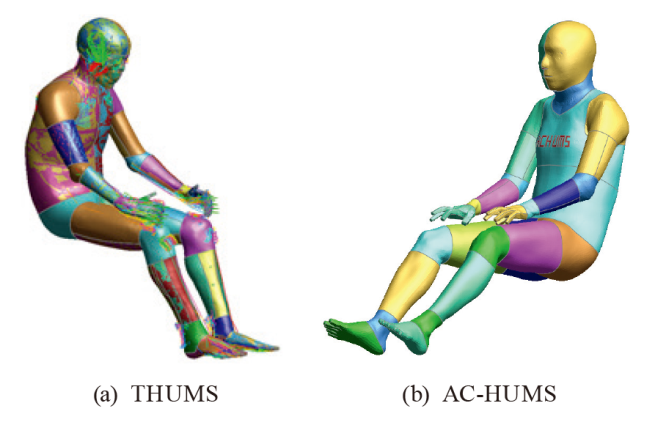
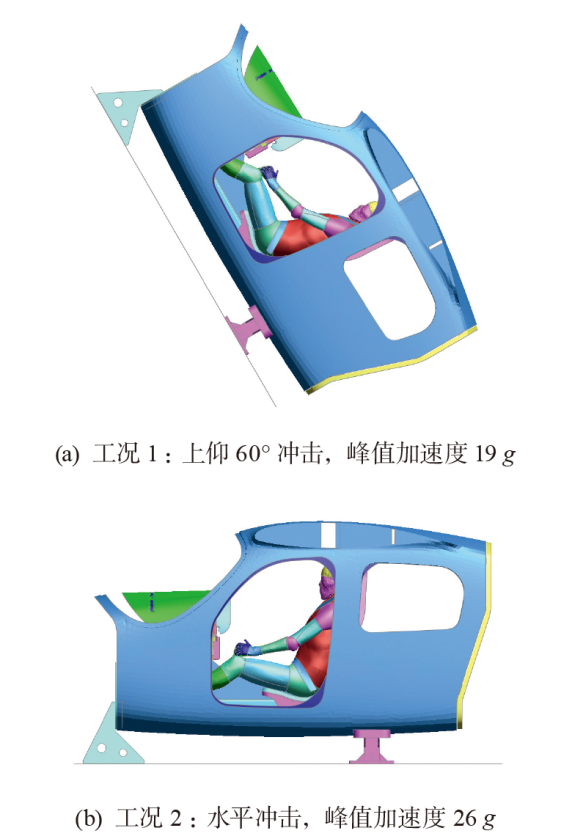
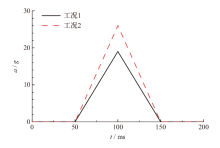
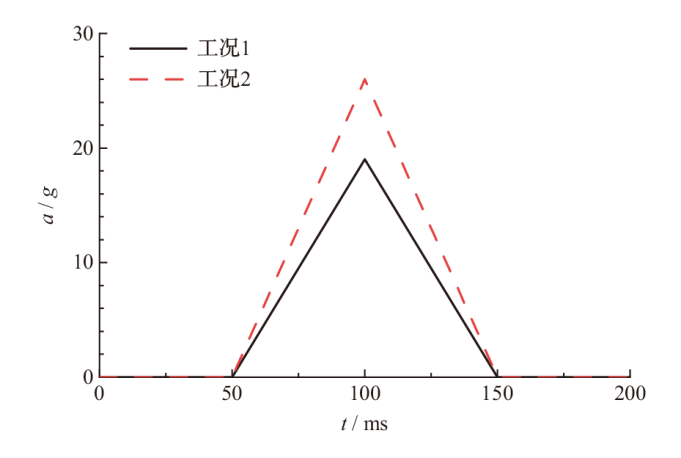
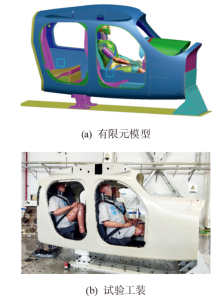
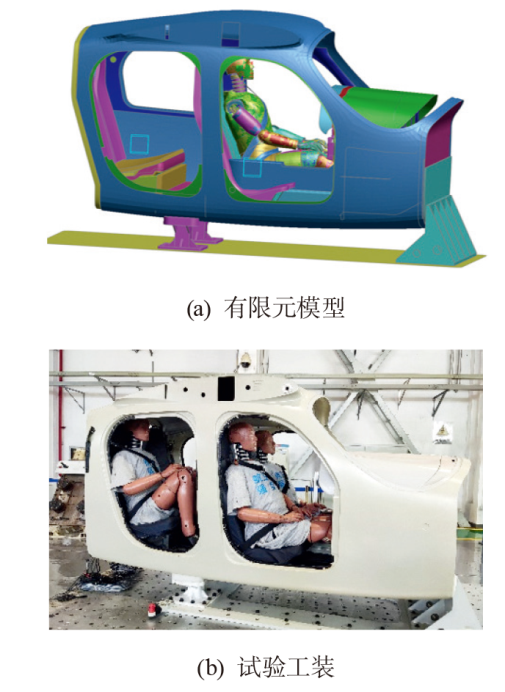
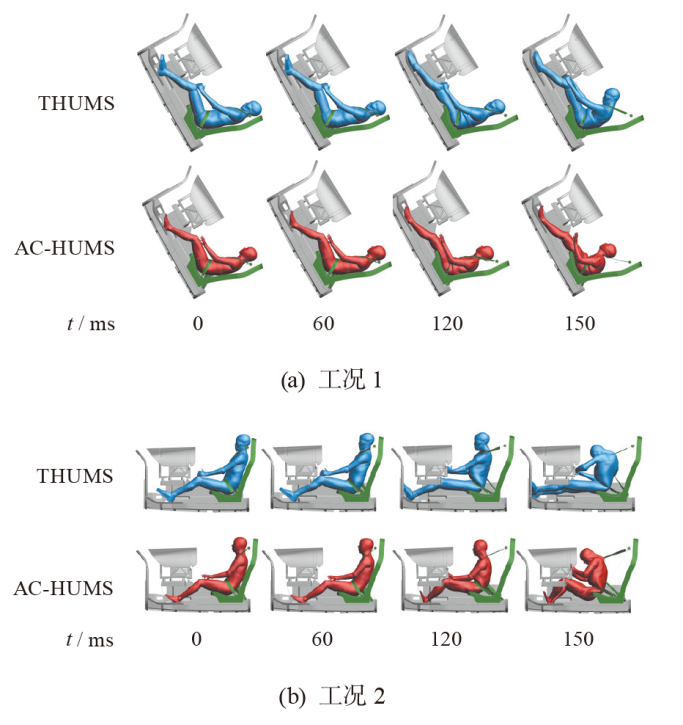
为研究航空器坠撞场景下中西方乘员由于体征不同引起的损伤风险差异,利用中、西方成年男性有限元模型AC-HUMS和THUMS分别进行小飞机坠撞场景模拟,分析中西方男性乘员在垂直19 g坠撞和水平26 g坠撞两种工况下头部、颈部、腰部的损伤风险差异分析。结果表明,水平26 g模拟坠撞工况下,中国乘员的头部损伤概率为西方乘员的66.6%~84.9%;垂直19 g模拟坠撞工况下,中国乘员的腰部损伤概率为西方乘员的71.43%;中国乘员在颈椎椎体与椎间盘连接处表现出更为频繁的应力集中现象,且在水平26 g模拟坠撞工况下其颈椎皮质骨应力明显高于西方乘员。可见,体征差异对小飞机坠撞冲击能量的传递路径以及人体头部、颈部、腰椎损伤分布模式预测结果有较显著影响,现有针对西方人体征制定的适航标准及乘员约束系统难以适应中国小飞机乘员的防护需求。
中图分类号:
石霄鹏, 陈浩, 郭凯, 刘天福, 解江. 小飞机坠撞场景下中西方乘员损伤风险差异分析[J]. 汽车安全与节能学报, 2026, 17(3): 322-331.
SHI Xiaopeng, CHEN Hao, GUO Kai, LIU Tianfu, XIE Jiang. Analysis of injury risk disparities between Chinese and Western occupants in small aircraft crash scenarios[J]. Journal of Automotive Safety and Energy, 2026, 17(3): 322-331.
| 损伤项目 | 极限值 | 损伤项目 | 极限值 |
|---|---|---|---|
| 颅骨等效应力 | 10.1 MPa [ | 颈椎前弯矩 | 190 N?m [ |
| 颅内等效应力 | 15 kPa [ | 颈椎后弯矩 | 57 N?m [ |
| 颅内压力(轻微脑震荡) | 56 kPa [ | 颈椎皮质骨应力 | 236 MPa [ |
| 颅内压力(严重脑损伤) | 173 kPa [ | 颈椎松质骨应力 | 59 MPa [ |
| 颈椎轴向拉力 | 3.3 kN [ | 腰椎轴力 | 4.500 kN [ |
| 颈椎轴向压力 | 4.0 kN [ | 腰椎皮质骨应力 | 236 MPa [ |
| 损伤项目 | 极限值 | 损伤项目 | 极限值 |
|---|---|---|---|
| 颅骨等效应力 | 10.1 MPa [ | 颈椎前弯矩 | 190 N?m [ |
| 颅内等效应力 | 15 kPa [ | 颈椎后弯矩 | 57 N?m [ |
| 颅内压力(轻微脑震荡) | 56 kPa [ | 颈椎皮质骨应力 | 236 MPa [ |
| 颅内压力(严重脑损伤) | 173 kPa [ | 颈椎松质骨应力 | 59 MPa [ |
| 颈椎轴向拉力 | 3.3 kN [ | 腰椎轴力 | 4.500 kN [ |
| 颈椎轴向压力 | 4.0 kN [ | 腰椎皮质骨应力 | 236 MPa [ |
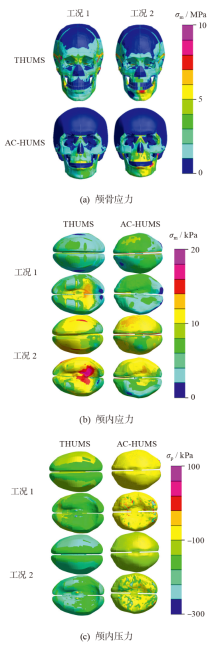

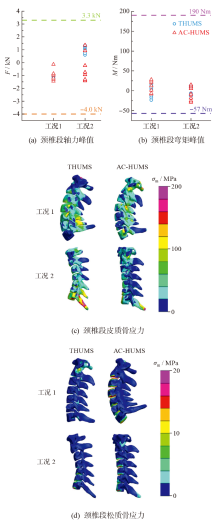
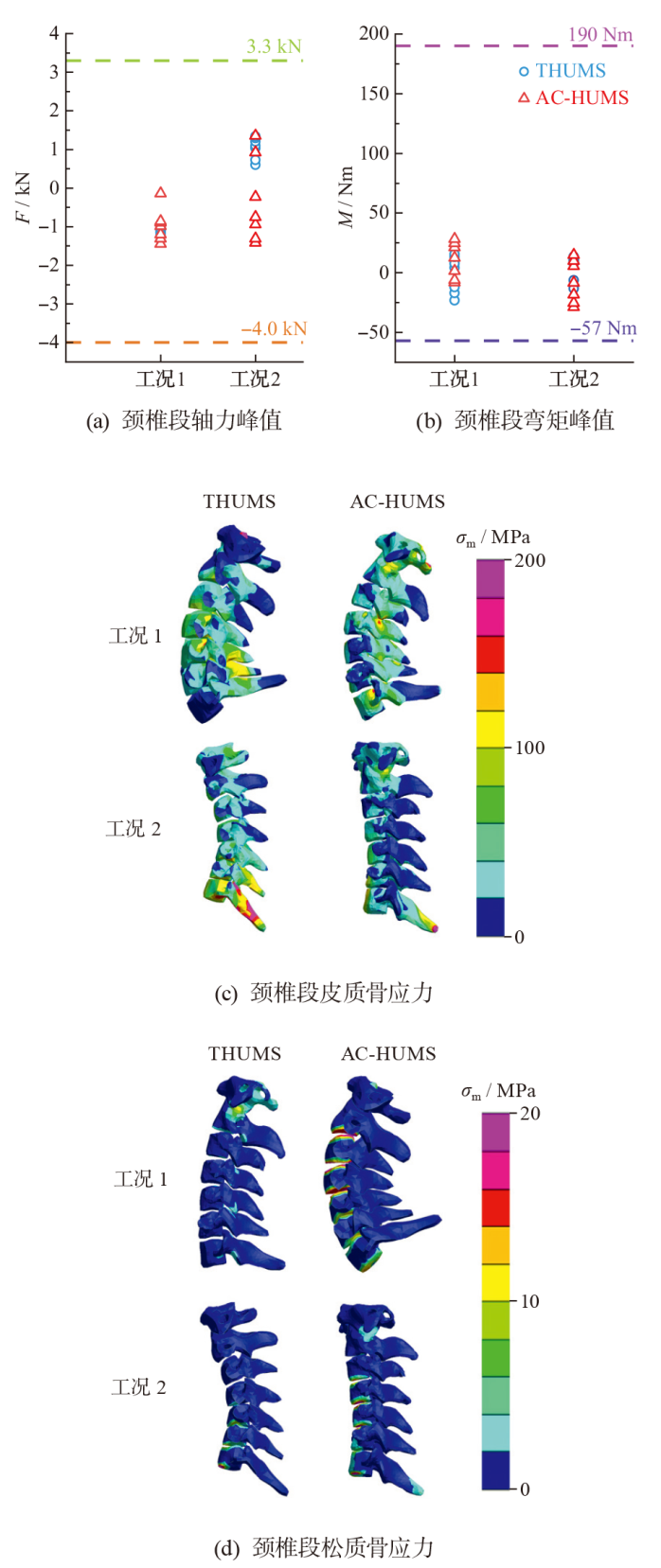
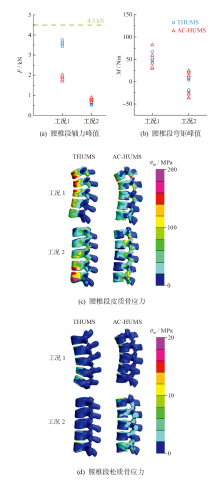
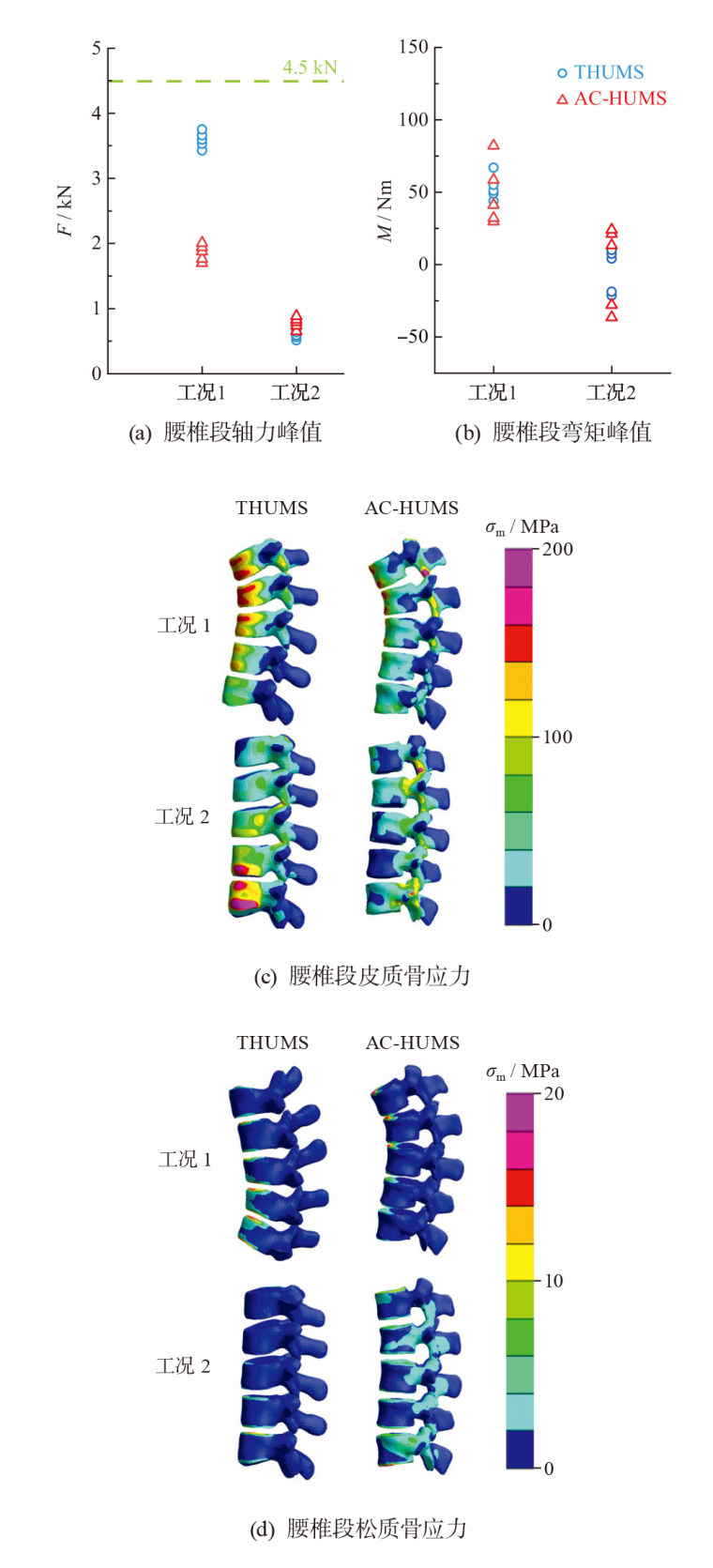
| 工况 | 腰椎段 | THUMS | AC-HUMS | |||
|---|---|---|---|---|---|---|
| P(Fz, My, SCSA) / % | 损伤风险/ % | P(Fz, My, SCSA) / % | 损伤风险/ % | |||
| 工况1 | L1 | 3.49 | 11.76 | 2.61 | 8.40 | |
| L2 | 1.82 | 1.96 | ||||
| L3 | 2.05 | 1.07 | ||||
| L4 | 1.93 | 1.05 | ||||
| L5 | 3.05 | 2.00 | ||||
| 工况2 | L1 | 3.40×10⁻⁴ | 1.97×10⁻³ | 3.89×10⁻² | 9.06×10⁻² | |
| L2 | 3.31×10⁻⁴ | 1.97×10⁻² | ||||
| L3 | 3.34×10⁻⁴ | 1.50×10⁻² | ||||
| L4 | 2.06×10⁻⁴ | 8.28×10⁻³ | ||||
| L5 | 7.64×10⁻⁴ | 8.84×10⁻³ | ||||
| 工况 | 腰椎段 | THUMS | AC-HUMS | |||
|---|---|---|---|---|---|---|
| P(Fz, My, SCSA) / % | 损伤风险/ % | P(Fz, My, SCSA) / % | 损伤风险/ % | |||
| 工况1 | L1 | 3.49 | 11.76 | 2.61 | 8.40 | |
| L2 | 1.82 | 1.96 | ||||
| L3 | 2.05 | 1.07 | ||||
| L4 | 1.93 | 1.05 | ||||
| L5 | 3.05 | 2.00 | ||||
| 工况2 | L1 | 3.40×10⁻⁴ | 1.97×10⁻³ | 3.89×10⁻² | 9.06×10⁻² | |
| L2 | 3.31×10⁻⁴ | 1.97×10⁻² | ||||
| L3 | 3.34×10⁻⁴ | 1.50×10⁻² | ||||
| L4 | 2.06×10⁻⁴ | 8.28×10⁻³ | ||||
| L5 | 7.64×10⁻⁴ | 8.84×10⁻³ | ||||
| [1] | Boyd D D. A review of general aviation safety (1984-2017) [J]. Aerosp Med Hum Perform, 2017, 88( 7): 657-664. |
| [2] | Wiegmann D A, Taneja N. Analysis of injuries among pilots involved in fatal general aviation airplane accidents[J]. Accid Anal Prev. 2003, 35(4): 571-577. |
| [3] | Amiri S, Naserkhaki S, Parnianpour M. Modeling and validation of a detailed FE viscoelastic lumbar spine model for vehicle occupant dummies[J]. Comput Biol Medi, 2018, 99: 191-200. |
| [4] | XIN Ye, Gaewsky J P, Jones D A, et al. Computational modeling and analysis of thoracolumbar spine fractures in frontal crash reconstruction[J]. Traf Inju Prev, 2018, 19(S2): S32-S39. |
| [5] |
朱鲜飞, 冯蕴雯, 薛小锋, 等. 水平冲击条件下不同撞击速度对乘员头部伤害影响分析[J]. 机械强度, 2020, 42(2): 374-383.
doi: 10.16579/j.issn.1001.9669.2020.02.018 |
| ZHU Xianfei, FENG Yunwen, XUE Xiaofeng, et al. Effect analysis of different impact velocities on occupant head injury under horizontal impact conditions[J]. J Mech Strength, 2020, 42(2): 374-383. (in Chinese) | |
| [6] |
Garofano A, Acanfora V, Riccio A. On the use of hybrid shock absorbers to increase safety of commercial aircraft passengers during a crash event[J]. Prog Aerosp Sci, 2024, 148: 101004.
doi: 10.1016/j.paerosci.2024.101004 URL |
| [7] | 陈家辉, 李艳军, 曹愈远, 等. 直升机后向座椅的适坠性仿真分析[J]. 科学技术与工程, 2023, 23(34): 14879-14887. |
| CHEN Jiahui, LI Yanjun, CAO Yuyuan, et al. Crashworth-iness simulation analysis of helicopter rear-facing seats[J]. Sci Tech Engi, 2023, 23(34): 14879-14887. (in Chinese) | |
| [8] | 曹愈远, 马心宇, 王景霖, 等. 载人 eVTOL 乘员保护系统适坠性与乘员损伤评估[J/OL]. 交通运输工程学报, 2026. (2026-1-27) [2026-05-25] https://doi.org/10.19818/j.cnki.1671-1637.2026.068. |
| CAO Yuyuan, MA Xinyu, WANG Jinglin, et al. Crashwor-thiness and occupant injury assessment of the occupant protection system for manned eVTOL[J/OL]. J Traf Transp Engi, 2026. (2026-1-27) [2026-05-25] https://doi.org/10.19818/j.cnki.1671-1637.2026.068. (in Chinese) | |
| [9] | Iwamoto M, Nakahira Y, Kimpara H. Development and validation of the total human model for safety (THUMS) toward further understanding of occupant injury mechan-isms in precrash and during crash, traffic injury prevention[J]. Traf Inju Prev, 2015, 16(S1): S36-S48. |
| [10] | 国家市场监督管理总局, 国家标准化管理委员会. GB/T 10000-2023: 中国成年人人体尺寸[S]. 北京: 中国标准出版社, 2023. |
| State Administration for Market Regulation, Standardi-zation Administration of China. GB/T 10000-2023: Human dimensions of Chinese adults. national technical committee on human ergonomics standardization[S]. Beijing: China Standards Press, 2023. (in Chinese) | |
| [11] | 尹彦, 杨洁, 马春生, 等. 东西方人体测量学尺寸差异分析[J]. 标准科学, 2015(7): 10-14. |
| YIN Yan, YANG Jie, MA Chunsheng, et al. Analysis of anthropometric dimension differences between eastern and western populations[J]. Stand Sci, 2015(7): 10-14. (in Chinese) | |
| [12] | 张金换, 杨洁, 金鑫, 等. 中美人体尺寸差异及对车辆正碰中驾驶员损伤风险的影响[J]. 汽车安全与节能学报, 2016, 7(2): 175-181. |
| ZHANG Jinhuan, YANG Jie, JIN Xin, et al. Differences in anthropometric dimensions between Chinese and American populations and their effects on driver injury risk in vehicle frontal impact[J]. J Autom Safe Energ, 2016, 7(2): 175-181. (in Chinese) | |
| [13] |
Niemeyer F, Wilke H-J, Schmidt H. Geometry strongly influences the response of numerical models of the lumbar spine: A probabilistic finite element analysis[J]. J Biomech, 45(8), 2012: 1414-1423.
doi: 10.1016/j.jbiomech.2012.02.021 pmid: 22436639 |
| [14] |
Naserkhaki S, Jaremko J L, Marwan El-R. Effects of inter-individual lumbar spine geometry variation on load-sharing: Geometrically personalized finite element study[J]. J Biomech, 49(13), 2016: 2909-2917.
doi: S0021-9290(16)30720-5 pmid: 27448498 |
| [15] | Rupp J D, Flannagan C A, Leslie A J, et al. Effects of BMI on the risk and frequency of AIS 3+ injuries in motor-vehicle crashes[C]// Obesity, Silver Spring, 2013, 21(1): E88-E97. |
| [16] | Meijer G J, Homminga J, Veldhuizen A G, et al. Influence of interpersonal geometrical variation on spinal motion segment stiffness: Implications for patient-specific mode-ling[J]. Spine, 2011, 36(14): E929-E935. |
| [17] | SHI Xiaopeng, DING Xianghe, GUO Kai, et al. Finite element comparison of human and hybrid iii responses in the airworthiness certification of normal aircraft[R]. SAE Tech Paper, 2024-01-7018. |
| [18] | 于潇, 杨笑婷, 费敬, 等. 基于特征参数分析的中国MPDB工况特征波形获取与应用[J]. 湖南大学学报(自然科学版), 2024, 51(10): 37-46. |
| YU Xiao, YANG Xiaoting, FEI Jing, et al. Acquisition and application of characteristic waveform for China MPDB condition based on feature parameter analysis[J]. J Hunan Univ (Nat Sci), 2024, 51(10): 37-46. (in Chinese) | |
| [19] |
Fahlstedt M, MENG Shiyang, Kleiven S. Influence of strain post-processing on brain injury prediction[J]. J Biomech, 2022, 132: 110940.
doi: 10.1016/j.jbiomech.2021.110940 URL |
| [20] | QIAN Jiaqi, WANG Qiang, LlU Yu, et al. Biofidelity evalu-ation of ac-hums pedestrian model based on generic sedan buck model[R]. SAE Tech Paper, 2025-01-8743. |
| [21] | 刘煜, 张辉达, 邬晓凡, 等. 多种碰撞工况下的中国与西方体征驾驶员响应对比分析[J]. 汽车安全与节能学报, 2025, 16(3): 376-385. |
| LIU Yu, ZHANG Huida, WU Xiaofan, et al. Comparative analysis of driver responses between Chinese and Western anthropometrics under various crash conditions[J]. J Autom Safe Energ, 2025, 16(3): 376-385. (in Chinese) | |
| [22] | Society of Automotive Engineering International. [S]. Wichita: SAE International, 2012. |
| [23] | 中华人民共和国交通运输部. [S]. 北京: 中华人民共和国交通运输部, 2022. |
| Ministry of Transport of the People's Republic of China. [S]. Beijing: Ministry of Transport of the People's Republic of China, 2022. (in Chinese) | |
| [24] | National Transportation Safety Board. Safety report-General aviation crashworthiness project: phase III—Acceleration loads and velocity changes of survivable general aviation accidents, NTSB/SR-85/02[R/OL]. Washington, National Transportation Safety Board, 1985. (1985-09-04) https://www.ntsb.gov/investigations/AccidentReports/Reports/SR8502.pdf. |
| [25] | Federal Aviation Administration. [S]. Washington, Federal Avia-tion Administration, 1988. |
| [26] | 冯成建. 基于典型交通事故的颅脑损伤力学机制研究[D]. 北京: 第三军医大学, 2013. |
| FENG Chengjian. Research on the mechanical mechanism of craniocerebral injury based on typical traffic accidents[D]. Beijing: Third Military Medical University, 2013. (in Chinese) | |
| [27] | Willinger R, Baumgartner D, Chinn B, et al. Head tolerance limits derived from numerical replication of real world accidents[C]// Int’l Res Coun Biomech Injury. UK: IRCOBI, 2000: 209-221. |
| [28] | Ward C C, Chan M, Nahum A M. lntracranial pressure-A brain injury criterion[R]. SAE Tech Paper, 801304, 1980. |
| [29] | Brownson P. The brace position for passenger aircraft: A biomechanical evaluation[D]. UK: University of Notting-ham, 1993. |
| [30] | Carter D R, Hayes W C. The compressive behavior of bone as a two-phase porous structure[J]. J Bone Joint Surg, 1977, 59(7): 954-962. |
| [31] | Brinckmann P, Biggemann M, Hilweg D. Prediction of the compressive strength of human lumbar vertebrae[J]. Clin Biom, 1989, 4: iii-iv, 1-27. |
| [32] | 于振浩, 敬霖, 黄志辉. 高速列车追尾碰撞时乘员头颈部损伤力学响应与风险评估[J]. 应用力学学报, 2024, 41(1): 77-89. |
| YU Zhenhao, JING Lin, HUANG Zhihui. Mechanical response and risk assessment of occupant head-neck injury during high-speed train rear-end collision[J]. Chin J Appl Mech, 2024, 41(1): 77-89. (in Chinese) | |
| [33] | Federal Aviation Administration. [S]. Washington DC: FAA, 2020. |
| [34] | Eppinger R, Sun E, Bandak F, et al. Development of impro-ved injury criteria for the assessment of advanced auto-motive restraint systems-II, DOT HS 808 856[R/OL]. Wash-ington, National Highway Traffic Safety Administration, 1999. (1999-11-01) https://rosap.ntl.bts.gov/view/dot/14738/dot_14738_DS1.pdf. |
| [35] | Johnson D, Koya B, Gayzik F S. Comparison of neck injury criteria values across human body models of varying complexity[J]. Front Bioengi Biotech. 2020(8): 985-996. |
| [36] |
John J D, Kumar G S, Yoganandan N. Cervical spine mor-phology and ligament property variations: A finite element study of their influence on sagittal bending characteristics[J]. J Biomech, 2019, 85: 18-26.
doi: 10.1016/j.jbiomech.2018.12.044 URL |
| [37] | Vasquez K B, Brozoski F T, Logsdon K P, et al. Retrospe-ctive analysis of injuries in underbody blast events: 2007-2010 [J]. Mil Med. 2018, 183(S1): 347-352. |
| [38] | Stemper B D, Yoganandan N, Baisden J L, et al. Rate-dependent fracture characteristics of lumbar vertebral bodies[J]. J Mech Beha Biom Mater, 2015, 41: 271-279. |
| [39] | Tushak S K, Gepner B D, Pipkorn B, et al. GHBMC-specific lumbar spine fracture risk prediction considering two different metrics[C]// Proc 2023 Int’l Resh Coun Biomech Inju. Cambridge, UK, 2023. |
| [1] | 李宜轩, 吴肖, 唐凯, 李政. 小偏置碰撞测试中纯电动车辆侧滑策略研究[J]. 汽车安全与节能学报, 2025, 16(6): 867-876. |
| [2] | 刘煜, 张辉达, 邬晓凡, 蒋韩, 李桂兵. 多种碰撞工况下的中国与西方体征驾驶员响应对比分析[J]. 汽车安全与节能学报, 2025, 16(3): 376-385. |
| [3] | 易文韬, 唐颖, 雷飞兵, 曾董, 蔡娅妮, 罗斌尹. 侧柱碰撞中头部运动学特征对弥散性脑损伤的影响[J]. 汽车安全与节能学报, 2025, 16(1): 66-76. |
| [4] | 荣海, 蒋建中, 姚再起, 马凯. 某电动汽车侧面柱碰工况门槛梁截面参数优化[J]. 汽车安全与节能学报, 2024, 15(6): 813-820. |
| [5] | 邹铁方, 江碟, 周靖, 袁湘婷. 参数扰动对一种先前的车辆制动控制和防护方法的影响[J]. 汽车安全与节能学报, 2024, 15(4): 477-483. |
| [6] | 张晨, 魏嵬, 陈家星, 马正伟. 基于交通事故重建的行人过街安全岛高度设计[J]. 汽车安全与节能学报, 2024, 15(2): 178-187. |
| [7] | 张道文, 雷毅, 任耀, 汤楷文, 董鑫驰, 罗晶, 胡文浩. 基于人—车碰撞事故重建的行人下肢动力学响应与损伤生物力学分析[J]. 汽车安全与节能学报, 2023, 14(6): 671-680. |
| [8] | 武和全, 周惠来, 李羿辉, 胡林. 汽车正面碰撞中后排不同坐姿乘员损伤生物力学分析[J]. 汽车安全与节能学报, 2023, 14(6): 688-697. |
| [9] | 任立海, 罗志秦, 陈浩, 蒋成约. 假人与人体模型在AEB作用下的驾驶员离位响应对比[J]. 汽车安全与节能学报, 2023, 14(4): 448-456. |
| [10] | 邹铁方, 赵云龙, 肖璟, 李艳春. 耦合气囊及制动控制对人地碰撞损伤的防护及效果评估[J]. 汽车安全与节能学报, 2022, 13(3): 438-445. |
| [11] | 龙永程, 郝海舟, 李凡, 费敬. 行人安全测试现行腿型冲击器的生物逼真度[J]. 汽车安全与节能学报, 2021, 12(4): 475-482. |
| [12] | 沈小燕, 余政涛, 秦箫, 陈野, 张国胜, 李金. 基于有限元仿真罐式危险货物运输车辆后防护装置碰撞特性[J]. 汽车安全与节能学报, 2021, 12(3): 364-372. |
| [13] | 刘金明, 马华星, 李奎, 李桂兵. 行人头部与车辆碰撞中旋转速度对颅脑组织响应影响[J]. 汽车安全与节能学报, 2021, 12(1): 70-78. |
| [14] | 韩勇, 吕春成, 唐斌, 黄红武, 罗洁思, 余意. 增高垫型CRS对小偏置碰撞中儿童乘员的损伤与防护[J]. 汽车安全与节能学报, 2020, 11(4): 444-453. |
| [15] | 吴玉宝,牛卫中,雷云涛. 两辆 SUV 乘用车侧碰耐撞性最差工况的判定[J]. JASE, 2020, 11(1): 79-85. |
| 阅读次数 | ||||||
|
全文 |
|
|||||
|
摘要 |
|
|||||
