欢迎访问《汽车安全与节能学报》,

汽车安全与节能学报 ›› 2025, Vol. 16 ›› Issue (2): 217-225.DOI: 10.3969/j.issn.1674-8484.2025.02.004
范小彬( ), 彭佳星
收稿日期:2024-08-31
修回日期:2024-09-24
出版日期:2025-04-30
发布日期:2025-04-22
作者简介:范小彬(1977—),男(汉),河南,副教授。E-mail:fanxiaobin@hpu.edu.cn。
基金资助:
FAN Xiaobin(), PENG Jiaxing
Received:2024-08-31
Revised:2024-09-24
Online:2025-04-30
Published:2025-04-22
摘要:
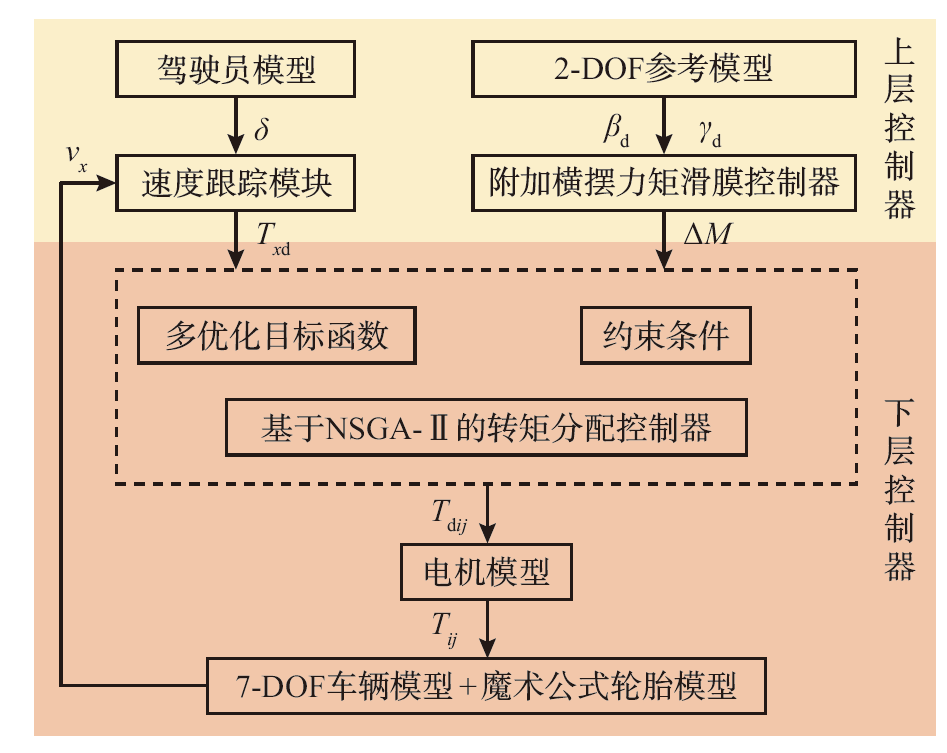
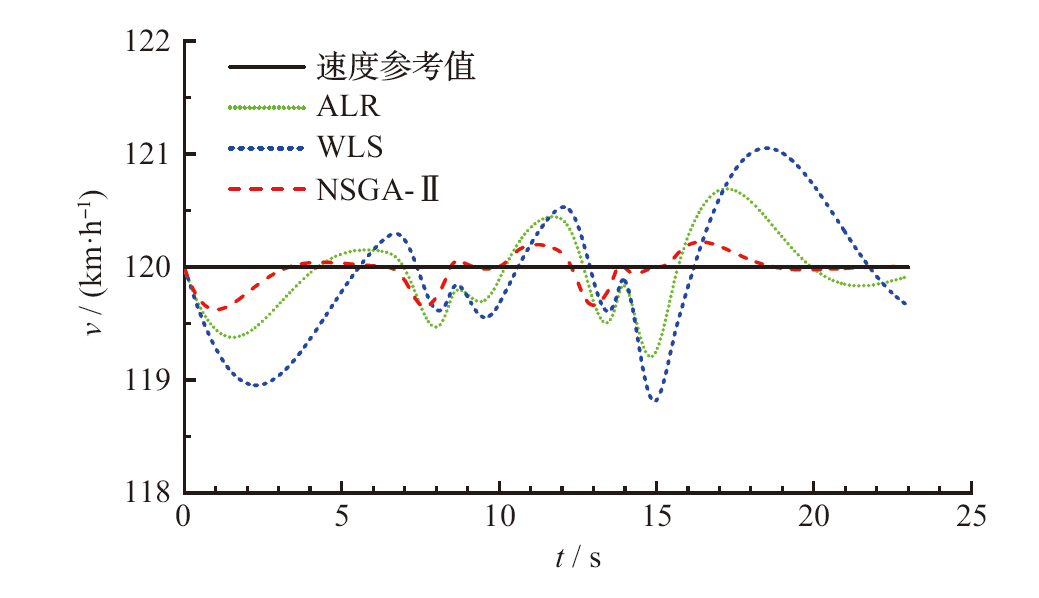
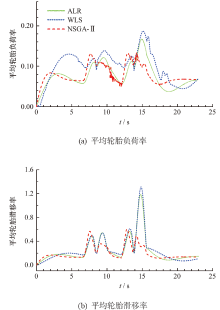
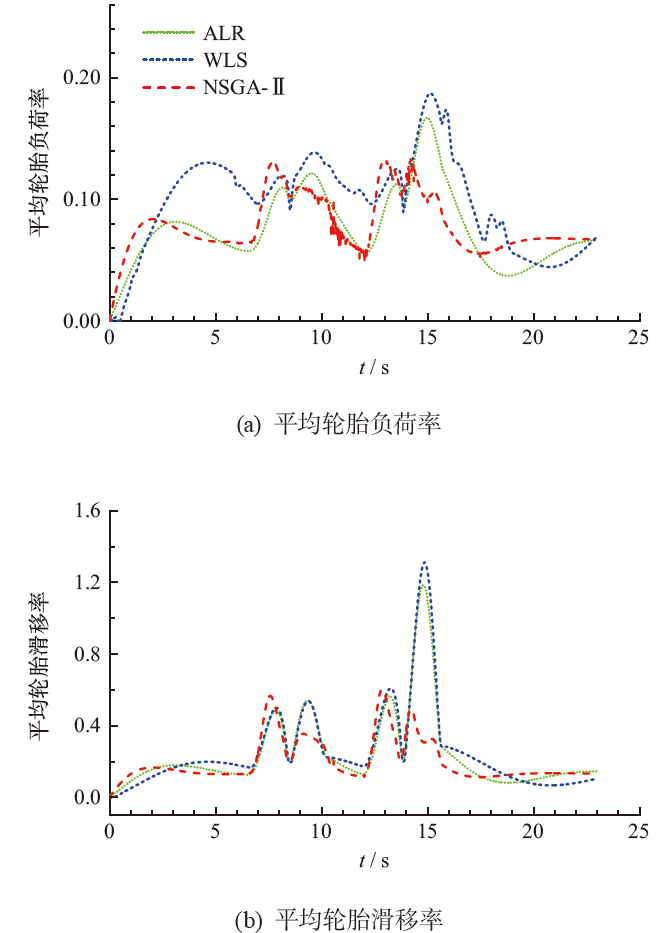
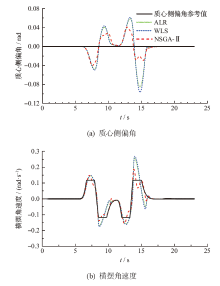
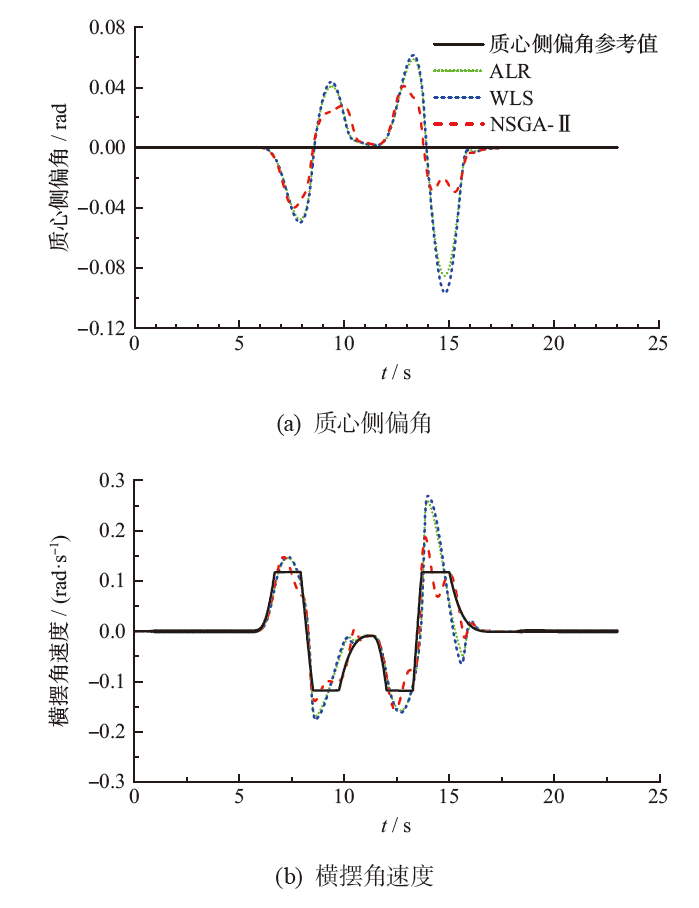
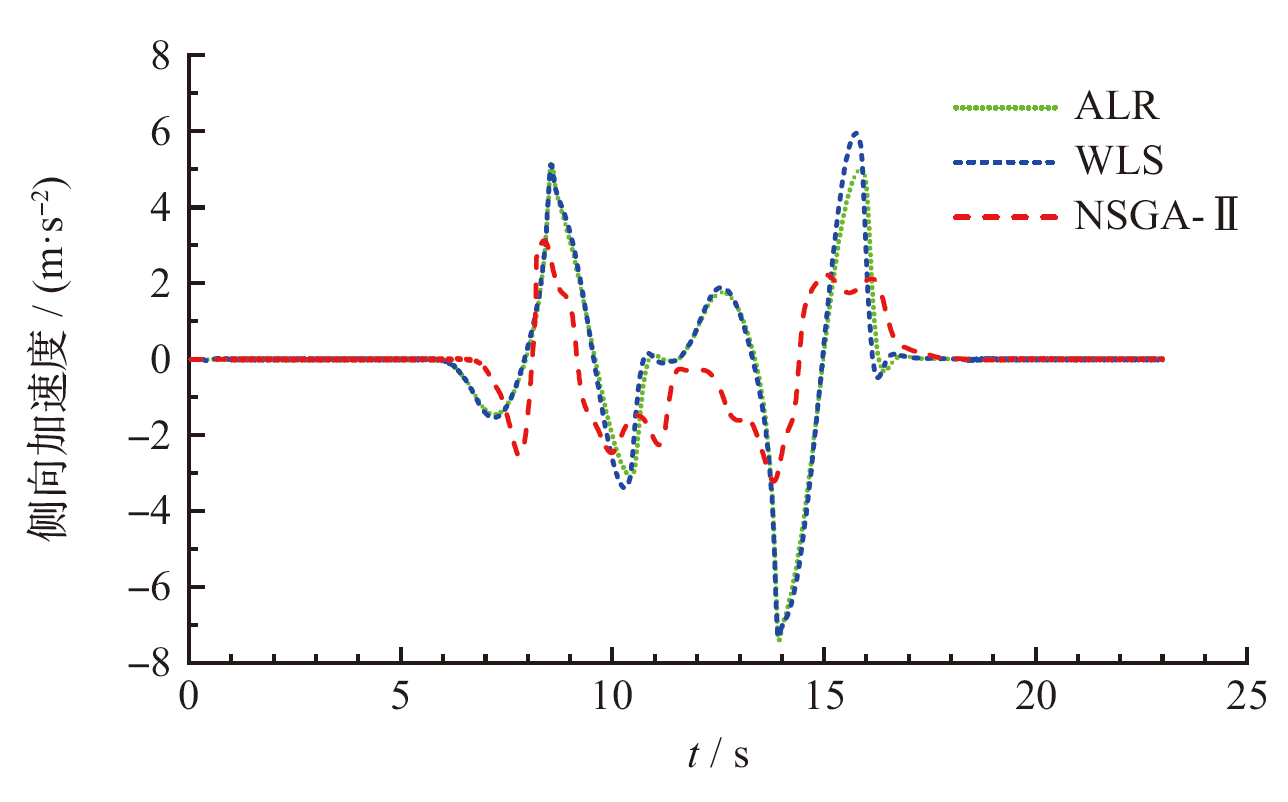
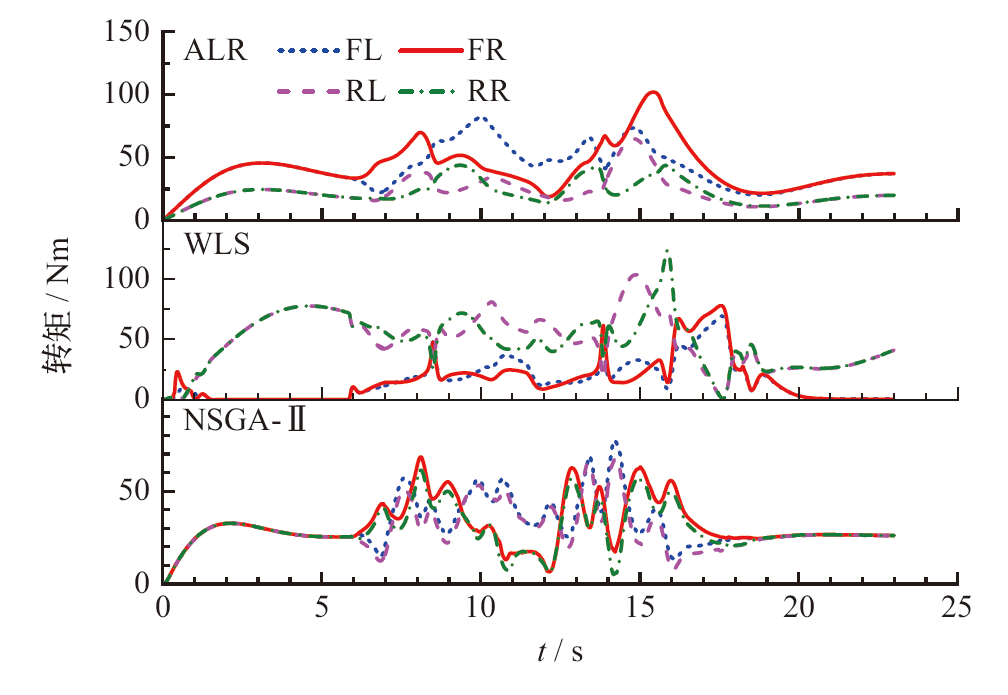
为了提升轮毂电机电动汽车在紧急转向工况下的转向稳定性和乘员舒适性,开发了基于第 2 代非支配排序遗传算法(NSGA-Ⅱ)的多目标优化策略。该策略采用直接横摆力矩控制方法,设计了操纵稳定性和乘员舒适性的优化目标函数,考虑了纵向期望转矩和附加横摆力矩等广义力的等式约束条件,并在NSGA-Ⅱ计算出的 Pareto 前沿中根据车辆的动态条件来选择转矩最优解。结果表明:相比于轴载比例(ALR)和加权最小二乘法(WLS)策略,优化策略的质心侧偏角和横摆角速度相对于参考值的均方根误差分别下降了 37.45%、52.08% 和 41.98%、56.95%,其侧向加速度和转矩的幅值也更小,证明所提出策略在轮毂电机电动汽车紧急转向时转矩分配的有效性,提高了车辆的转向稳定性和乘员舒适性。
中图分类号:
范小彬, 彭佳星. 紧急转向工况轮毂电机电动汽车多目标转矩分配策略[J]. 汽车安全与节能学报, 2025, 16(2): 217-225.
FAN Xiaobin, PENG Jiaxing. Multi-objective torque distribution strategy for hub motor electric vehicles under emergency steering conditions[J]. Journal of Automotive Safety and Energy, 2025, 16(2): 217-225.
| 总质量,m | 1 298 kg |
|---|---|
| 质心到前轴距离,lf | 1.015 m |
| 质心到后轴距离,lr | 1.895 m |
| 前轴轮距,Bf | 1.675 m |
| 后轴轮距,Br | 1.675 m |
| 轮胎滚动半径,Rw | 0.325 m |
| 质心高度,hg | 0.54 m |
| 车辆绕Z轴的转动惯量,Iz | 1 536.7 kg · m2 |
| 电机最大转矩,Tmax | 200 Nm |
| 总质量,m | 1 298 kg |
|---|---|
| 质心到前轴距离,lf | 1.015 m |
| 质心到后轴距离,lr | 1.895 m |
| 前轴轮距,Bf | 1.675 m |
| 后轴轮距,Br | 1.675 m |
| 轮胎滚动半径,Rw | 0.325 m |
| 质心高度,hg | 0.54 m |
| 车辆绕Z轴的转动惯量,Iz | 1 536.7 kg · m2 |
| 电机最大转矩,Tmax | 200 Nm |
| [1] | 赵明慧, 郭浩然, 张利鹏, 等. 四轮独立转向分布式驱动电动汽车单轮转向失效行驶稳定性控制[J]. 机械工程学报, 2024, 60(10): 507-522. |
| ZHAO Minghui, GUO Haoyan, ZHANG Lipeng. Driving stability control of four-wheel independent steering distributed drive electric vehicle with single wheel steering failure[J]. J Mech Engi, 2024, 60(10): 507-522. (in Chinese) | |
| [2] | 张雷, 徐同良, 李嗣阳, 等. 全线控分布式驱动电动汽车底盘协同控制研究综述[J]. 机械工程学报, 2023, 59(20): 261-280. |
| ZHANG Lei, XU Tongliang, LI Siyang, et al. Overview on chassis coordinated control for full x-by-wire distributed drive electric vehicles[J]. J Mech Engi, 2023, 59(20): 261-280. (in Chinese) | |
| [3] | 丁宁, 贝绍轶, 李波, 等. 分布式驱动电动汽车横向稳定性自适应优化控制[J]. 重庆理工大学学报(自然科学), 2024, 38(8): 64-73. |
| DING Ning, BEI Shaoyi, LI Bo, et al. Adaptive optimization control for lateral stability of distributed drive electric vehicle[J]. J Chongqing Univ Tech (Nat Sci), 2024, 38(8): 64-73. (in Chinese) | |
| [4] | WU Shi, LI Yipeng, GUAN Yibo, et al. Distribution method of automotive torque for hub motor considering energy consumption optimization[J]. Int’l J Auto Tech, 2023, 24(3): 913-928. |
| [5] | 王艳华, 孟永凯, 邓吉琛, 等. 分布式电动车转向横向稳定性力矩适应性分配策略[J]. 重庆理工大学学报(自然科学版), 2024, 38(3): 46-54. |
| WANG Yanhua, MENG Yongkai, DENG Jichen, et al. Lateral stability of distributed electric vehicle steering torque adaptive distribution strategy[J]. J Chongqing Univ Tech (Nat Sci), 2024, 38(3): 46-54. (in Chinese) | |
| [6] | 王成, 屈小贞, 孙晓帮. 分布式驱动电动汽车的横向稳定性控制研究[J]. 现代制造工程, 2023(11): 63-69. |
| WANG Cheng, QU Xiaozhen, SUN Xiaobang. Research on lateral stability of distributed drive electric vehicle control[J]. Modern Manu Engi, 2023(11): 63-69. (in Chinese) | |
| [7] | 王保华, 王伟龙, 孙雨辰, 等. 基于动态门限值的分布式驱动电动汽车驱动力矩控制研究[J]. 汽车工程学报, 2023, 13(5): 705-715. |
| WANG Baohua, WANG Weilong, SUN Yuchen, et al. Dynamic threshold-based drive torque control for distributed drive electric vehicles[J]. Chinese J Autom Engi, 2023, 13(5): 705-715. (in Chinese) | |
| [8] | ZHAI Li, SUN Tianmin, WANG Jie. Electronic stability control based on motor driving and braking torque distribution for a four in-wheel motor drive electric vehicle[J]. IEEE Trans on Vehi Tech, 2016, 65(6): 4726-4739. |
| [9] | Temelcan G, Kocken H G, Albayrak I. Finding compromise solutions for fully fuzzy multi-objective linear programming problems by using game theory approach[J]. J Intel Fuzz Syst, 2022, 42(1): 283-293. |
| [10] | CHEN Haibing, LI Lin, YOU Ling. A weight vector adjustment method for decomposition-based multi-objective evolutionary algorithms[J]. IEEE Access, 2023, 11: 42 324-42 330. |
| [11] | WANG Xuanxuan, JI Wujun, GAO Yun. Energy consumption optimization strategy of hybrid vehicle based on NSGA-II genetic algorithm[J]. Processes, 2023, 11(6): 2227-9717. |
| [12] | GUO Lie, LIN Xiao, GE Pingshu, et al. Torque distribution for electric vehicle with four in-wheel motors by considering energy optimization and dynamics performance [C]// 2017 IEEE Intel Vehi Symp(IV)Los Angeles, NJ. IEEE, 2017: 1619-1624. |
| [13] | WANG Junnian, GAO Shoulin, WANG Kai, et al. Wheel torque distribution optimization of four-wheel independent-drive electric vehicle for energy efficient driving[J]. Contr Engi Pract. 2021, 110: 104779. |
| [14] |
HUANG Juhua, LIU Yingkang, LIU Mingchun, et al. Multi-objective optimization control of distributed electric drive vehicles based on optimal torque distribution[J]. IEEE Access, 2019, 7: 16377-16394.
doi: 10.1109/ACCESS.2019.2894259 |
| [15] | LÜ Xiangxuan, WU Xiaolan, BAI Zhifeng, et al. An optimized multi-objective torque distribution strategy for distributed drive electric vehicle based on sparrow search algorithm[J]. J Meas Sci Instruct, 2023, 14(1): 85-94. |
| [16] | 李超. 分布式四轮驱动电动汽车复合制动稳定性控制策略研究[D]. 长春: 吉林大学, 2024. |
| LI Chao. Research on the control strategy of distributed four-wheel drive electric vehicles with composite braking stability[D]. Changchun: Jilin University, 2024. (in Chinese) | |
| [17] |
王震坡, 丁晓林, 张雷. 四轮轮毂电机驱动电动汽车驱动防滑控制关键技术综述[J]. 机械工程学报, 2019, 55(12): 99-120.
doi: 10.3901/JME.2019.12.099 |
| WANG Zhenpo, DING Xiaolin, ZHANG Lei. Overview on key technologies of acceleration slip regulation for four-wheel-independently-actuated electric vehicles[J]. J Mech Engi, 2019, 55(12): 99-120. (in Chinese) | |
| [18] | 赵璇. 分布式四驱纯电动汽车多目标优化转矩分配研究[D]. 兰州: 兰州交通大学, 2023. |
| ZHAO Xuan. Torque distribution research for multi-objective optimization of distributed drive pure electric vehicles[D]. Lanzhou: Lanzhou Jiaotong University, 2023. (in Chinese) | |
| [19] | 田杰, 张纯涛. 分布式驱动差动转向汽车的纵横向力协调控制研究[J]. 重庆理工大学学报(自然科学), 2022, 36(10): 21-30. |
| TIAN Jie,ZHANG Chuntao. Longitudinal and transverse force coordinated control of distributed drive differential steering vehicle[J]. J Chongqing Univ Tech (Nat Sci), 2022, 36(10): 21-30. (in Chinese) |
| [1] | 吴祥成, 郭俊轩, 陈华宇, 苏良彬, 卢金. 基于储能箱的电动汽车集成式热管理系统设计及性能分析[J]. 汽车安全与节能学报, 2026, 17(2): 244-252. |
| [2] | 张志勇, 杜宸胄, 易晟, 于辉. 考虑噪声和初始状态不确定性的车辆状态UKF估计[J]. 汽车安全与节能学报, 2025, 16(3): 414-424. |
| [3] | 吕远朋, 王方, 龙春光, 王丹琦, 邹铁方, 刘煜. 电动汽车侧面柱撞前排双乘员中远端乘员头颈部损伤研究[J]. 汽车安全与节能学报, 2025, 16(2): 207-216. |
| [4] | 周正益, 杨林, 孟易真, 李怀瑾, 吕丰, 刘志胜, 李旸, 吴炜坤. 云端数据驱动的锂电池故障无监督学习早期预警[J]. 汽车安全与节能学报, 2025, 16(2): 234-242. |
| [5] | 杜世龙, 郝瀚. 退役动力电池回收的经济性分析[J]. 汽车安全与节能学报, 2025, 16(1): 86-96. |
| [6] | 吴桐, 黄凯, 刘志远, 蒋玮. 交通网络和电力网络融合承载力的研究综述[J]. 汽车安全与节能学报, 2024, 15(5): 634-649. |
| [7] | 徐宏明. 欧洲汽车动力系统多元化的发展趋势和展望[J]. 汽车安全与节能学报, 2024, 15(2): 137-153. |
| [8] | 王居闯, 曹清林, 邱睿, 宋刘伟, 郭平安, 赵港. 在侧面碰撞中电动汽车电池模块破损的预测[J]. 汽车安全与节能学报, 2024, 15(2): 169-177. |
| [9] | 朱明, 季金华, 金盛, 季毓婷, 别一鸣. 电动汽车与清洁能源融合发展技术研究与展望[J]. 汽车安全与节能学报, 2024, 15(1): 1-19. |
| [10] | 徐明诚, 徐利伟, 殷国栋, 董锋威. 燃油车和纯电车混杂智能网联队列系统的节能与稳定控制[J]. 汽车安全与节能学报, 2024, 15(1): 71-82. |
| [11] | 李志文, 焦晓红, 张婷. 基于多胞体系统的FWID EV鲁棒加权增益调度轨迹跟踪控制[J]. 汽车安全与节能学报, 2024, 15(1): 111-120. |
| [12] | 安钟衍, 宋盼盼, 鲁振博, 郑思宇, 魏名山, 诸葛伟林, 张扬军. 电动汽车CO2空调涡旋压缩机变工况工作特性[J]. 汽车安全与节能学报, 2023, 14(4): 488-495. |
| [13] | 张一西, 赵轩, 马建, 王兴路, 胡月琦. 基于NFTSMC的分布式驱动电动汽车稳定性控制[J]. 汽车安全与节能学报, 2023, 14(2): 212-223. |
| [14] | 贾凡, 王谙词, 殷翔, 曹锋, 刘和成. 不同控制策略下新能源汽车跨临界CO2热泵最优运行特性[J]. 汽车安全与节能学报, 2022, 13(4): 770-777. |
| [15] | 李敏清, 冯坚, 韩志玉. 串联式和增程式混合动力轻型商用车的性能对比[J]. 汽车安全与节能学报, 2022, 13(3): 550-559. |
| 阅读次数 | ||||||
|
全文 |
|
|||||
|
摘要 |
|
|||||
