Welcome to Journal of Automotive Safety and Energy,

Journal of Automotive Safety and Energy ›› 2026, Vol. 17 ›› Issue (2): 225-235.DOI: 10.3969/j.issn.1674-8484.2026.02.008
• Automotive Energy Efficiency and Environment Protection • Previous Articles Next Articles
CHENG Zhenbo1( ), LONG Zihang1, PENG Tenghua1, SUN Yachao1, WANG Quansheng2
Received:2025-10-31
Revised:2026-03-13
Online:2026-04-30
Published:2026-04-30
CLC Number:
CHENG Zhenbo, LONG Zihang, PENG Tenghua, SUN Yachao, WANG Quansheng. Thermal comfort optimization of automotive passenger cabin enabled by concealed air vent design[J]. Journal of Automotive Safety and Energy, 2026, 17(2): 225-235.
Add to citation manager EndNote|Ris|BibTeX
URL: https://www.journalase.com/EN/10.3969/j.issn.1674-8484.2026.02.008
| 工况 | θ / ℃ | Q / (kg·s-1) | |
|---|---|---|---|
| #1和#2 | #3和#4 | ||
| A1 | 8 | 0.021 | 0.023 |
| A2 | 10 | 0.021 | 0.023 |
| A3 | 12 | 0.021 | 0.023 |
| A4 | 14 | 0.021 | 0.023 |
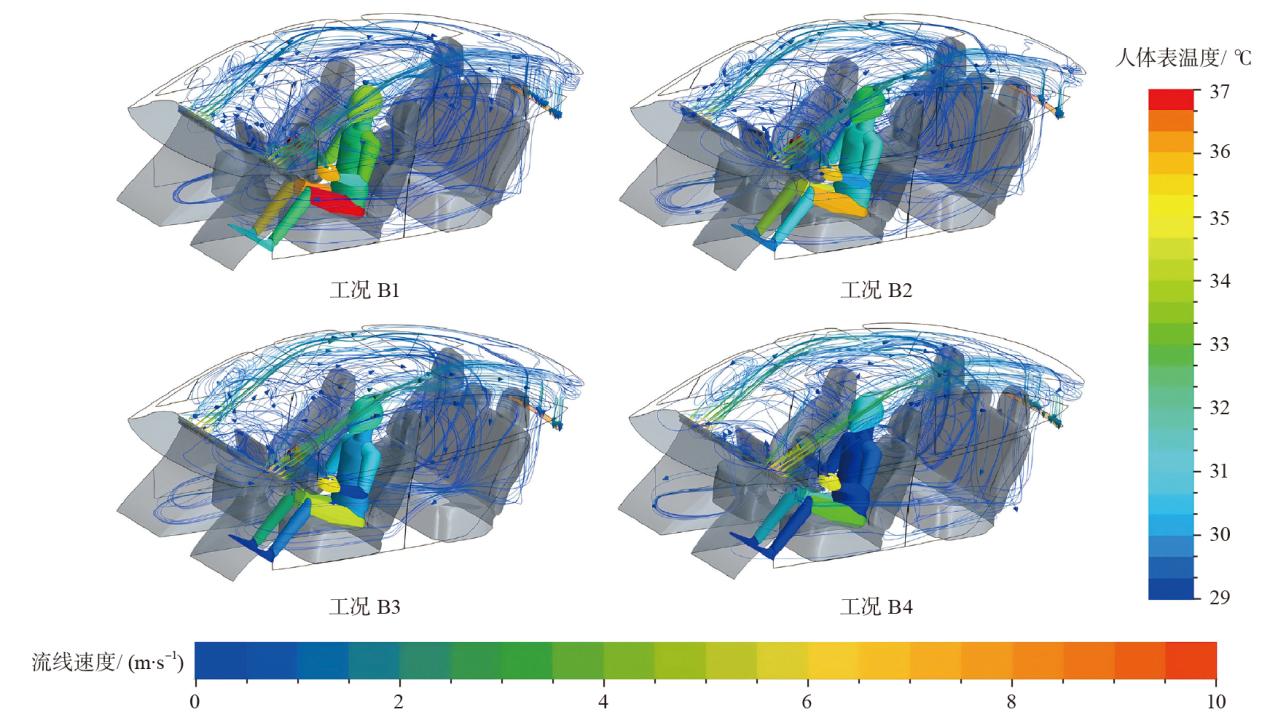
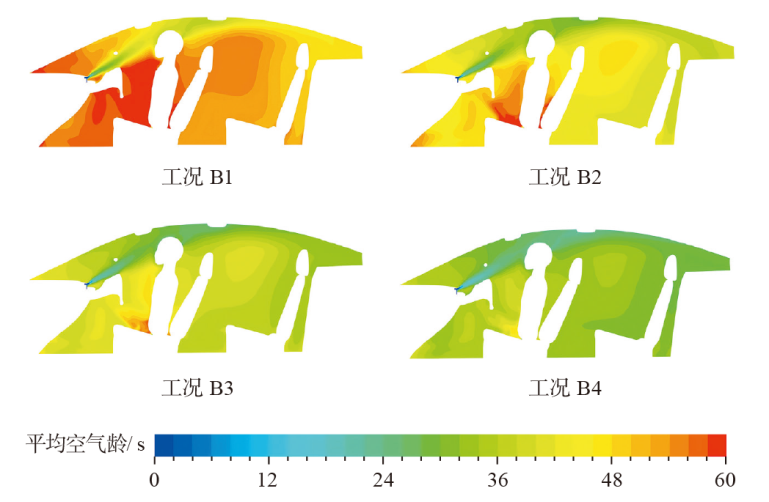
| B1 | 8 | 0.017 | 0.019 |
| B2 | 8 | 0.021 | 0.023 |
| B3 | 8 | 0.024 | 0.026 |
| B4 | 8 | 0.028 | 0.030 |
| 工况 | θ / ℃ | Q / (kg·s-1) | |
|---|---|---|---|
| #1和#2 | #3和#4 | ||
| A1 | 8 | 0.021 | 0.023 |
| A2 | 10 | 0.021 | 0.023 |
| A3 | 12 | 0.021 | 0.023 |
| A4 | 14 | 0.021 | 0.023 |
| B1 | 8 | 0.017 | 0.019 |
| B2 | 8 | 0.021 | 0.023 |
| B3 | 8 | 0.024 | 0.026 |
| B4 | 8 | 0.028 | 0.030 |
| 样本点 | D / mm | L / mm | W / mm | ηAEQT |
|---|---|---|---|---|
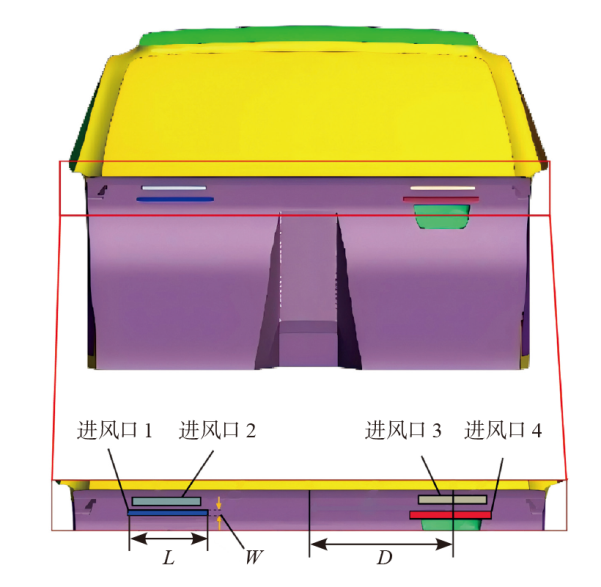
| 1 | 464.62 | 165.13 | 13.95 | 0.211 |
| 2 | 440 | 360 | 11.69 | 0.270 |
| 3 | 510.77 | 308.72 | 10.46 | 0.379 |
| 4 | 421.54 | 221.54 | 6.51 | 0.338 |
| 5 | 513.85 | 190.77 | 9.44 | 0.438 |
| 27 | 470.77 | 211.28 | 16 | 0.229 |
| 28 | 446.15 | 170.26 | 9.64 | 0.310 |
| 29 | 446.15 | 272.82 | 7.02 | 0.387 |
| 30 | 470.77 | 211.28 | 16 | 0.229 |
| 31 | 446.15 | 170.26 | 9.64 | 0.310 |
| 样本点 | D / mm | L / mm | W / mm | ηAEQT |
|---|---|---|---|---|
| 1 | 464.62 | 165.13 | 13.95 | 0.211 |
| 2 | 440 | 360 | 11.69 | 0.270 |
| 3 | 510.77 | 308.72 | 10.46 | 0.379 |
| 4 | 421.54 | 221.54 | 6.51 | 0.338 |
| 5 | 513.85 | 190.77 | 9.44 | 0.438 |
| 27 | 470.77 | 211.28 | 16 | 0.229 |
| 28 | 446.15 | 170.26 | 9.64 | 0.310 |
| 29 | 446.15 | 272.82 | 7.02 | 0.387 |
| 30 | 470.77 | 211.28 | 16 | 0.229 |
| 31 | 446.15 | 170.26 | 9.64 | 0.310 |
| 指标 | σθ | θmean / ℃ | Kθ / 10-3 | σv | vmean / (m·s-1) | Kv | |||||||||||
|---|---|---|---|---|---|---|---|---|---|---|---|---|---|---|---|---|---|
| 乘员舱 | 原始 | 优化 | 原始 | 优化 | 原始 | 优化 | 原始 | 优化 | 原始 | 优化 | 原始 | 优化 | |||||
| 主驾的XZ截面 | 2.011 | 1.845 | 298.7 | 298.7 | 6.7 | 6.2 | 0.599 | 0.660 | 0.647 | 0.732 | 0.93 | 0.90 | |||||
| XZ中间截面 | 2.254 | 1.904 | 298.1 | 299.3 | 7.6 | 6.4 | 0.784 | 0.700 | 0.927 | 0.790 | 1.18 | 1.13 | |||||
| 副驾驶XZ截面 | 1.395 | 1.377 | 298.9 | 298.1 | 7.5 | 5.5 | 0.749 | 0.770 | 0.877 | 0.820 | 1.17 | 1.07 | |||||
| 前排的YZ截面 | 1.928 | 1.373 | 298.9 | 298.5 | 6.5 | 4.6 | 0.613 | 0.753 | 0.664 | 0.721 | 1.08 | 0.96 | |||||
| 通过后排的YZ截面 | 1.335 | 1.130 | 297.9 | 298.1 | 4.5 | 3.8 | 0.680 | 0.697 | 0.459 | 0.489 | 0.68 | 0.70 | |||||
| 指标 | σθ | θmean / ℃ | Kθ / 10-3 | σv | vmean / (m·s-1) | Kv | |||||||||||
|---|---|---|---|---|---|---|---|---|---|---|---|---|---|---|---|---|---|
| 乘员舱 | 原始 | 优化 | 原始 | 优化 | 原始 | 优化 | 原始 | 优化 | 原始 | 优化 | 原始 | 优化 | |||||
| 主驾的XZ截面 | 2.011 | 1.845 | 298.7 | 298.7 | 6.7 | 6.2 | 0.599 | 0.660 | 0.647 | 0.732 | 0.93 | 0.90 | |||||
| XZ中间截面 | 2.254 | 1.904 | 298.1 | 299.3 | 7.6 | 6.4 | 0.784 | 0.700 | 0.927 | 0.790 | 1.18 | 1.13 | |||||
| 副驾驶XZ截面 | 1.395 | 1.377 | 298.9 | 298.1 | 7.5 | 5.5 | 0.749 | 0.770 | 0.877 | 0.820 | 1.17 | 1.07 | |||||
| 前排的YZ截面 | 1.928 | 1.373 | 298.9 | 298.5 | 6.5 | 4.6 | 0.613 | 0.753 | 0.664 | 0.721 | 1.08 | 0.96 | |||||
| 通过后排的YZ截面 | 1.335 | 1.130 | 297.9 | 298.1 | 4.5 | 3.8 | 0.680 | 0.697 | 0.459 | 0.489 | 0.68 | 0.70 | |||||

| [1] | Wan W J, Kooi J V D. Influence of the position of supply and exhaust openings on comfort in a passenger vehicle[J]. Int’l J Vehi Desi, 1991, 12(5/6): 588-597. |
| [2] | Lin C-H, Han T, Koromilas C A. Effects of HVAC design parameters on passenger thermal comfort[C]// Int’l Cong Expo, SAE Tech Paper Ser. Warrendale, PA, USA: SAE International, 1992. |
| [3] | 李亭墨. 某载货汽车驾驶室内流场气动特性分析[D]. 长春: 吉林大学, 2007. |
| LI Tingmo. Analysis of aerodynamic characteristics of the flow field in the cab of a truck[D]. Changchun: Jilin University, 2007. (in Chinese) | |
| [4] | 王靖宇, 胡兴军, 李亭墨. 送风口对驾驶室内流场气动特性的影响[J]. 重庆理工大学学报(自然科学版), 2010, 24(7): 7-11. |
| WANG Jingyu, HU Xingjun, LI Tingmo. The influence of air supply outlets on the aerodynamic characteristics of the flow field in the cab[J]. J Chongqing Univ Tech (Nat Sci Edit), 2010, 24(7): 7-11. (in Chinese) | |
| [5] | 李亮. 制冷工况下某轿车乘员舱热舒适性分析与优化[D]. 重庆: 重庆理工大学, 2021. |
| LI Liang. Analysis and optimization of thermal comfort in the passenger cabin of a certain car under refrigeration conditions[D]. Chongqing: Chongqing University of Technology, 2021. (in Chinese) | |
| [6] | Nielsen P V. Numerical prediction of air distribution in rooms-status and potentials. building system: Room air and air contaminant distributions[J]. ASHRAE J, 1988(5). |
| [7] | 薛铁龙. 某轿车乘员舱内环境舒适性评价与分析研究[D]. 合肥: 合肥工业大学, 2015. |
| XUE Tielong. Research on comfort evaluation and analysis of passenger cabin environment in a certain car[D]. Hefei: Hefei University of Technology, 2015. (in Chinese) | |
| [8] | 邓昱, 霍为炜, 成亚仙, 等. 电动汽车冬季乘员舱热环境分析[J]. 机械设计与制造, 2023(1): 91-95, 100. |
| DENG Yu, HUO Weiwei, CHENG Yaxian, et al. Analysis of thermal environment in winter passenger cabin of electric vehicles[J]. Mech Desig Manuf, 2023(1): 91-95, 100. (in Chinese) | |
| [9] | HUANG Wencai, HU Guangdi, University S J. Numerical simulation analysis of chamber airflow based on different air return position of car[J]. Comput Simul, 2018(12): 105-110, 126. |
| [10] | Fanger P O. Thermal Comfort Analysis and Applications in Environmental Engineering[M]. New York, McGraw-Hill, 1970: 224. |
| [11] | ZHOU Xiaojie, LAI Dayi, CHEN Qingyan. Thermal sensation model for driver in a passenger car with changing solar radiation[J]. Build Environ, 2020, 183: 107-123. |
| [12] | 李明, 李明高, 高峰, 等. STAR-CCM+与流场计算[M]. 北京: 机械工业出版社, 2011: 271. |
| LI Ming, LI Minggao, GAO Feng, et al. STAR-CCM+ Flow Field Calculation[M]. Beijing: Machinery Industry Press, 2011: 271. (in Chinese) | |
| [13] | 中国汽车工程协会. T/CSAE145-2020: 汽车空调系统最大降温性能试验规范[S]. 中国汽车工程学会, 2020. |
| China Society of Automotive Engineers. T/CSAE 145-2020: Test specification for maximum cooling performance of automotive air conditioning systems[S]. China Society of Automotive Engineers, 2020. (in Chinese) | |
| [14] | Sandberg M. What is ventilation efficiency[J]. Build Environ, 1981, 16(2): 123-135. |
| [15] | 吕鸿斌. 车辆乘员舱热舒适性与节能边际效用分析[D]. 上海: 上海交通大学, 2019. |
| Lü Hongbin. Analysis of thermal comfort and energy-saving marginal utility in vehicle passenger compartments[D]. Shanghai: Shanghai Jiao Tong University, 2019. (in Chinese) | |
| [16] | 李双双. 某型轿车车室内流场数值模拟分析[D]. 荆州: 长江大学, 2020. |
| LI Shuangshuang. Numerical simulation and analysis of interior flow field in a certain passenger car[D]. Jingzhou: Yangtze University, 2020. (in Chinese) | |
| [17] | 赵彬. 汽车发动机舱内流阻力与散热性能的协同优化[D]. 重庆: 重庆理工大学, 2020. |
| ZHAO Bing. Collaborative optimization of flow resistance and heat dissipation performance in automotive engine compartment[D]. Chongqing: Chongqing University of Technology, 2020. (in Chinese) | |
| [18] | CHEN Hong, Ooka R, Kato S. Study on optimum design method for pleasant outdoor thermal environment using genetic algorithms (GA) and coupled simulation of convection, radiation and conduction[J]. Build Environ, 2008, 43(1): 18-30. |
| [19] |
曾小华, 王振伟, 宋大凤. 基于多岛遗传算法的功率分流式双模混合动力客车参数优化[J]. 机械工程学报, 2020, 56(2): 98-105.
doi: 10.3901/JME.2020.02.098 |
| ZENG Xiaohua, WANG Zhenwei, Song Dafeng. Parameter optimization of power split dual-mode hybrid electric bus based on multi island genetic algorithm[J]. J Mech Engi, 2020, 56(2): 98-105. (in Chinese) |
| [1] | LIN Hongxia, WU Jinmo, SONG Yuhan, LIN Xiaoyong, ZHOU Fan, JI Xiaobo. Thermal comfort experimental study of non-uniform vehicle environment in chilly freezing and snowstorm [J]. Journal of Automotive Safety and Energy, 2022, 13(4): 625-633. |
| [2] | WANG Fuliang. Evaluation of the influences of pressure relief valve on the ventilation air flow and pressure in a passenger cabin [J]. Journal of Automotive Safety and Energy, 2020, 11(3): 322-328. |
| Viewed | ||||||
|
Full text |
|
|||||
|
Abstract |
|
|||||
