Welcome to Journal of Automotive Safety and Energy,

Journal of Automotive Safety and Energy ›› 2020, Vol. 11 ›› Issue (4): 444-453.DOI: 10.3969/j.issn.1674-8484.2020.04.003
• Automotive Safety • Previous Articles Next Articles
HAN Yong1,2( ), LÜ Chuncheng1(), TANG Bin1, HUANG Hongwu1, LUO Jiesi1, YU Yi1
Received:2020-07-20
Online:2020-12-30
Published:2021-01-04
CLC Number:
HAN Yong, LÜ Chuncheng, TANG Bin, HUANG Hongwu, LUO Jiesi, YU Yi. Injury and protection of child occupants in small overlap impact by booster CRS[J]. Journal of Automotive Safety and Energy, 2020, 11(4): 444-453.
Add to citation manager EndNote|Ris|BibTeX
URL: https://www.journalase.com/EN/10.3969/j.issn.1674-8484.2020.04.003
| 关键字 | 含义 | 参数值 |
|---|---|---|
| SBRID | 限力器ID | 1 |
| SBID | 第一个伸出限力器的安全带单元ID | 89 804 591 |
| SID | 传感器(用于触发限力器工作) ID | 1 |
| TDEL | 传感器触发后的时间延迟 | 5 ms |
| PULL | 延迟阶段,安全带伸出限力器的长度 | 10 mm |
| LLCID | 限力器的加载曲线ID | 1 |
| ULCID | 限力器的卸载曲线ID | 2 |
| LFED | 防止安全带初始松弛而吸入限力器 内部的安全带长度 | 12 mm |
| 关键字 | 含义 | 参数值 |
|---|---|---|
| SBRID | 限力器ID | 1 |
| SBID | 第一个伸出限力器的安全带单元ID | 89 804 591 |
| SID | 传感器(用于触发限力器工作) ID | 1 |
| TDEL | 传感器触发后的时间延迟 | 5 ms |
| PULL | 延迟阶段,安全带伸出限力器的长度 | 10 mm |
| LLCID | 限力器的加载曲线ID | 1 |
| ULCID | 限力器的卸载曲线ID | 2 |
| LFED | 防止安全带初始松弛而吸入限力器 内部的安全带长度 | 12 mm |
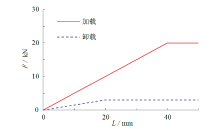
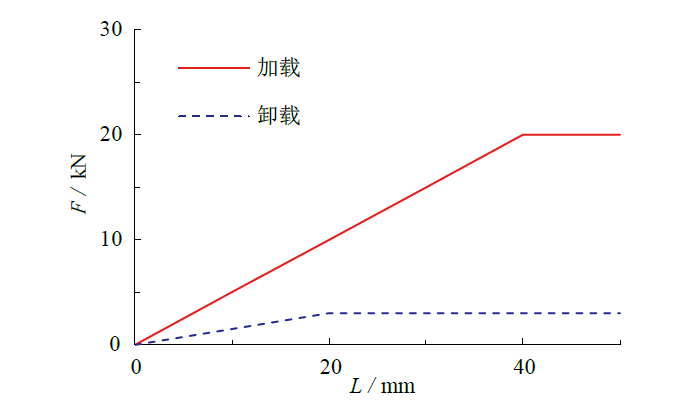
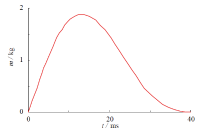
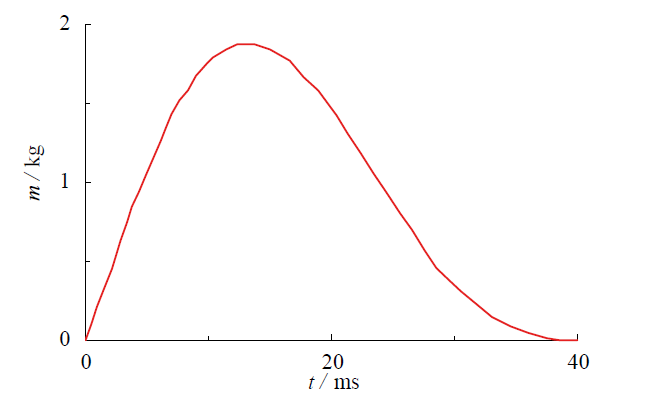
| 关键字 | 含义 | 参数值 |
|---|---|---|
| VSCA | 体积缩放系数 | 1 |
| PSCA | 压力缩放系数 | 1 |
| VINI | 初始体积 | 0 |
| MWD | 质量阻尼系数 | 0 |
| SPSF | 滞点压力系数 | 0 |
| CV | 定容热容量 | 1.700 MJ·(kg·K)-1 |
| CP | 定压热容量 | 10.04 MJ·(kg·K)-1 |
| T | 气体温度 | 300 ℃ |
| LCID | 充气速率曲线 | 2 |
| MU | 泄气孔形状系数 | 0.7 |
| PE | 环境压力 | 100 kPa |
| RO | 环境密度 | 1.20 mg·m-3 |
| 关键字 | 含义 | 参数值 |
|---|---|---|
| VSCA | 体积缩放系数 | 1 |
| PSCA | 压力缩放系数 | 1 |
| VINI | 初始体积 | 0 |
| MWD | 质量阻尼系数 | 0 |
| SPSF | 滞点压力系数 | 0 |
| CV | 定容热容量 | 1.700 MJ·(kg·K)-1 |
| CP | 定压热容量 | 10.04 MJ·(kg·K)-1 |
| T | 气体温度 | 300 ℃ |
| LCID | 充气速率曲线 | 2 |
| MU | 泄气孔形状系数 | 0.7 |
| PE | 环境压力 | 100 kPa |
| RO | 环境密度 | 1.20 mg·m-3 |
| [1] | World Health Organization. Global status report on road safety 2018: Summary[EB/OL]. WHO, 2018.(2020-08-01). https://www.who.int/violence injury prevention/road safety status/2018/en/. |
| [2] |
Berfenstam R. Sweden’s pioneering child accident programme: 40 years later[J]. Injury Prevention, 1995, 1(2):68-69.
doi: 10.1136/ip.1.2.68 URL pmid: 9345997 |
| [3] | Sehti D, Racioppi F, Towner E, et al. European report on child injury prevention[J]. Euro Report Child Injury Prevention, 2008,16(1):5-6. |
| [4] | Pintar F A, Yoganandan N, Maiman D J. et al. Injury mechanisms and severity in narrow offset frontal impacts[C]// Anna Adva Automotive Medi /Ann Sci Conf. Asso Adva Automotive Med, 2008,52:185. |
| [5] | Hallman J J, Yoganandan N, Pintar F A, et al. Injury differences between small and large overlap frontal crashes[C]// Anna Adva Automotive Medi /Ann Sci Conf. Asso Adva Automotive Med, 2011,55:147. |
| [6] | 曹立波, 胡渊, 颜凌波, 等. 基于E-NCAP的6岁儿童乘员损伤防护研究[J]. 汽车工程, 2017,39(2):174-180. |
| CAO Libo, HU Yuan, YAN Lingbo, et al. A study on injury protection of 6 years old child occupant based on E-NCAP[J]. Automotive Engineering, 2017,39(2):174-180. (in Chinese) | |
| [7] | 曹立波, 林诗远, 颜凌波, 等. 基于E-NCAP的10岁儿童损伤防护研究[J]. 汽车工程, 2017,39(6):653-660. |
| CAO Libo, LIN Shiyuan, YAN Lingbo, et al. A study on injury protection of 10 years old child occupant based on E-NCAP[J]. Automotive Engineering, 2017,39(6):653-660. (in Chinese) | |
| [8] | HU Jia, WANG Dazhi, Mellor M, et al. Safety performance comparisons of different types of child seats in high speed impact tests[C]// 2011 ESV Conference, SAIC Motor China 2011: 11-53. |
| [9] | 李海岩, 李健, 贺丽娟, 等. 约束系统误用对 6 岁儿童乘员头颈部损伤的影响[J]. 医用生物力学, 2020,35(2):143-149. |
| LI Haiyan, LI Jian, CUI Shihai, et al. The effect on head-neck injuries of six-year-old child occupant by misusing the restraint system[J]. J Medi Biomechanics, 2020,35(2):143-149. (in Chinese) | |
| [10] | 韩勇, 谢金萍, 卢晓萍, 等 . 基于 DOE 的儿童乘员约束系统约束路径优化[J]. 汽车安全与节能学报, 2015,6(3):230-236. |
| HAN Yong, XIE Jingping, LU Xiaoping, et al. Parameter optimization of CRS’ seatbelt constraint paths based on design-of-experiment (DOE)[J]. J Automotive Safety Energy, 2015,6(3):230-236. (in Chinese) | |
| [11] | 韩勇, 卢晓萍, 谢金萍, 等. 在 ECE R129 实验条件下 Q3 和 THUMS 3YO 有限元模型的响应差异分析[J]. 汽车安全与节能学报, 2016,7(3):291-298. |
| HAN Yong, LU Xiaoping, XIE Jinping, et al. Comparison of different response between Q3 and THUMS 3YO finite element models under ECE R129 test[J]. J Automotive Safety Energy, 2016,7(3):291-298. (in Chinese) | |
| [12] | 韩勇, 唐慧聪, 田丰翼, 等. 不同约束载荷下三岁儿童乘员胸部运动方程与损伤风险研究[J]. 振动与冲击, 2020,39(1):216-222. |
| HAN Yong, TANG Huicong, TIAN Fengyi, et al. Chest motion equation and injury risk of a 3-year-old child under different constrained loads[J]. J Vibration Shock, 2020,39(1):216-222. (in Chinese) | |
| [13] | Insurance Institute for Highway Safety. Small overlap frontal crashworthiness evaluation crash test protocol (Version V) [EB/OL]. Ruckersville VA: IIHS, (2016-05-17). http://www.iihs.org/ |
| [14] | Marzougui D, Samaha R R, CUI Chongzhen, et al. Extended validation of the finite element model for the 2001 ford taurus passenger sedan[R]. 2012-W-004, National Crash Analysis Center, George Washington University, Washington, DC, USA, 2012. http://www.ncac.gwu.edu/vml/archive/ncac/vehicle/Website/TaurusBL/NCAC-2012-W-004.pdf. |
| [15] | Toyota Motor Corporation. Total Human Model for Safety (THUMS), 6YO Pedestrian /Occupant Model [EB/OL]. [2016-01-01]. http://www.lstc.com/thums. |
| [16] | OUYANG Jun, ZHAO Weidong, XU Yongqing, et al. Thoracic impact testing of pediatric cadaveric subjects[J]. J Trauma-Injury Infection and Critical Care, 2006, 61(6):1492-1500. |
| [17] | Loyd A M. Studies of the human head from neonate to adult: an inertial, geometrical and structural analysis with comparisons to the ATD head [D]. Duke University, Durham, NC, USA:Department of Biomedical Engineering, 2011. |
| [18] | 韩勇, 彭乐园, 潘迪, 等. 基于仿真和动物试验的 3 岁儿童胸腹部软组织器官损伤风险研究[J]. 机械工程学报, 2019,55(18):132-141. (in chinese) |
| HAN Yong, PENG Leyuan, PAN Di, et al. Soft tissue injury risk in chest and abdomen of 3YO child based on simulation and animal experiments[J]. J Mech Engi, 2019,55(18):132-141. (in chinese) | |
| [19] | Hooijdonk van P A, Tijssens M G A. Development and application of a child restraint system model for safety performance assessment[EB/OL]. TASS Report, [2012-10-30]. https://www.britax-roemer.com/car-seats/highback-boosters/kidfix-iii-s/9018.html. |
| [20] | 唐亮, 吴滔滔, 周青, 等. 儿童乘员伤害指标及下潜趋势的影响因素[J]. 华南理工大学学报: 自然科学版, 2012,40(7):46-50. |
| TANG Liang, WU Taotao, ZHOU Qing, et al. Factors influencing injury risk and submarining tendency of child occupant[J]. J South China Univ of Tech: Nat Sci Ed, 2012,40(7):46-50. (in Chinese) | |
| [21] | Baumgartner D, Willinger R, Shewchenko N, et al. Tolerance limits for mild traumatic brain injury derived from numerical head impact replication[C]// Proc 2001 Int’l IRCOBI Conf Biomec Impacts. 2001: 353-355. |
| [22] | LYU Wenle, RUAN Shijie, LI Haiyan, et al. Development and validation of a 6-year-old pedestrian thorax and abdomen finite element model and impact injury analysis[J]. Int’l J Vehi Safety, 2015, 8(4):339-356. |
| [23] | Yamada H, Evans F G. Strength of biological materials[J]. Baltimore: The Williams & Wilkins 1970: 246-248. |
| [24] | Gayzik F S, Francis S. Development of a finite element based injury metric for pulmonary contusion[D]. Winston-Salem, North Carolina: Wake Forest University, 2008. |
| [25] | Bohman K, Boström O, Olsson J, et al. The effect of a pretensioner and a load limiter on a HIII 6y, seated on four different types of booster cushions in frontal impacts[C]// International IRCOBI Conference, Madrid, Spain. 2006: 377-380. |
| [26] | Sundararajan S, Rouhana S W, Board D, et al. Biomechanical assessment of a rear-seat inflatable seatbelt in frontal impacts[R]. SAE Tech Paper, No. 2011-22-0008, 2011. |
| [27] | 王玉超, 亓向翠, 杨荣山, 等. 基于LS-DYNA 正面台车试验的有限元仿真[J]. 汽车技术, 2013(7):39-44. |
| WANG Yuchao, QI Xiangcui, YANG Rongshan, et al. FE Simulation of frontal crash sled test based on LS-DYNA[J]. Automobile Tech, 2013(7):39-44. (in Chinese) | |
| [28] | 袁立明. 汽车驾驶员安全气囊静态爆破仿真与试验研究[D]. 长春: 长春工业大学, 2016. |
| YUAN Liming. Simulation and experimental research on static deployment of vehicle driver airbag[D]. Changchun: Changchun University of Technology, 2016. (in Chinese) |
| [1] | DENG Gongxun, CAI Yani, LEI Feibing, LIU Hengjin, QI Lulin, FAN Yubo. Effect of vehicle crash severity and advanced restraint system parameters on occupant injuries [J]. Journal of Automotive Safety and Energy, 2025, 16(5): 698-706. |
| [2] | WANG Wenjie, SUN Yi, LIU Zhao, ZHU Ping. Optimization design for automobile ORSs based on composite deep Gaussian process regression network [J]. Journal of Automotive Safety and Energy, 2025, 16(3): 367-375. |
| [3] | WANG Juchuang, CAO Qinglin, QIU Rui, SONG Liuwei, GUO Ping'an, ZHAO Gang. Prediction of battery-module damage in electric-vehicle side-collisions [J]. Journal of Automotive Safety and Energy, 2024, 15(2): 169-177. |
| [4] | TANG Youming, XIE Xiangjian, SUN Guibin, WANG Ping, ZHANG Yi, SUN Guanyu. Effect of increasing age on injury risk in elderly male occupant [J]. Journal of Automotive Safety and Energy, 2023, 14(4): 413-420. |
| [5] | XU Zhe, GAO Guanyu, LIU Cancan, LOU Lei. Multi-point intrusion side impact method for the child restraint system and dummy injury [J]. Journal of Automotive Safety and Energy, 2023, 14(1): 38-45. |
| [6] | CAO Libo, ZHANG Chao,YAN Lingbo, DAI Hongliang, ZHANG Ruifeng. Analysis of the optimization trend of restraint system in two car oblique crash [J]. Journal Of Automotive Safety And Energy, 2019, 10(3): 308-316. |
| [7] | XIAO Lingyun,Shaopeng, DONG Honglei, ZHOU Yong, ZHAO Dapeng, HU Wenhao, ZHANG Jinhuan. Children's safety seats recall and the assessment of ease of use in China and the US [J]. Journal Of Automotive Safety And Energy, 2018, 9(2): 131-140. |
| [8] | ZHOU Qing, JI Peijun, HUANG Yi, et al. Challenges and opportunities of smart occupant protection against motor vehicle collision accidents in future traffic environment [J]. Journal Of Automotive Safety And Energy, 2017, 08(04): 333-350. |
| [9] | HU Jingwen. Rear Seat Occupant Protection: What Do We Know and What is the Future? [J]. Journal Of Automotive Safety And Energy, 2016, 07(04): 339-354. |
| [10] | TANG Youming, LIU Na, SONG Mingyang. Injury analysis on co-driver of sport utility vehicle in frontal impact [J]. Journal Of Automotive Safety And Energy, 2016, 07(04): 390-394. |
| [11] | HAN Yong, LU Xiaoping, XIE Jinping, WANG Fang, HUANG Hongwu, MIZUNO Koji. Comparison of different response between Q3 and THUMS 3YO finite element models under ECE R129 test conditions [J]. Journal Of Automotive Safety And Energy, 2016, 07(03): 291-298. |
| [12] | ZHANG Jinhuan, LI Hao, ZHOU Yong, FU Hailong, HUANG Yang, XIAO Lingyun, HU Wenhao, DONG Honglei. Effects of abdomen block stiffness on female occupant injuries and submarining trend [J]. Journal of Automotive Safety and Energy, 2015, 6(04): 360-364. |
| [13] | . Application of the occupant injury investigation in frontal crash based on THUMS model [J]. Journal of Automotive Safety and Energy, 2015, 6(04): 379-383. |
| [14] | HAN Yong, XIE Jingping, LU Xiaoping, WANG Fang, HUANG Hongwu, MIZUNO Koji. Parameter optimization of CRS' seatbelt constraint paths based on design-of-experiment (DOE) [J]. Journal Of Automotive Safety And Energy, 2015, 6(03): 230-236. |
| [15] | . Lateral impact sled test system for child restraint system based on ECE R129 [J]. Journal Of Automotive Safety And Energy, 2015, 6(03): 237-244. |
| Viewed | ||||||
|
Full text |
|
|||||
|
Abstract |
|
|||||
