欢迎访问《汽车安全与节能学报》,

汽车安全与节能学报 ›› 2026, Vol. 17 ›› Issue (5): 588-598.DOI: 10.3969/j.issn.1674-8484.2026.05.008
涂佳豪( ), 蔺铖铖, 张元皓, 聂少鹏, 杨炜*()
收稿日期:2026-04-28
修回日期:2026-07-06
出版日期:2026-10-31
发布日期:2026-11-08
通讯作者:
*杨炜,讲师。E-mail:yw@chd.edu.cn。
作者简介:涂佳豪(2002—),男(汉),江西,硕士研究生。E-mail:tjh10242834@163.com。
基金资助:
TU Jiahao(), LIN Chengcheng, ZHANG Yuanhao, NIE Shaopeng, YANG Wei*()
Received:2026-04-28
Revised:2026-07-06
Online:2026-10-31
Published:2026-11-08
摘要:
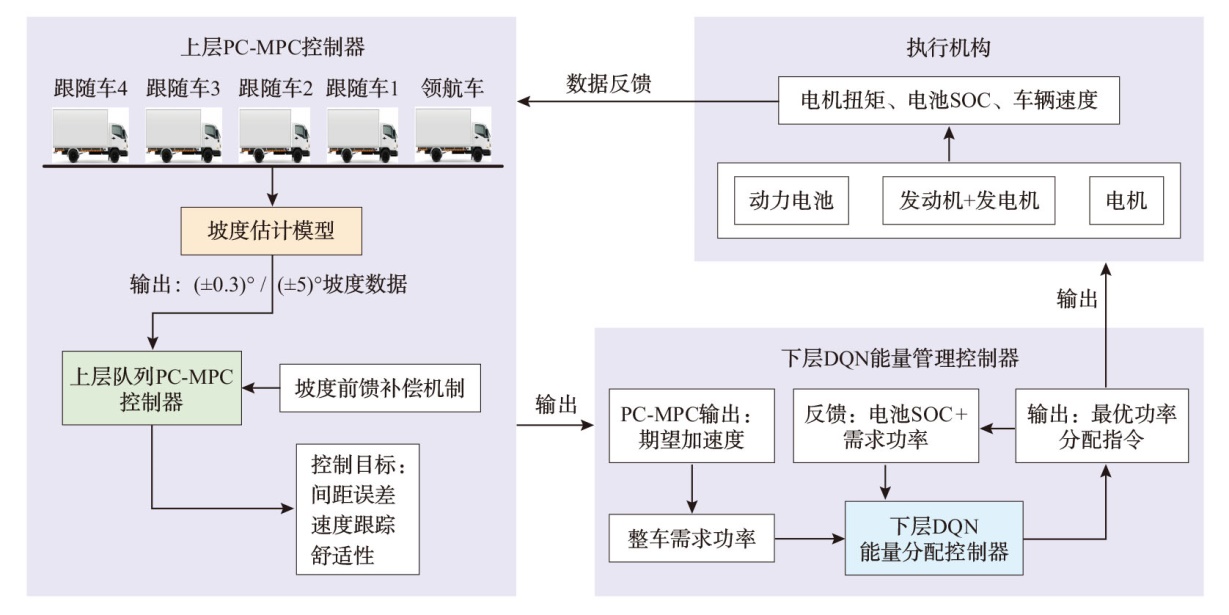
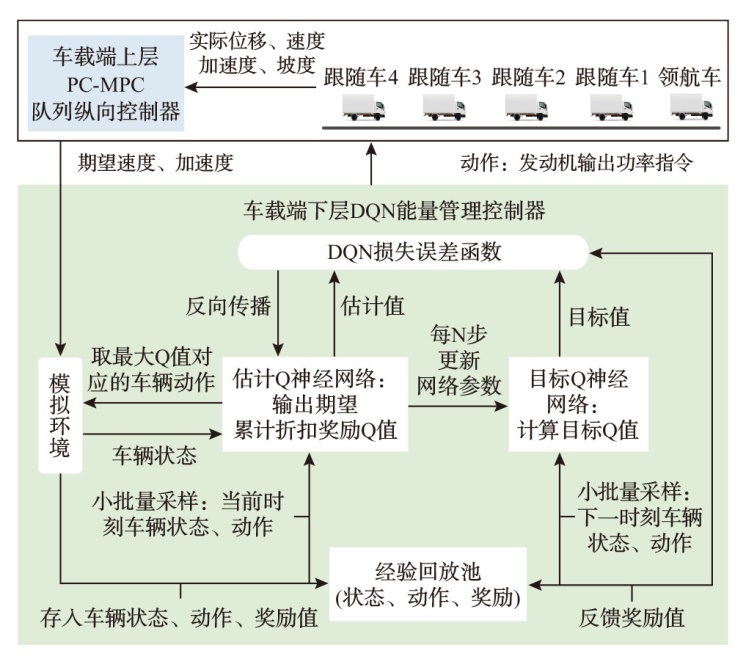
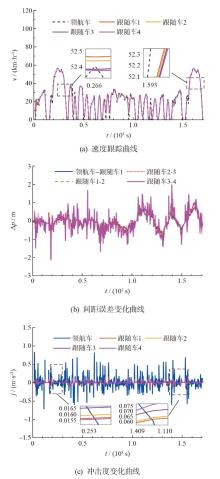
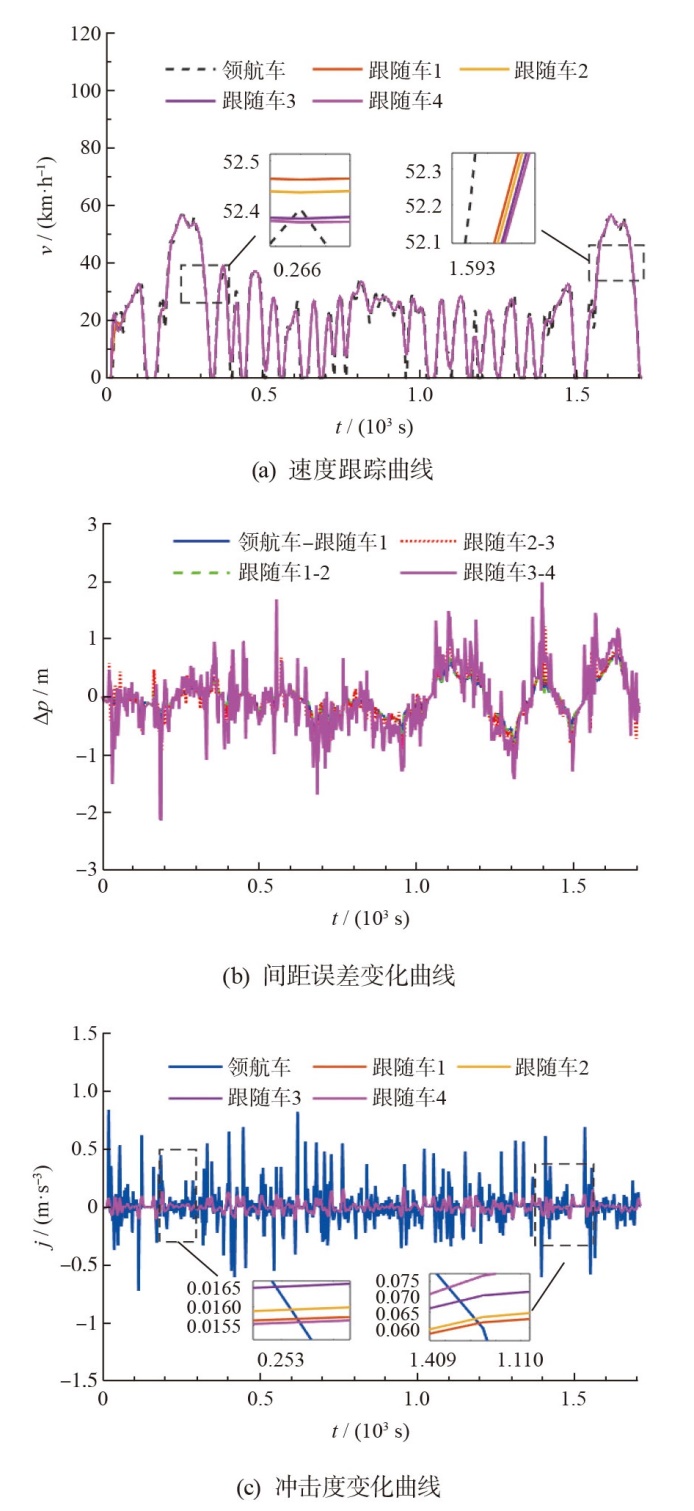
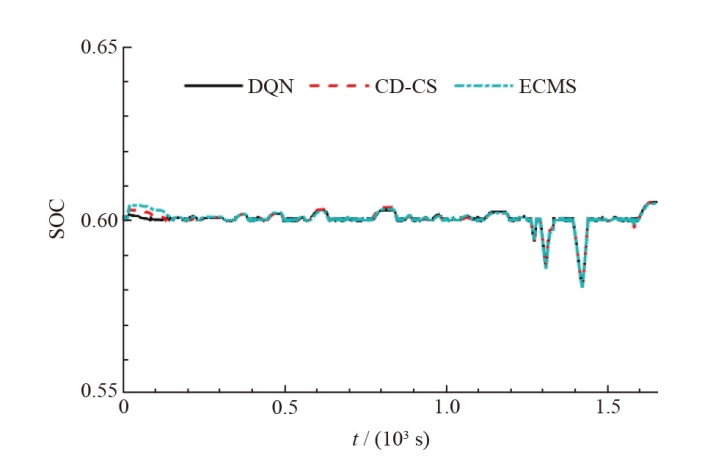
针对坡度扰动下混动商用车队缺乏动力需求与能量分配协同控制的问题,提出一种闭环分层协同控制策略。构建自适应扩展 Kalman 滤波(AEKF)模型实现坡度估计,并将估计坡度作为时变扰动引入上层预见补偿模型预测控制器(PC-MPC),实现纵向补偿控制;基于深度 Q 网络(DQN)建立下层能量管理模型,根据上层输出的期望加速度,实现动态功率分配,并将实际纵向动力响应反馈至上层形成闭环。仿真结果表明:相比于单一 GPS 与运动学估计方法,AEKF 模型在(±0.3)°坡度下的均方根误差( RMSE)分别降低约 35.9%、20.0%,在(±5)°坡度下分别降低约 1 0.4%、11.4%。相较于传统电量消耗-电量维持(CD-CS)与等效燃油消耗最小(ECMS)策略,DQN 平均燃油消耗分别降低约10%、8%。该闭环分层协同策略能够实现车辆纵向稳定性与能量经济性的协同控制。
中图分类号:
涂佳豪, 蔺铖铖, 张元皓, 聂少鹏, 杨炜. 坡度环境下基于PC-MPC和DQN的混动商用车队列分层控制[J]. 汽车安全与节能学报, 2026, 17(5): 588-598.
TU Jiahao, LIN Chengcheng, ZHANG Yuanhao, NIE Shaopeng, YANG Wei. Hierarchical control of hybrid commercial vehicle platoon based on PC-MPC and DQN under road-grade conditions[J]. Journal of Automotive Safety and Energy, 2026, 17(5): 588-598.
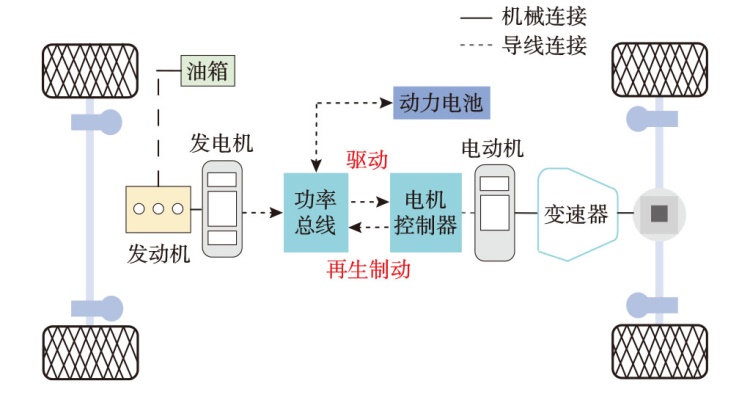
| 整车质量,m / kg | 3 895 |
| 发动机最大功率,pe / kW | 100 |
| 发动机最大扭矩,Te / Nm | 300 |
| 发电机最大功率,pg / kW | 80 |
| 发电机最大扭矩,Tg / Nm | 250 |
| 电池容量,Qb / Ah | 30 |
| 变速比,ig | 0.90 |
| 主减速器比,i0 | 4.33 |
| 电机最大功率,pm / kW | 70 |
| 电机最大扭矩,Tm / Nm | 300 |
| 发动机-发电机传动比,ηg | 1∶1.15 |
| 整车质量,m / kg | 3 895 |
| 发动机最大功率,pe / kW | 100 |
| 发动机最大扭矩,Te / Nm | 300 |
| 发电机最大功率,pg / kW | 80 |
| 发电机最大扭矩,Tg / Nm | 250 |
| 电池容量,Qb / Ah | 30 |
| 变速比,ig | 0.90 |
| 主减速器比,i0 | 4.33 |
| 电机最大功率,pm / kW | 70 |
| 电机最大扭矩,Tm / Nm | 300 |
| 发动机-发电机传动比,ηg | 1∶1.15 |
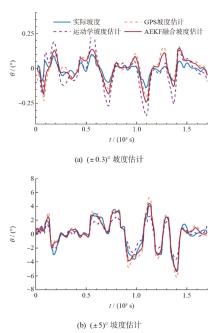
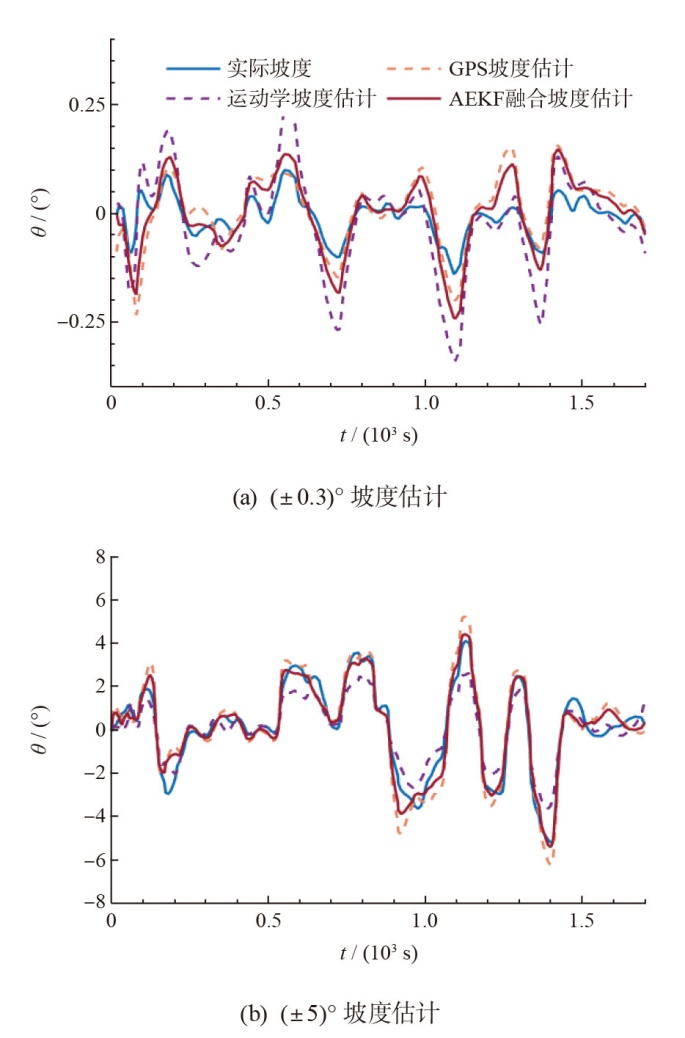
| 方法 | (±0.3)°坡度工况 | (±5)°坡度工况 | |||||
|---|---|---|---|---|---|---|---|
| RMSE | MAE | MaxAE | RMSE | MAE | MaxAE | ||
| GPS | 0.062 4 | 0.045 4 | 0.244 0 | 0.693 2 | 0.534 8 | 2.195 1 | |
| 运动学 | 0.050 0 | 0.037 3 | 0.202 2 | 0.701 0 | 0.528 9 | 2.038 0 | |
| AEKF | 0.040 0 | 0.031 2 | 0.171 7 | 0.621 1 | 0.488 7 | 1.612 6 | |
| 方法 | (±0.3)°坡度工况 | (±5)°坡度工况 | |||||
|---|---|---|---|---|---|---|---|
| RMSE | MAE | MaxAE | RMSE | MAE | MaxAE | ||
| GPS | 0.062 4 | 0.045 4 | 0.244 0 | 0.693 2 | 0.534 8 | 2.195 1 | |
| 运动学 | 0.050 0 | 0.037 3 | 0.202 2 | 0.701 0 | 0.528 9 | 2.038 0 | |
| AEKF | 0.040 0 | 0.031 2 | 0.171 7 | 0.621 1 | 0.488 7 | 1.612 6 | |
| 车辆 | 油耗/ kg | 时间/ s | |||||
|---|---|---|---|---|---|---|---|
| DQN | ECMS | CD-CS | DQN | ECMS | CD-CS | ||
| 跟随车1 | 1.352 | 1.476 | 1.498 | 24.12 | 341.7 | 20.48 | |
| 跟随车2 | 1.347 | 1.475 | 1.512 | 23.22 | 341.4 | 19.45 | |
| 跟随车3 | 1.346 | 1.480 | 1.510 | 23.37 | 344.8 | 20.33 | |
| 跟随车4 | 1.345 | 1.481 | 1.512 | 23.16 | 341.1 | 20.38 | |
| 车辆 | 油耗/ kg | 时间/ s | |||||
|---|---|---|---|---|---|---|---|
| DQN | ECMS | CD-CS | DQN | ECMS | CD-CS | ||
| 跟随车1 | 1.352 | 1.476 | 1.498 | 24.12 | 341.7 | 20.48 | |
| 跟随车2 | 1.347 | 1.475 | 1.512 | 23.22 | 341.4 | 19.45 | |
| 跟随车3 | 1.346 | 1.480 | 1.510 | 23.37 | 344.8 | 20.33 | |
| 跟随车4 | 1.345 | 1.481 | 1.512 | 23.16 | 341.1 | 20.38 | |
| [1] |
解少博, 张思雨, 史珊珊, 等. 典型工况构建方法对新能源汽车能耗评价的影响分析[J]. 中国公路学报, 2022, 35(9): 361-371.
doi: 10.19721/j.cnki.1001-7372.2022.09.029 |
| XIE Shaobo, ZHANG Siyu, SHI Shanshan, et al. Analysis of the influence of typical working condition construction method on energy consumption evaluation of new energy vehicles[J]. China J Highw Transport, 2022, 35(9): 361-371. (in Chinese) | |
| [2] | 李丞, 仇昕, 朱仲文, 等. 基于双层预测和工况识别的燃料电池汽车自适应能量管理策略[J]. 机械工程学报, 2026, 62(10): 325-337. |
| LI Cheng, QIU Xin, ZHU Zhongwen, et al. Adaptive energy management strategy for fuel cell vehicles based on two-layer prediction and working condition identification[J]. China J Mech Engi, 2026, 62(10): 325-337. (in Chinese) | |
| [3] | WANG Ying. Intelligent energy management and operation efficiency of electric vehicles based on artificial intelligence algorithms and thermal energy optimization[J]. Therm Sci Engi Prog, 2024, 55: 102900. |
| [4] | PAN Mingzhang, CAO Sheng, ZHANG Zhiqing, et al. Recent progress on energy management strategies for hybrid electric vehicles[J]. J Energ Stor, 2025, 116: 115936. |
| [5] |
《中国公路学报》编辑部. 中国汽车工程学术研究综述[J]. 中国公路学报, 2023, 36(11): 1-192.
doi: 10.19721/j.cnki.1001-7372.2023.11.001 |
| Editorial Department of China Journal of Highway Research. Review on China's automotive engineering research progress[J]. China J Highw Transport, 2023, 36(11): 1-192. (in Chinese) | |
| [6] | 周健豪, 赵旭东, 赵万忠, 等. 分体式飞行汽车氢-电混合动力能量管理策略[J]. 汽车工程, 2026, 48(4): 811-820. |
| ZHOU Jianhao, ZHAO Xudong, ZHAO Wanzhong, et al. Energy management strategy of hydrogen-electric hybrid for split flying car[J]. Autom Engineering, 2026, 48(4): 811-820. (in Chinese) | |
| [7] | Barcellona S, Barresi M, Noriega H, et al. Real time adaptive energy management strategy for electric vehicles with hybrid energy storage system[C]// IEEE Vehi Powe Propul Conf, Washington, DC, USA, 2024: 1-6. |
| [8] | WANG Fan, HONG Yina, ZHAO Xiaohuan. Research and comparative analysis of energy management strategies for hybrid electric vehicles: A review[J]. Energies, 2025, 18(11): 2873. |
| [9] | CHU Liang, LI Shi-bo, HU Jin-cheng, et al. A novel A-ECMS energy management strategy based on dragonfly algorithm for plug-in FCEVs[J]. Sensors, 2023, 23(3): 1192. |
| [10] | Piras M, Bellis V D, Malfi E, et al. Incorporating speed forecasting and SOC planning into predictive ECMS for heavy-duty fuel cell vehicles[J]. Int’l J Hydro Energ, 2024, 55: 1405-1421. |
| [11] | Reig A, Mancini G, Mazza F. Multi-stage ECMS consider-ing engine dynamics and start/stop strategy for real-time application in hybrid electric vehicles[J]. Int’l J Engi Res, 2026, 27(8): 1387-1396. |
| [12] | 梁民仓, 王胜正. 纯电动绿色船舶长航程航次规划与充换电策略[J]. 交通运输工程学报, 2024, 24(3): 266-278. |
| LIANG Mincang, WANG Shengzheng. Long-range voyage planning and charging and swapping strategy of pure electric green ships[J]. J Traf Transport Engi, 2024, 24(3): 266-278. (in Chinese) | |
| [13] | SHEN Zhen, LUO Can, DONG Xisong, et al. Two-level energy control strategy based on ADP and A-ECMS for series hybrid electric vehicles[J]. IEEE Trans Intel Transport Syst, 2022, 23(8): 13178-13189. |
| [14] | 谭孟骑, 邓涛, 马宝鹏. 基于DP的单行星排混合动力汽车MA-ECMS能量管理研究[J]. 重庆理工大学学报(自然科学), 2025, 39(6): 45-52. |
| TAN Mengqi, DENG Tao, MA Baopeng. Research on energy management of MA-ECMS for single-planetary hybrid vehicle based on DP[J]. J Chongqing Univ Tech (Nat Sci), 2025, 39(6): 45-52. (in Chinese) | |
| [15] | 席利贺, 张欣, 耿聪, 等. 基于动态规划算法的增程式电动汽车能量管理策略优化[J]. 交通运输工程学报, 2018, 18(3): 148-156. |
| XI Lihe, ZHANG Xin, GENG Cong, et al. Optimization of energy management strategy of extended-range electric vehicle based on dynamic programming algorithm[J]. J Traf Transport Engi, 2018, 18(3): 148-156. (in Chinese) | |
| [16] | Amodu O A, Mahmood R A R, Althumali H, et al. A question-centric review on DRL-based optimization for UAV-assisted MEC sensor and IoT applications, challenges, and future directions[J]. Vehi Comm, 2025, 53: 100899. |
| [17] | Sumiea E H, Abdulkadir S J, Alhussian H S, et al. Deep deterministic policy gradient algorithm: a systematic review[J]. Heliyon, 2024, 10(9): e30697. |
| [18] | 曹延旭, 魏中宝, 宋若旸, 等. 基于深度强化学习的跟驰场景中燃料电池混合动力汽车多目标能量管理研究[J]. 机械工程学报, 2025, 61(12): 191-203. |
| CAO Yanxu, WEI Zhongbao, SONG Ruoyang, et al. Research on multi-objective energy management of fuel cell hybrid vehicles in the follow-up scenario based on deep reinforcement learning[J]. China J Mech Engi, 2025, 61(12): 191-203. (in Chinese) | |
| [19] | GAN Jiongpeng, LI Shen, WEI Chongfeng, et al. Intelligent learning algorithm and intelligent transportation-based energy management strategies for hybrid electric vehicles: A review[J]. IEEE Trans Intel Transport Syst, 2023, 24(10): 10345-10361. |
| [20] | 张玉坤, 霍为炜, 龚国庆, 等. 燃料电池汽车跟车速度控制与能量管理分层优化[J]. 重庆理工大学学报(自然科学), 2026, 40(2): 10-18. |
| ZHANG Yukun, HUO Weiwei, GONG Guoqing, et al. Fuel cell vehicle speed control and hierarchical optimization of energy management[J]. J Chongqing Univ Tech (Nat Sci), 2026, 40(2): 10-18. (in Chinese) | |
| [21] | WANG Hao, Biswas A, Ahmed R, et al. Hierarchical energy management recognizing powertrain dynamics for electrified vehicles with deep reinforcement learning and transfer learning[J]. IEEE Trans Transport Electrif, 2025, 11(1): 3466-3479. |
| [1] | 曹守启, 姜加胜, 周国峰, 陈渐伟. 基于LTV-MPC的分布式驱动无人车路径跟踪与侧倾稳定性控制[J]. 汽车安全与节能学报, 2026, 17(3): 397-408. |
| [2] | 王越, 段宏伟, 钟薇, 杨路, 何雷, 柴福来, 石晓杨. 融合GoT-SAC的领航—跟随式多车编队路径规划方法[J]. 汽车安全与节能学报, 2026, 17(1): 122-129. |
| [3] | 李钊, 隆武强, 田华. 甲醇—电力混合动力推进系统能量管理的优化[J]. 汽车安全与节能学报, 2026, 17(1): 70-78. |
| [4] | 李钊, 隆武强, 田华. 复合储能式混合动力系统全局最优控制策略研究[J]. 汽车安全与节能学报, 2025, 16(6): 877-885. |
| [5] | 代立宏, 金妮妮, 莫宗华, 胡鹏, 万文俊, 刘浩业, 王天友. 基于分段SOC轨迹预测的PHEV分层能量管理策略[J]. 汽车安全与节能学报, 2025, 16(5): 736-746. |
| [6] | 韩雨, 陈志轩, 王翊萱, 李春杰, 雷伟, 焦彦利, 刘攀. 基于深度强化学习的入口匝道流量调控方法[J]. 汽车安全与节能学报, 2025, 16(4): 587-597. |
| [7] | 黎子源, 刘强, 李鼎立, 李子龙. 基于深度强化学习的智能网联车辆盲区通行策略[J]. 汽车安全与节能学报, 2025, 16(3): 470-477. |
| [8] | 杨建军, 柳东威, 李菁元, 柳邵辉, 张飞龙, 王梦渊. 混合动力汽车的道路预见性节能技术及一种测评方法[J]. 汽车安全与节能学报, 2025, 16(2): 268-276. |
| [9] | 胡志龙, 裴晓飞, 周洪龙, 魏炜冉. 基于风险敏感的自动驾驶汽车分层强化学习决策[J]. 汽车安全与节能学报, 2025, 16(2): 326-333. |
| [10] | 张富椿, 尹燕莉, 马永娟, 肖杭洋, 陈海鑫, 余凯. 网联混合动力汽车队列的生态驾驶与能量管理分层控制[J]. 汽车安全与节能学报, 2025, 16(1): 159-169. |
| [11] | 蔡田茂, 孔伟伟, 罗禹贡, 石佳, 姬鹏霄, 李聪民. 基于MADDPG算法的匝道合流区多车协同控制[J]. 汽车安全与节能学报, 2024, 15(6): 923-933. |
| [12] | 许敏, 张亦嘉. 中国混合动力汽车动力总成技术进展[J]. 汽车安全与节能学报, 2024, 15(3): 269-294. |
| [13] | 关权, 涂正凯. 锂电池与燃料电池混合观光车动力系统的优化设计[J]. 汽车安全与节能学报, 2024, 15(2): 199-207. |
| [14] | 尹燕莉, 王福振, 詹森, 黄学江, 张鑫新, 张富椿. 基于KL散度工况识别的混合动力汽车队列的分层控制[J]. 汽车安全与节能学报, 2024, 15(2): 242-252. |
| [15] | 张新锋, 吴琳. 基于集成深度强化学习的自动驾驶车辆行为决策模型[J]. 汽车安全与节能学报, 2023, 14(4): 472-479. |
| 阅读次数 | ||||||
|
全文 |
|
|||||
|
摘要 |
|
|||||
