欢迎访问《汽车安全与节能学报》,

汽车安全与节能学报 ›› 2025, Vol. 16 ›› Issue (5): 736-746.DOI: 10.3969/j.issn.1674-8484.2025.05.008
代立宏1( ), 金妮妮1(), 莫宗华2, 胡鹏3, 万文俊1, 刘浩业1,*(), 王天友1
收稿日期:2025-01-08
修回日期:2025-09-29
出版日期:2025-10-31
发布日期:2025-11-10
通讯作者:
*刘浩业,教授。E-mail:liuhaoye@tju.edu.cn。
作者简介:代立宏(1973—),男(汉),安徽,博士研究生。E-mail:dailihong@mychery.com。基金资助:
DAI Lihong1(), JIN Nini1(), MO Zonghua2, HU Peng3, WAN Wenjun1, LIU Haoye1,*(), WANG Tianyou1
Received:2025-01-08
Revised:2025-09-29
Online:2025-10-31
Published:2025-11-10
摘要: 为了在实际驾驶条件下实现接近全局的最佳能量分配,该文提出了一种分层能量管理-自适应初始等效因子策略(HEMS-AIEFS)。HEMS-AIEFS采用了 2 层结构:上层实施分段的电池荷电状态(SOC)规划方法,利用动态规划(DP)算法生成的数据训练神经网络模型,再利用该模型在线规划SOC 节点轨迹;下层采用预测等效消耗最小化策略(P-ECMS)跟踪上层规划的 SOC 轨迹,并加入自适应初始等效因子策略(AIEFS)改善跟踪效果。结果表明:相比于传统确定初始等效因子的方法,所提 AIEFS 降低 2.36%~7.69% 油耗;与电量消耗-电量维持策略(CD-CS)相比,HEMS-AIEFS 在不同工况下可节省 1.56%~9.13% 的燃油消耗,所需计算时间是 DP 算法的 4.9%~5.6%。该研究展示了基于速度信息分段 SOC 规划的HEMS-AIEFS在插电式混合动力车(PHEV)能量管理优化方面的巨大潜力。
中图分类号:
代立宏, 金妮妮, 莫宗华, 胡鹏, 万文俊, 刘浩业, 王天友. 基于分段SOC轨迹预测的PHEV分层能量管理策略[J]. 汽车安全与节能学报, 2025, 16(5): 736-746.
DAI Lihong, JIN Nini, MO Zonghua, HU Peng, WAN Wenjun, LIU Haoye, WANG Tianyou. Hierarchical energy management strategy for PHEVs based on segmented SOC trajectory prediction[J]. Journal of Automotive Safety and Energy, 2025, 16(5): 736-746.
| 组件 | 参数 | 值 |
|---|---|---|
| 车辆 | 整车质量/ kg | 2 100.75 |
| 迎风面积/ m2 | 2.79 | |
| 空气阻力系数 | 0.36 | |
| 车轮半径/ m | 0.358 | |
| 滚动阻力系数 | 0.007 | |
| 发动机 | 最大功率/ kW | 205 |
| 最大扭矩/ (N·m) | 215 | |
| 电池 | 额定电压/ V | 350 |
| 额定容量/ (kWh) | 19.2 | |
| 电机1 | 最大功率/ kW | 95 |
| 最大转速/ (103 r·min-1) | 12 | |
| 最大扭矩/ (N·m) | 150 | |
| 电机2 | 最大功率/ kW | 105 |
| 最大转速/ (103 r·min-1) | 12 | |
| 最大扭矩/ (N·m) | 240 | |
| 传动系统 | 电机1惰轮传动比 | 2.282 |
| 电机2齿轮传动比 | 2.289 | |
| 两挡位传动比 | 0.731/1.226 | |
| 主传动比 | 3.941 |
| 组件 | 参数 | 值 |
|---|---|---|
| 车辆 | 整车质量/ kg | 2 100.75 |
| 迎风面积/ m2 | 2.79 | |
| 空气阻力系数 | 0.36 | |
| 车轮半径/ m | 0.358 | |
| 滚动阻力系数 | 0.007 | |
| 发动机 | 最大功率/ kW | 205 |
| 最大扭矩/ (N·m) | 215 | |
| 电池 | 额定电压/ V | 350 |
| 额定容量/ (kWh) | 19.2 | |
| 电机1 | 最大功率/ kW | 95 |
| 最大转速/ (103 r·min-1) | 12 | |
| 最大扭矩/ (N·m) | 150 | |
| 电机2 | 最大功率/ kW | 105 |
| 最大转速/ (103 r·min-1) | 12 | |
| 最大扭矩/ (N·m) | 240 | |
| 传动系统 | 电机1惰轮传动比 | 2.282 |
| 电机2齿轮传动比 | 2.289 | |
| 两挡位传动比 | 0.731/1.226 | |
| 主传动比 | 3.941 |
| 训练集类别 | 样本数量 | 占比/ % | 说明 |
|---|---|---|---|
| 训练集 | 51 200 | 64.07 | 来自DP算法生成的原始样本 |
| 验证集 | 6 400 | 7.99 | 来自DP算法生成的原始样本 |
| 测试集(原始) | 6 400 | 7.99 | 来自DP算法生成的原始样本 |
| 测试集(扩展) | 6 975 | 13.96 | 来自WLTC×2循环经DP求解的新样本 |
| 测试集总计 | 13 375 | 21.95 | 包含原始与扩展测试样本 |
| 样本总计 | 71 000 | 100 |
| 训练集类别 | 样本数量 | 占比/ % | 说明 |
|---|---|---|---|
| 训练集 | 51 200 | 64.07 | 来自DP算法生成的原始样本 |
| 验证集 | 6 400 | 7.99 | 来自DP算法生成的原始样本 |
| 测试集(原始) | 6 400 | 7.99 | 来自DP算法生成的原始样本 |
| 测试集(扩展) | 6 975 | 13.96 | 来自WLTC×2循环经DP求解的新样本 |
| 测试集总计 | 13 375 | 21.95 | 包含原始与扩展测试样本 |
| 样本总计 | 71 000 | 100 |
| 参数 | 值 | 参数 | 值 |
|---|---|---|---|
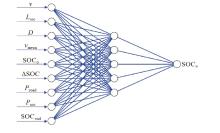
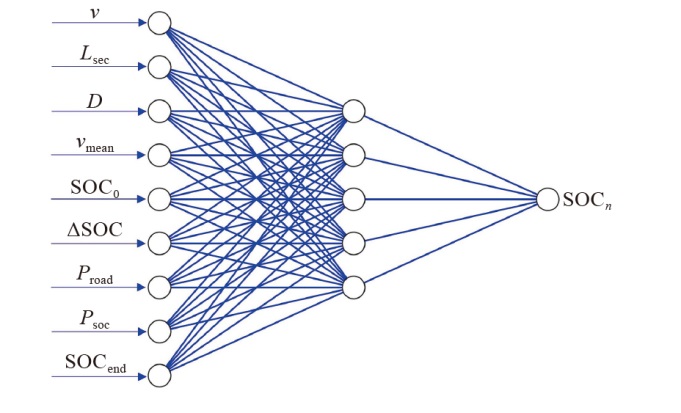
| 网络结构 | 输入层-隐藏层- 输出层(9-9-1) | 学习率 | 0.01 |
| 隐藏层激活函数 | 双曲正切Sigmoid函数(tansig) | 最大训练轮次 | 1 000 epochs |
| 输出层激活函数 | 线性函数(purelin) | 训练目标误差 | 0.000 01 |
| 训练算法 | Levenberg- Marquardt 算法(trainlm) | 最小性能梯度 | 1×10⁻⁶ |
| 参数 | 值 | 参数 | 值 |
|---|---|---|---|
| 网络结构 | 输入层-隐藏层- 输出层(9-9-1) | 学习率 | 0.01 |
| 隐藏层激活函数 | 双曲正切Sigmoid函数(tansig) | 最大训练轮次 | 1 000 epochs |
| 输出层激活函数 | 线性函数(purelin) | 训练目标误差 | 0.000 01 |
| 训练算法 | Levenberg- Marquardt 算法(trainlm) | 最小性能梯度 | 1×10⁻⁶ |
| 驾驶工况 | 能量管理策略 | 矫正燃油消耗/ g |
|---|---|---|
| WLTC×2 (SOC 0.5~0.4) | DP | 1 437.94 |
| AIEFS | 1 506.73 | |
| ISDE Map | 1 551.33 | |
| EF0 = 2.2 | 1 511.95 | |
| UDDS (SOC 0.5~0.4) | DP | 20.98 |
| AIEFS | 22.92 | |
| ISDE Map | 19.04 | |
| EF0 = 2.2 | 24.87 | |
| WLTC×2 (SOC 0.4~0.4) | DP | 1 867.61 |
| AIEFS | 1 948.65 | |
| ISDE Map | 2 117.15 | |
| EF0 = 2.2 | 2 002.04 | |
| UDDS (SOC 0.4~0.4) | DP | 432.98 |
| AIEFS | 447.49 | |
| ISDE Map | 440.95 | |
| EF0 = 2.2 | 444.23 | |
| FTP (SOC 0.4~0.4) | DP | 178.02 |
| AIEFS | 198.30 | |
| ISDE Map | 257.97 | |
| EF0 = 2.2 | 190.63 |
| 驾驶工况 | 能量管理策略 | 矫正燃油消耗/ g |
|---|---|---|
| WLTC×2 (SOC 0.5~0.4) | DP | 1 437.94 |
| AIEFS | 1 506.73 | |
| ISDE Map | 1 551.33 | |
| EF0 = 2.2 | 1 511.95 | |
| UDDS (SOC 0.5~0.4) | DP | 20.98 |
| AIEFS | 22.92 | |
| ISDE Map | 19.04 | |
| EF0 = 2.2 | 24.87 | |
| WLTC×2 (SOC 0.4~0.4) | DP | 1 867.61 |
| AIEFS | 1 948.65 | |
| ISDE Map | 2 117.15 | |
| EF0 = 2.2 | 2 002.04 | |
| UDDS (SOC 0.4~0.4) | DP | 432.98 |
| AIEFS | 447.49 | |
| ISDE Map | 440.95 | |
| EF0 = 2.2 | 444.23 | |
| FTP (SOC 0.4~0.4) | DP | 178.02 |
| AIEFS | 198.30 | |
| ISDE Map | 257.97 | |
| EF0 = 2.2 | 190.63 |
| SOC 初始值 | CD-CS 矫正燃油 消耗/ g | DP / g | 相较于 CD-CD的 优化效果 / % | HEMS-AIEFS 矫正燃油 消耗/ g | 相较于CD-CD的 优化效果 / % |
|---|---|---|---|---|---|
| 0.7 | 806.09 | 680.36 | 15.60 | 732.45 | 9.13 |
| 0.6 | 1 195.43 | 1 067.50 | 10.70 | 1 102.36 | 7.79 |
| 0.5 | 1 581.93 | 1 465.60 | 7.35 | 1 515.74 | 4.18 |
| 0.4 | 1 985.21 | 1 867.61 | 5.92 | 1 954.27 | 1.56 |
| SOC 初始值 | CD-CS 矫正燃油 消耗/ g | DP / g | 相较于 CD-CD的 优化效果 / % | HEMS-AIEFS 矫正燃油 消耗/ g | 相较于CD-CD的 优化效果 / % |
|---|---|---|---|---|---|
| 0.7 | 806.09 | 680.36 | 15.60 | 732.45 | 9.13 |
| 0.6 | 1 195.43 | 1 067.50 | 10.70 | 1 102.36 | 7.79 |
| 0.5 | 1 581.93 | 1 465.60 | 7.35 | 1 515.74 | 4.18 |
| 0.4 | 1 985.21 | 1 867.61 | 5.92 | 1 954.27 | 1.56 |
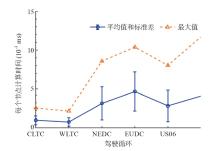
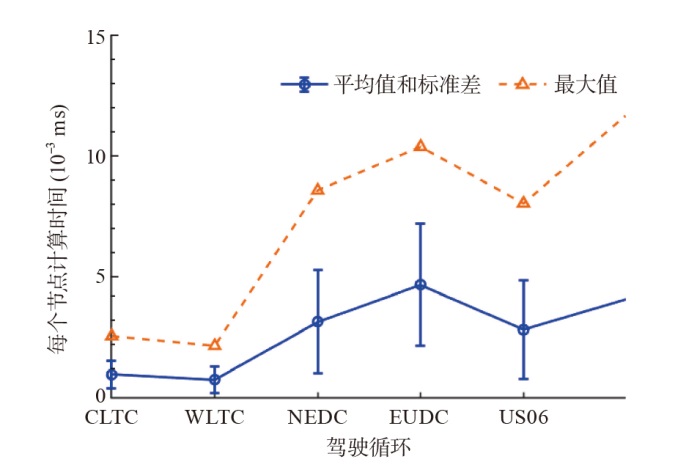
| 策略对比 | 计算效率比 | 平均值 | |||||
|---|---|---|---|---|---|---|---|
| CLTC | WLTC | NEDC | EUDC | US06 | UDDS | ||
| HEMS-AIEFS vs. DP | 0.056 | 0.054 | 0.055 | 0.056 | 0.049 | 0.052 | 0.054 |
| HEMS-AIEFS vs. CD-CS | 3.033 | 3.765 | 3.814 | 4.416 | 3.964 | 4.080 | 3.845 |
| 策略对比 | 计算效率比 | 平均值 | |||||
|---|---|---|---|---|---|---|---|
| CLTC | WLTC | NEDC | EUDC | US06 | UDDS | ||
| HEMS-AIEFS vs. DP | 0.056 | 0.054 | 0.055 | 0.056 | 0.049 | 0.052 | 0.054 |
| HEMS-AIEFS vs. CD-CS | 3.033 | 3.765 | 3.814 | 4.416 | 3.964 | 4.080 | 3.845 |
| [1] |
ZHANG Fengqi, HU Xiaosong, Langari R, et al. Energy management strategies of connected HEVs and PHEVs: Recent progress and outlook[J]. Prog Energ Combust Sci, 2019, 73: 235-256.
doi: 10.1016/j.pecs.2019.04.002 URL |
| [2] |
ZHANG Pei, YAN Fuwu, DU Changqing. A comprehensive analysis of energy management strategies for hybrid electric vehicles based on bibliometrics[J]. Renew Sustain Energ Rev, 2015, 48: 88-104.
doi: 10.1016/j.rser.2015.03.093 URL |
| [3] |
LIU Yonggang, LI Jie, YE Ming, et al. Optimal energy management strategy for a plug-in hybrid electric vehicle based on road grade information[J]. Energies, 2017, 10: 412-431.
doi: 10.3390/en10040412 URL |
| [4] | DONG Peng, ZHAO Junwei, LIU Xuewu, et al. Practical application of energy management strategy for hybrid electric vehicles based on intelligent and connected technologies: Development stages, challenges, and future trends[J]. Renew Sustain Energ Rev, 2022, 170: No 112947. |
| [5] | GU Wen, ZHAO Dezong, Mason B. A review of intelligent road preview methods for energy management of hybrid vehicles[J]. IFAC-Papers OnLine, 2019, 52: 654-660. |
| [6] | KONG Yan, XU Nan, ZHANG Yuanjian, et al. Acquisition of full-factor trip information for global optimization energy management in multi-energy source vehicles and the measure of the amount of information to be transmitted[J]. Energy, 2021, 236: No 121423. |
| [7] | CUI Wei, CUI Naxin, LI Tao, et al. An Efficient multi-objective hierarchical energy management strategy for plug-in hybrid electric vehicle in connected scenario[J]. Energy, 2022, 257: No 124690. |
| [8] | ZHANG Hao, FAN Qinhao, LIU Shang, et al. Hierarchical energy management strategy for plug-in hybrid electric powertrain integrated with dual-mode combustion engine[J]. Appl Energ, 2021, 304: No 117869. |
| [9] | Taghavipour A, Vajedi M, Azad N L, et al. A comparative analysis of route-based energy management systems for PHEVs[J]. Asia J Contr, 2016, 18: 29-39. |
| [10] | Paganelli G, Guezennec Y, Rizzoni G. Optimizing control strategy for hybrid fuel cell vehicle[J]. SAE Trans, 2002, 1: 398-406. |
| [11] | Chen Z, Liu Y, Ye M, et al. A survey on key techniques and development perspectives of equivalent consumption minimisation strategy for hybrid electric vehicles[J]. Renew Sustain Energ Rev, 2021, 151: No 111607. |
| [12] | GUO Hongqiang, WANG Xiangyu, LI Liang. State-of-charge-constraint-based energy management strategy of plug-in hybrid electric vehicle with bus route[J]. Energ Conv Manag, 2019, 199: No 111972. |
| [13] |
Kim N, Rousseau A, Lee D. A jump condition of PMP-based control for PHEVs[J]. J Power Sources, 2011, 196: 10380-10386.
doi: 10.1016/j.jpowsour.2011.07.003 URL |
| [14] | Onori S, Serrao L. On adaptive-ECMS strategies for hybrid electric vehicles[C]// Proc Int’l Sci Conf hybr Elect Vehi, Malmaison, France. 2011. |
| [15] | LI Ping, JIAO Xiaohong, LI Yang. Adaptive real-time energy management control strategy based on fuzzy inference system for plug-in hybrid electric vehicles[J]. Contr Engi Pract, 2021, 107: No 104703. |
| [16] | LEI Zhenzhen, QIN Datong, HOU Liliang, et al. An adaptive equivalent consumption minimization strategy for plug-in hybrid electric vehicles based on traffic information[J]. Energy, 2020, 190: No 116409. |
| [17] | ZHNEG Qing, YUAN Haorui, WU Jinzhu, et al. Equivalent consumption minimization strategy based on dynamic programming for plug-in hybrid electric vehicle[J]. IFAC-PapersOnLine, 2018, 51: 612-617. |
| [18] | FENG Jian, HAN Zhiyu. Progress in research on equivalent consumption minimization strategy based on different information sources for hybrid vehicles[J]. IEEE Trans Transp Elect, 2024, 10: 135-149. |
| [19] | LIN Xinyou, ZHANG Jiajin, SU Lian. A trip distance adaptive real-time optimal energy management strategy for a plug-in hybrid vehicle integrated driving condition prediction[J]. J Energ Stor, 2022, 52: No 105055. |
| [20] | LIN Xinyou, FENG Qigao, MO Liping, et al. Optimal adaptation equivalent factor of energy management strategy for plug-in CVT HEV[J]. Proc Instit Mech Engi, Part D: J Autom Engi, 2019, 233: 877-889. |
| [21] | CHEN Zhang, Vahidi A, Pisu P, et al. Role of terrain preview in energy management of hybrid electric vehicles[J]. IEEE Trans Vehi Tech, 2010, 59: 1139-1147. |
| [22] | LI Jie, LIU Yonggang, QIN Datong, et al. Research on equivalent factor boundary of equivalent consumption minimization strategy for PHEVs[J]. IEEE Trans Vehi Tech, 2020, 69: 6011-6124. |
| [23] | CHEN Di, Youngkim K, Stefanopoulou A G. Predictive equivalent consumption minimization strategy with segmented traffic information[J]. IEEE Trans Vehi Tech, 2020, 69: 14377-14390. |
| [24] | ZHANG Hao, LEI Nuo, LIU Shang, et al. Data-driven predictive energy consumption minimization strategy for connected plug-in hybrid electric vehicles[J]. Energy, 2023, 283: No 128514. |
| [25] | ZHOU Wei, CHEN Yaoqi, ZHAI Haoran, et al. Predictive energy management for a plug-in hybrid electric vehicle using driving profile segmentation and energy-based analytical SOC planning[J]. Energy, 2021, 220: No 119700. |
| [26] | YANG Ye, ZHANG Youtong, TIAN Jingyi, et al. Adaptive real-time optimal energy management strategy for extender range electric vehicle[J]. Energy, 2020, 197: No 117237. |
| [27] |
SUN Chao, SUN Fengchun, HE Hongwen. Investigating adaptive-ECMS with velocity forecast ability for hybrid electric vehicles[J]. Appl Energ, 2017, 185: 1644-1653.
doi: 10.1016/j.apenergy.2016.02.026 URL |
| [28] | FENG Tianheng, YANG Lin, GU Qing, et al. A supervisory control strategy for plug-in hybrid electric vehicles based on energy demand prediction and route preview[J]. IEEE Trans Vehi Tech, 2015, 64: 1691-1700. |
| [29] | YU Xiao, LIN Cheng, XIE Peng, et al. A novel real-time energy management strategy based on Monte Carlo Tree Search for coupled powertrain platform via vehicle-to-cloud connectivity[J]. Energy, 2022, 256: No 124619. |
| [30] | LU Ziwang, TIAN He, SUN Yiwen, et al. Neural network energy management strategy with optimal input features for plug-in hybrid electric vehicles[J]. Energy, 2023, 285: No 129399. |
| [31] | Lim W, Lee S, Sunwoo M, et al. Hierarchical trajectory planning of an autonomous car based on the integration of a sampling and an optimization method[J]. IEEE Trans Intel Transport Syst, 2018, 19: 613-626. |
| [32] | Reda M, Onsy A, Haikal A Y, et al. Path planning algorithms in the autonomous driving system: A comprehensive review[J]. Robot Auto Syst, 2024, 174: No 104630. |
| No related articles found! |
| 阅读次数 | ||||||
|
全文 |
|
|||||
|
摘要 |
|
|||||
