Welcome to Journal of Automotive Safety and Energy,

Journal of Automotive Safety and Energy ›› 2025, Vol. 16 ›› Issue (4): 587-597.DOI: 10.3969/j.issn.1674-8484.2025.04.009
• Intelligent Driving and Intelligent Transportation • Previous Articles Next Articles
HAN Yu1( ), CHEN Zhixuan1, WANG Yixuan1,*(), LI Chunjie1, LEI Wei2, JIAO Yanli2, LIU Pan1
Received:2024-11-29
Revised:2025-04-27
Online:2025-08-30
Published:2025-08-27
CLC Number:
HAN Yu, CHEN Zhixuan, WANG Yixuan, LI Chunjie, LEI Wei, JIAO Yanli, LIU Pan. Deep reinforcement learning-based strategy for freeway ramp metering[J]. Journal of Automotive Safety and Energy, 2025, 16(4): 587-597.
Add to citation manager EndNote|Ris|BibTeX
URL: https://www.journalase.com/EN/10.3969/j.issn.1674-8484.2025.04.009
| 算法: 基于TD3的匝道控制模型训练算法 |
|---|
| 算法输入: 可供交互的仿真环境 算法输出: 匝道控制策略 1 设定算法参数,包括:最大训练回合数max_episode、每回合步数J、奖励衰减因子γ、记忆容量memory_size、抽样条数batch_size、探索噪声σexpl、策略噪声σpol、策略噪声界限c、软更新参数τ等; 2 随机初始化Actor网络π?和Critic网络Qθ1 、Qθ2的网络参数?、θ1、θ2,并将网络参数复制给相对应的目标网络的参数值?'、θ'1、θ'2; 3 for i = 1,2,…,max_episode do 4 初始化经验池及探索噪声σexpl 5 初始化仿真环境 6 for j = 1,2…,J do 7 智能体根据当前观测到的状态生成动作 8 智能体与环境交互 9 将本次交互得到的数据样本存入经验池中 10 从经验池中随机抽取训练样本 11 向训练样本的动作向量a加入策略噪声, a = a + clip(randnorm (0, σpolicy), -c, c) 12 基于式(7)最小化损失函数更新Critic主网络参数 13 基于式(8)计算策略梯度更新Actor主网络参数 14 更新目标网络参数,?' = τ? + (1- τ)?', θ'i = τθ + (1- τ) θ' 15 end for 16 end for |
| 算法: 基于TD3的匝道控制模型训练算法 |
|---|
| 算法输入: 可供交互的仿真环境 算法输出: 匝道控制策略 1 设定算法参数,包括:最大训练回合数max_episode、每回合步数J、奖励衰减因子γ、记忆容量memory_size、抽样条数batch_size、探索噪声σexpl、策略噪声σpol、策略噪声界限c、软更新参数τ等; 2 随机初始化Actor网络π?和Critic网络Qθ1 、Qθ2的网络参数?、θ1、θ2,并将网络参数复制给相对应的目标网络的参数值?'、θ'1、θ'2; 3 for i = 1,2,…,max_episode do 4 初始化经验池及探索噪声σexpl 5 初始化仿真环境 6 for j = 1,2…,J do 7 智能体根据当前观测到的状态生成动作 8 智能体与环境交互 9 将本次交互得到的数据样本存入经验池中 10 从经验池中随机抽取训练样本 11 向训练样本的动作向量a加入策略噪声, a = a + clip(randnorm (0, σpolicy), -c, c) 12 基于式(7)最小化损失函数更新Critic主网络参数 13 基于式(8)计算策略梯度更新Actor主网络参数 14 更新目标网络参数,?' = τ? + (1- τ)?', θ'i = τθ + (1- τ) θ' 15 end for 16 end for |
| 模型参数 | 取值 | 参数含义 |
|---|---|---|
| Dmin / m | 2.5 | 车辆静止时与前车保持的最小间距 |
| amax / (m·s-2) | 2.6 | 车辆最大加速度 |
| |bmax| / (m·s-2) | 4.5 | 车辆最大减速度 |
| h / s | 1.1 | 期望跟驰车头时距 |
| σ | 0.4 | 驾驶失误概率 |
| lcAssertive | 1.0 | 较小的可换道间距的接受程度 |
| lcStrategic | 1.0 | 换道的迫切性 |
| lcCooperative | 1.0 | 换道时与周围车辆的合作性 |
| Nep_max | 400 | 智能体训练的最大回合数 |
| γ | 0.99 | 累计奖励衰减因子 |
| Nmemory_max | 2 048 | 记忆容量 |
| batch size | 256 | 每次学习的抽样数 |
| σexpl | 0.4 | 探索噪声 |
| σpol | 0.3 | 策略噪声 |
| c | 0.5 | 策略噪声界限 |
| τ | 0.02 | 软更新参数 |
| 模型参数 | 取值 | 参数含义 |
|---|---|---|
| Dmin / m | 2.5 | 车辆静止时与前车保持的最小间距 |
| amax / (m·s-2) | 2.6 | 车辆最大加速度 |
| |bmax| / (m·s-2) | 4.5 | 车辆最大减速度 |
| h / s | 1.1 | 期望跟驰车头时距 |
| σ | 0.4 | 驾驶失误概率 |
| lcAssertive | 1.0 | 较小的可换道间距的接受程度 |
| lcStrategic | 1.0 | 换道的迫切性 |
| lcCooperative | 1.0 | 换道时与周围车辆的合作性 |
| Nep_max | 400 | 智能体训练的最大回合数 |
| γ | 0.99 | 累计奖励衰减因子 |
| Nmemory_max | 2 048 | 记忆容量 |
| batch size | 256 | 每次学习的抽样数 |
| σexpl | 0.4 | 探索噪声 |
| σpol | 0.3 | 策略噪声 |
| c | 0.5 | 策略噪声界限 |
| τ | 0.02 | 软更新参数 |
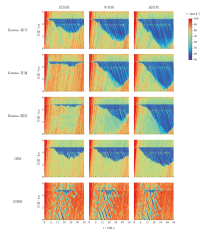

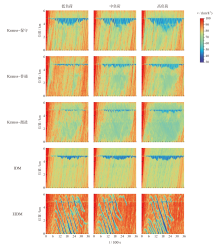
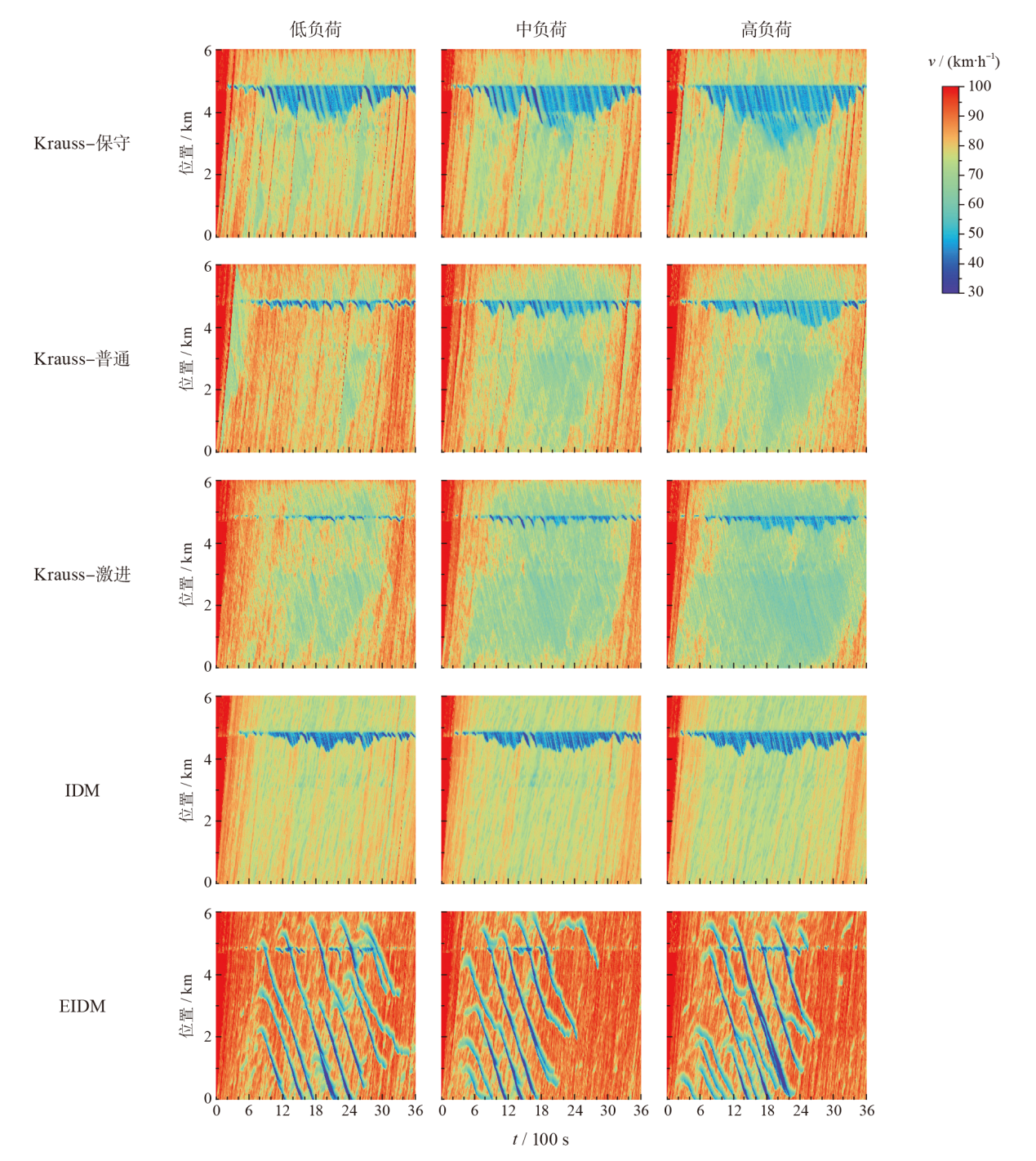
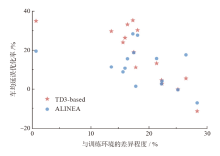
| 微观动力学模型 | 低负荷 | 中负荷 | 高负荷 | |||||
|---|---|---|---|---|---|---|---|---|
| 强化学习 | ALINEA | 强化学习 | ALINEA | 强化学习 | ALINEA | |||
| Krauss-保守 | 13.72 | 16.24 | 30.80 | 28.19 | 35.89 | 28.92 | ||
| Krauss-普通 | 0.28 | 0.11 | 35.51 | 20.10 | 33.70 | 16.09 | ||
| Krauss-激进 | 5.07 | 3.17 | 19.43 | 19.26 | 26.92 | 11.14 | ||
| IDM | 11.61 | 1.93 | 24.50 | 9.26 | 30.21 | 11.84 | ||
| EIDM | -10.89 | -6.65 | 5.89 | 18.11 | 3.24 | 4.55 | ||
| 微观动力学模型 | 低负荷 | 中负荷 | 高负荷 | |||||
|---|---|---|---|---|---|---|---|---|
| 强化学习 | ALINEA | 强化学习 | ALINEA | 强化学习 | ALINEA | |||
| Krauss-保守 | 13.72 | 16.24 | 30.80 | 28.19 | 35.89 | 28.92 | ||
| Krauss-普通 | 0.28 | 0.11 | 35.51 | 20.10 | 33.70 | 16.09 | ||
| Krauss-激进 | 5.07 | 3.17 | 19.43 | 19.26 | 26.92 | 11.14 | ||
| IDM | 11.61 | 1.93 | 24.50 | 9.26 | 30.21 | 11.84 | ||
| EIDM | -10.89 | -6.65 | 5.89 | 18.11 | 3.24 | 4.55 | ||
| [1] | Papageorgiou M, Kotsialos A. Freeway ramp metering: An overview[J]. IEEE Trans Intel Transport Syst, 2002, 3(4): 271-281. |
| [2] | WANG Jin, May A D. Computer model for optimal freeway on-ramp control[J]. Highw Res Record, 1973, 469: 16-25. |
| [3] | Papageorgiou M, Hadj-Salem H, Blosseville J M. ALINEA: A local feedback control law for on-ramp metering[J]. Transport Res Record, 1991, 1320(1): 58-67. |
| [4] | WANG Yibing, Kosmatopoulos E B, Papageorgiou M, et al. Local ramp metering in the presence of a distant downstream bottleneck: Theoretical analysis and simulation study[J]. IEEE Trans Intel Transport Syst, 2014, 15(5): 2024-2039. |
| [5] | Papageorgiou M, Hadj-Salem H, Middelham F. ALINEA local ramp metering: Summary of field results[J]. Transport Res Record, 1997, 1603(1): 90-98. |
| [6] | Papamichail I, Papageorgiou M, Vong V, et al. Heuristic ramp-metering coordination strategy implemented at Monash freeway, Australia[J]. Transport Res Record, 2010, 2178(1): 10-20. |
| [7] | Hegyi A, De Schutter B, Hellendoorn H. Model predictive control for optimal coordination of ramp metering and variable speed limits[J]. Transport Res Part C: Emerg Tech, 2005, 13(3): 185-209. |
| [8] | Bellemans T, De Schutter B, De Moor B. Model predictive control for ramp metering of motorway traffic: A case study[J]. Contr Engi Pract, 2006, 14(7): 757-767. |
| [9] | LI Zhibin, LIU Pan, Xu Chengcheng, et al. Reinforcement learning-based variable speed limit control strategy to reduce traffic congestion at freeway recurrent bottlenecks[J]. IEEE Trans Intel Transport Syst, 2017, 18(11): 3204-3217. |
| [10] |
韩雨, 郭延永, 张乐, 等. 消除高速公路运动波的可变限速控制方法[J]. 中国公路学报, 2022, 35(1): 151-158.
doi: 10.19721/j.cnki.1001-7372.2022.01.013 |
| HAN Yu, GUO Yanyong, ZHANG Le, et al. An optimal variable speed limit control approach against freeway jam waves[J]. China J Highw Transport, 2022, 35(1): 151-158. (in Chinese) | |
| [11] | 涂辉招, 孙立军, 高子翔. 基于风险评估技术的城市快速路多匝道协调控制时机研究[J]. 中国公路学报, 2015, 28(7): 86-92,101. |
| TU Huizhao, SUN Lijun, GAO Zixiang. Study on control timing of coordinated multi-ramp for urban freeway corridors based on risk assessment technique[J]. China J Highw Transport, 2015, 28(7): 86-92, 101. (in Chinese) | |
| [12] | Noaeen M, Naik A, Goodman L, et al. Reinforcement learning in urban network traffic signal control: A systematic literature review[J]. Expert Syst Appl, 2022, 199: No 116830. |
| [13] | Mannion P, Duggan J, Howley E. An experimental review of reinforcement learning algorithms for adaptive traffic signal[M]// Auto Road Transport Support Syst, Springer International Publishing, AG Gewerbestraße 11, 6330 Cham, Switzerland 2016: 47-66. |
| [14] | 徐东伟, 周磊, 王达, 等. 基于深度强化学习的城市交通信号控制综述[J]. 交通运输工程与信息学报, 2022, 20(1): 15-30. |
| XU Dongwei, ZHOU Lei, WANG Da, et al. A review of urban traffic signal control based on deep reinforcement learning[J]. J Transport Engi Info, 2022, 20(1): 15-30. (in Chinese) | |
| [15] | HAN Yu, WANG Meng, LI Linghui, et al. A physics-informed reinforcement learning-based strategy for local and coordinated ramp metering[J]. Transport Res Part C: Emerg Tech, 2022, 137: No 103584. |
| [16] | HAN Yu, Hegyi A, ZHANG Le, et al. A new reinforcement learning-based variable speed limit control approach to improve traffic efficiency against freeway jam waves[J]. Transport Res Part C: Emerg Tech, 2022, 144: No 103900. |
| [17] | Christopher J C, Watkins H. Technical note Q-learning[J]. Mach Learn. 1992(8): 279-292. |
| [18] | Mnih V, Kavukcuoglu K, Silver D, et al. Human-level control through deep reinforcement learning[J]. Nature, 2015, 518: 529-533. |
| [19] | Gullapalli V, A stochastic reinforcement learning algorithm for learning real-valued functions[J]. Neural Netw, 1990, 3(6): 671-692. |
| [20] | Timothy P L, Jonathan H, Pritzel A, et al. Continuous control with deep reinforcement learning[C]. arXiv:1509.02971. 2015. |
| [21] | Fujimoto S, van Hoof H, Meger D. Addressing function approximation error in Actor-Critic methods[C]. arXiv:1802.09477. 2018. |
| [22] | Spiliopoulou A D, Manolis D, Papamichail I, et al. Queue management techniques for metered freeway on-ramps[J]. Transport Res Record. 2010, 2178(1): 40-48. |
| [23] | LIU Yang, WU Fanyou, LIU Zhiyuan, et al. Can language models be used for real-world urban-delivery route optimization?[J]. Innovation, 2023, 4(6): No 100520. |
| [24] | 何逸煦, 林泓熠, 刘洋, 等. 强化学习在自动驾驶技术中的应用与挑战[J]. 同济大学学报(自然科学版), 2024, 52(4): 520-531. |
| HE Yixu, LIN Hongyi, LIU Yang, et al. Applications and challenges of reinforcement learning in autonomous driving technology[J]. J Tongji Univ (Nat Sci Edit), 2024, 52(4): 520-531. (in Chinese) | |
| [25] | 柳鹏, 赵克刚, 梁志豪, 等. 基于深度强化学习CLPER-DDPG的车辆纵向速度规划[J]. 汽车安全与节能学报, 2024(5): 702-710. |
| LIU Peng, ZHAO Kegang, LIANG Zhihao, et al. Longitudinal velocity planning for vehicles based on CLPER-DDPG deep reinforcement learning[J]. J Autom Safe Energ, 2024, 15(5): 702-710. (in Chinese) | |
| [26] | 李文礼, 邱凡珂, 廖达明, 等. 基于深度强化学习的高速公路换道跟踪控制模型[J]. 汽车安全与节能学报, 2022, 13(4): 750-759. |
| LI Wenli, QIU Fanke, LIAO Daming, et al. Lane-changing and tracking control model for expressways based on deep reinforcement learning[J]. J Autom Safe Energ, 2022, 13(4): 750-759. (in Chinese) | |
| [27] | 刘洋, 占佳豪, 李深, 等. 自动驾驶技术的未来: 单车智能和智能车路协同[J]. 汽车安全与节能学报, 2024, 15(5): 611-633. |
| LIU Yang, ZHAN Jiahao, LI Shen, et al. The future of autonomous driving technology: single-vehicle intelligence and intelligent vehicle-road coordination[J]. J Autom Safe Energ, 2024, 15(5): 611-633. (in Chinese) | |
| [28] |
林泓熠, 刘洋, 李深, 等. 车路协同系统关键技术研究进展[J]. 华南理工大学学报(自然科学版), 2023, 51(10): 46-67.
doi: 10.12141/j.issn.1000-565X.230200 |
| LIN Hongyi, LIU Yang, LI Shen, et al. Research progress on key technologies of cooperative vehicle - infrastructure system[J]. J South China Univ Tech (Nat Sci Edit), 2023, 51(10): 46-67. (in Chinese) | |
| [29] | 李颖, 费怡瑄, 安毅生, 等. 智能交通场景下的地图匹配技术综述[J]. 交通运输工程学报, 2024, 24(5): 301-332. |
| LI Ying, FEI Yixuan, AN Yisheng, et al. A Review of map matching technology in intelligent transportation scenarios[J]. J Traf Transport Engi, 2024, 24(5): 301-332. (in Chinese) | |
| [30] | HAN Yu, WU Jiarui, DING Fan, et al. Capacity drop at active bottlenecks: An empirical study based on trajectory data[J]. Transport Res Part B: Methodol, 2025, 196: No 103218. |
| [1] | WANG Yue, DUAN Hongwei, ZHONG Wei, YANG Lu, HE Lei, CHAI Fulai, SHI Xiaoyang. Path planning method for leader-follower multi-vehicle formation with integrating GoT-SAC [J]. Journal of Automotive Safety and Energy, 2026, 17(1): 122-129. |
| [2] | LI Ziyuan, LIU Qiang, LI Dingli, LI Zilong. Blind spot traffic strategy for intelligent connected vehicles based on deep reinforcement learning [J]. Journal of Automotive Safety and Energy, 2025, 16(3): 470-477. |
| [3] | HU Zhilong, PEI Xiaofei, ZHOU Honglong, WEI Weiran. Risk-sensitive hierarchical reinforcement learning decision-making for autonomous vehicles [J]. Journal of Automotive Safety and Energy, 2025, 16(2): 326-333. |
| [4] | ZHANG Fuchun, YIN Yanli, MA Yongjuan, XIAO Hangyang, CHEN Haixin, YU Kai. Ecological driving and hierarchical control of energy management for networked hybrid electric vehicle queues [J]. Journal of Automotive Safety and Energy, 2025, 16(1): 159-169. |
| [5] | CAI Tianmao, KONG Weiwei, LUO Yugong, SHI Jia, JI Pengxiao, LI Congmin. Multi-vehicle cooperative control in ramp merging area based on MADDPG algorithm [J]. Journal of Automotive Safety and Energy, 2024, 15(6): 923-933. |
| [6] | ZHANG Xinfeng, WU Lin. Behavior decision-making model for autonomous vehicles based on an ensemble deep reinforcement learning [J]. Journal of Automotive Safety and Energy, 2023, 14(4): 472-479. |
| [7] | HAN Ling, ZHANG Hui, FANG Ruoyu, LIU Guopeng, ZHU Changsheng, CHI Ruifeng. Global path planning strategy based on an improved deep reinforcement learning [J]. Journal of Automotive Safety and Energy, 2023, 14(2): 202-211. |
| [8] | FENG Yao, JING Shoucai, HUI Fei, ZHAO Xiangmo, LIU Jianbei. Deep reinforcement learning-based lane-changing trajectory planning method of intelligent and connected vehicles [J]. Journal of Automotive Safety and Energy, 2022, 13(4): 705-717. |
| [9] | LI Wenli, QIU Fanke, LIAO Daming, REN Yongpeng, YI Fan. Highway lane change decision control model based on deep reinforcement learning [J]. Journal of Automotive Safety and Energy, 2022, 13(4): 750-759. |
| [10] | ZHENG Yangjun, HE Shuai, SHUAI Zhibin, LI Jianqiu, GAI Jiangtao, LI Yong, ZHANG Ying, LI Guohui. Lateral velocity estimation for four-wheel-independent-drive electric vehicles based on deep reinforcement learning [J]. Journal of Automotive Safety and Energy, 2022, 13(2): 309-316. |
| [11] | XU Jie, PEI Xiaofei, YANG Bo, FANG Zhigang. Learning-based automatic driving decision-making integrated with vehicle trajectory prediction [J]. Journal of Automotive Safety and Energy, 2022, 13(2): 317-324. |
| Viewed | ||||||
|
Full text |
|
|||||
|
Abstract |
|
|||||
