Welcome to Journal of Automotive Safety and Energy,

Journal of Automotive Safety and Energy ›› 2023, Vol. 14 ›› Issue (4): 431-438.DOI: 10.3969/j.issn.1674-8484.2023.04.004
• Automotive Safety • Previous Articles Next Articles
WANG Chang( ), WANG Yifei(), GE Zhenzhen*(), ZHAO Xia, LI Zhao
Received:2022-12-26
Revised:2023-05-08
Online:2023-08-31
Published:2023-08-31
CLC Number:
WANG Chang, WANG Yifei, GE Zhenzhen, ZHAO Xia, LI Zhao. Driver visual load and operating characteristics under a human- machine interface mode with full-touch-screen[J]. Journal of Automotive Safety and Energy, 2023, 14(4): 431-438.
Add to citation manager EndNote|Ris|BibTeX
URL: https://www.journalase.com/EN/10.3969/j.issn.1674-8484.2023.04.004
| 简称 | 次级任务 | 传统车操作 | 全触屏车操作 |
|---|---|---|---|
| 开空调 | 开空调,调至18 ℃ | 用按键,打开空调,调节旋钮至18 ℃。 | 点击空调图标,连续点击“+”至18 ℃。 |
| 调风量 | 用空调吹前挡风玻璃 | 按前风挡除雾按键。 | 点击前风挡除雾图标。 |
| 吹玻璃 | 调高出风量2个挡位 | 连续按出风量按键2次。 | 点击出风量图标—调高图标,点击2次。 |
| 简单 电话 | 给某某打电话 | 拿起手机,点击通话图标—联系人图标—联系人某某,点击拨打电话,放下手机。 | 点击通话图标—联系人图标—联系人某某。 |
| 复杂 电话 | 给王某打电话 | 拿起手机,点击通话图标—联系人图标,下滑列表,点击联系人“王某”—拨打电话,放下手机。 | 点击通话图标—联系人图标,下滑列表,点击联系人“王某”。 |
| 导航 | 导航至最近加油站 | 点击手机导航图标—搜索框,输入文字,选定文字,点击第一条搜索结果,点击开始导航。 | 点击导航图标—搜索框,输入文字,选定文字,点击第一条搜索结果,点击开始导航。 |
| 简称 | 次级任务 | 传统车操作 | 全触屏车操作 |
|---|---|---|---|
| 开空调 | 开空调,调至18 ℃ | 用按键,打开空调,调节旋钮至18 ℃。 | 点击空调图标,连续点击“+”至18 ℃。 |
| 调风量 | 用空调吹前挡风玻璃 | 按前风挡除雾按键。 | 点击前风挡除雾图标。 |
| 吹玻璃 | 调高出风量2个挡位 | 连续按出风量按键2次。 | 点击出风量图标—调高图标,点击2次。 |
| 简单 电话 | 给某某打电话 | 拿起手机,点击通话图标—联系人图标—联系人某某,点击拨打电话,放下手机。 | 点击通话图标—联系人图标—联系人某某。 |
| 复杂 电话 | 给王某打电话 | 拿起手机,点击通话图标—联系人图标,下滑列表,点击联系人“王某”—拨打电话,放下手机。 | 点击通话图标—联系人图标,下滑列表,点击联系人“王某”。 |
| 导航 | 导航至最近加油站 | 点击手机导航图标—搜索框,输入文字,选定文字,点击第一条搜索结果,点击开始导航。 | 点击导航图标—搜索框,输入文字,选定文字,点击第一条搜索结果,点击开始导航。 |
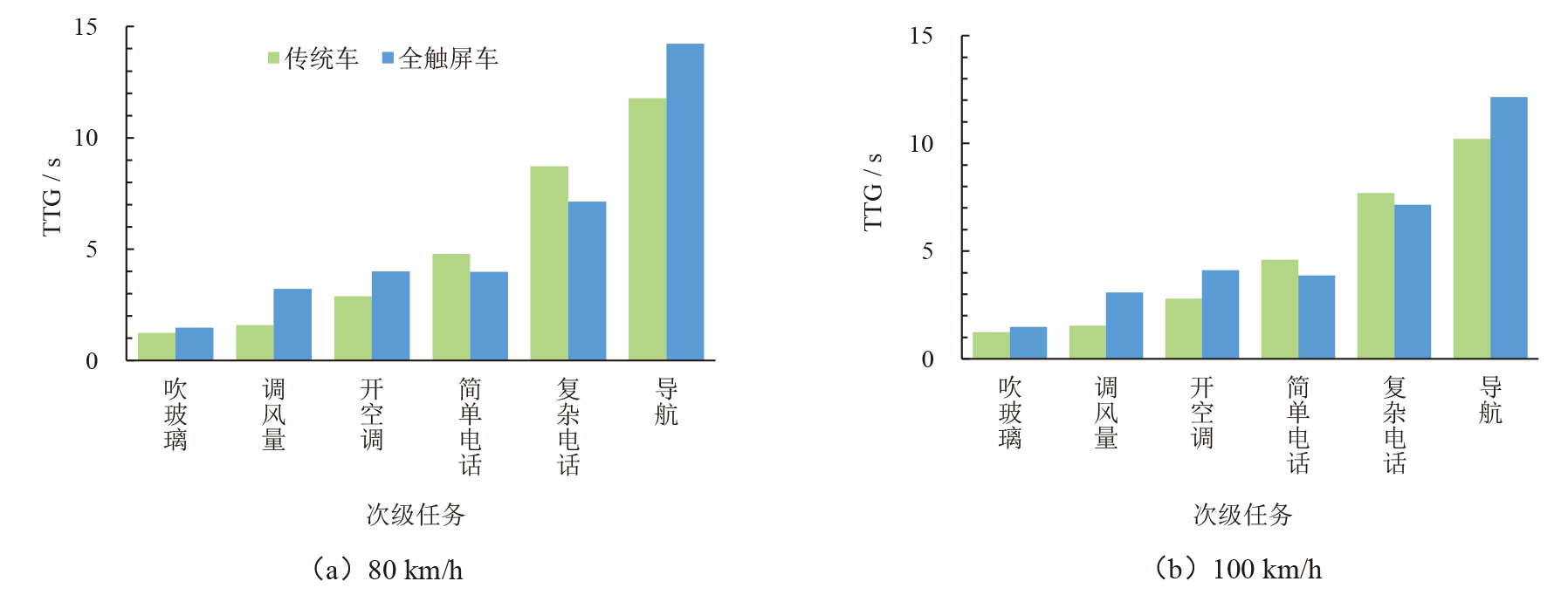
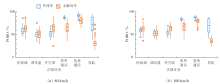
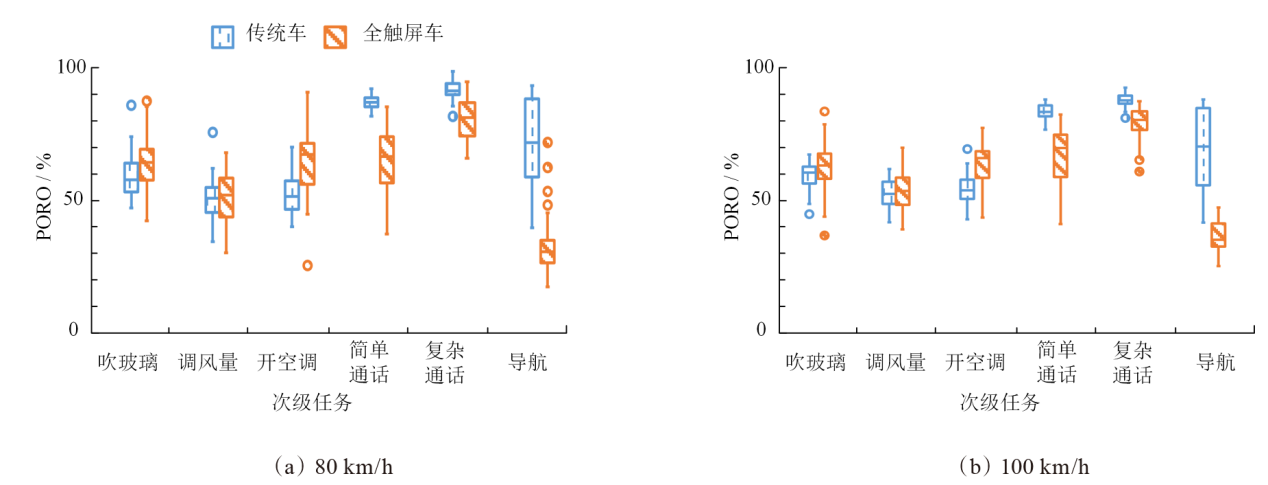
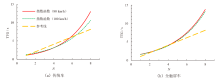
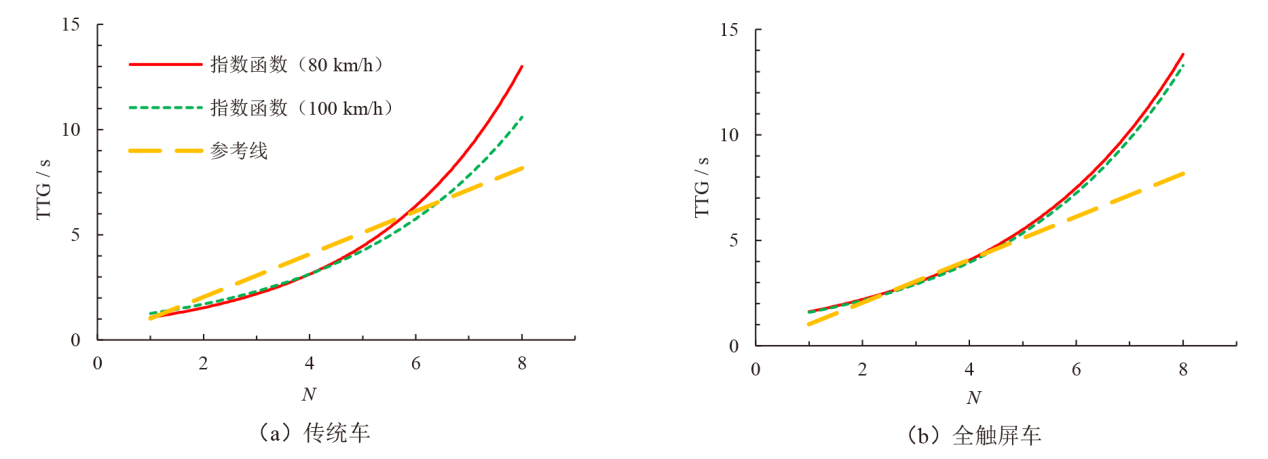
| 车速 / (km·h-1) | 传统模式 | 全触屏模式 | |||||||||
|---|---|---|---|---|---|---|---|---|---|---|---|
| N | TTG / s | 相对误差/ % | N | TTG / s | 相对误差/ % | ||||||
| 试验均值 | 拟合值 | 误差 | 试验均值 | 拟合值 | 误差 | ||||||
| 80 | 1 | 1.02 | 1.07 | 0.05 | 5.1 | 1 | 1.50 | 1.62 | 0.12 | 8.1 | |
| 2 | 1.45 | 1.53 | 0.08 | 5.6 | 3 | 3.10 | 2.99 | -0.12 | -3.7 | ||
| 3 | 2.42 | 2.19 | -0.24 | -9.8 | 4 | 3.91 | 4.06 | 0.14 | 3.7 | ||
| 5 | 5.02 | 4.46 | -0.56 | -11.1 | 3 | 3.46 | 2.99 | -0.47 | -13.6 | ||
| 7 | 9.05 | 9.10 | 0.05 | 0.5 | 6 | 7.03 | 7.49 | 0.46 | 6.5 | ||
| 8 | 11.93 | 13.00 | 1.07 | 9.0 | 8 | 13.79 | 13.82 | 0.03 | 0.2 | ||
| 100 | 1 | 1.21 | 1.26 | 0.05 | 3.9 | 1 | 1.50 | 1.59 | 0.09 | 6.2 | |
| 2 | 1.56 | 1.71 | 0.14 | 9.0 | 3 | 2.90 | 2.91 | 0.02 | 0.6 | ||
| 3 | 2.61 | 2.31 | -0.30 | -11.4 | 4 | 3.95 | 3.95 | -0.01 | -0.2 | ||
| 5 | 4.81 | 4.25 | -0.56 | -11.6 | 3 | 3.40 | 2.91 | -0.49 | -14.3 | ||
| 7 | 7.31 | 7.81 | 0.50 | 6.8 | 6 | 7.06 | 7.24 | 0.18 | 2.5 | ||
| 8 | 10.04 | 10.59 | 0.55 | 5.5 | 8 | 12.73 | 13.28 | 0.55 | 4.3 | ||
| 车速 / (km·h-1) | 传统模式 | 全触屏模式 | |||||||||
|---|---|---|---|---|---|---|---|---|---|---|---|
| N | TTG / s | 相对误差/ % | N | TTG / s | 相对误差/ % | ||||||
| 试验均值 | 拟合值 | 误差 | 试验均值 | 拟合值 | 误差 | ||||||
| 80 | 1 | 1.02 | 1.07 | 0.05 | 5.1 | 1 | 1.50 | 1.62 | 0.12 | 8.1 | |
| 2 | 1.45 | 1.53 | 0.08 | 5.6 | 3 | 3.10 | 2.99 | -0.12 | -3.7 | ||
| 3 | 2.42 | 2.19 | -0.24 | -9.8 | 4 | 3.91 | 4.06 | 0.14 | 3.7 | ||
| 5 | 5.02 | 4.46 | -0.56 | -11.1 | 3 | 3.46 | 2.99 | -0.47 | -13.6 | ||
| 7 | 9.05 | 9.10 | 0.05 | 0.5 | 6 | 7.03 | 7.49 | 0.46 | 6.5 | ||
| 8 | 11.93 | 13.00 | 1.07 | 9.0 | 8 | 13.79 | 13.82 | 0.03 | 0.2 | ||
| 100 | 1 | 1.21 | 1.26 | 0.05 | 3.9 | 1 | 1.50 | 1.59 | 0.09 | 6.2 | |
| 2 | 1.56 | 1.71 | 0.14 | 9.0 | 3 | 2.90 | 2.91 | 0.02 | 0.6 | ||
| 3 | 2.61 | 2.31 | -0.30 | -11.4 | 4 | 3.95 | 3.95 | -0.01 | -0.2 | ||
| 5 | 4.81 | 4.25 | -0.56 | -11.6 | 3 | 3.40 | 2.91 | -0.49 | -14.3 | ||
| 7 | 7.31 | 7.81 | 0.50 | 6.8 | 6 | 7.06 | 7.24 | 0.18 | 2.5 | ||
| 8 | 10.04 | 10.59 | 0.55 | 5.5 | 8 | 12.73 | 13.28 | 0.55 | 4.3 | ||
| [1] |
谭征宇, 戴宁一, 张瑞佛, 等. 智能网联汽车人机交互研究现状及展望[J]. 计算机集成制造系统, 2020, 26(10): 2615-2632.
doi: 10.13196/j.cims.2020.10.002 |
| TAN Zhengyu, DAI Ningyi, ZHANG Ruifo, et al. Overview and perspectives on human-computer interaction in intelligent and connected vehicles[J]. Computer Integ Manu Syst, 2020, 26(10): 2615-2632. (in Chinese) | |
| [2] | 杨家夏, 李雪玮, 赵晓华, 等. 基于视觉的高速公路施工区车路协同系统的驾驶分心[J]. 汽车安全与节能学报, 2020, 11(4): 493-502. |
| YANG Jiaxia, LI Xuewei, ZHAO Xiaohua, et al. Driving distraction of cooperative vehicle infrastructure system in freeway work zone based on driver’s visual characteristics[J]. J Auto Safe Energ, 2020, 11(4): 493-502. (in Chinese) | |
| [3] | Karush S. Eyes on the road: Searching for answers to the problem of distracted driving[J]. IIHS Status Report, 2014, 49(8): 1-11. |
| [4] | 秦华, 李吉涛, 冉令华. 次级任务下的驾驶人视觉搜索能力研究[J]. 交通运输系统工程与信息, 2021, 21(1): 137-141. |
| QIN Hua, LI Jitao, RAN Linghua. Research on driver’s visual search ability under secondary task[J]. J Transp Syst Eng Info Tech, 2021, 21(1): 137-141. (in Chinese) | |
| [5] |
王畅, 郭应时, 付锐, 等. 视线离开前方区域时的驾驶人操作行为[J]. 重庆交通大学学报(自然科学版), 2014, 33(3): 124-128.
doi: 10.3969/j.issn.1674-0696.2014.03.27 |
| WANG Chang, GUO Yingshi, FU Rui, et al. Driver’s operation behavior during eyes off road[J]. J Chongqing Jiaotong Univ: Nat Sci, 2014, 33(3): 124-128. (in Chinese) | |
| [6] |
Lee V K, Champagne C R, Francescutti L H. Fatal distraction: Cell phone use while driving[J]. Canadian Family Physician, 2013, 59(7): 723-725.
pmid: 23851528 |
| [7] | 袁泉, 齐悦瑞, 于迪, 等. 骑行者智能手机使用行为的影响因素与风险情景[J]. 汽车安全与节能学报, 2022, 13(1): 48-54. |
| YUAN Quan, QI Yuerui, YU Di, et al. Contributing factors and risky scenario of cyclists’ smart phone using behavior[J]. J Auto Safe Energ, 2022, 13(1): 48-54. (in Chinese) | |
| [8] | Maddox, John. Visual-manual NHTSA driver distraction guidelines for in-vehicle electronic devices[J]. Federal Register, 2012, 77(80): 24764-24766. |
| [9] | Victor T, Dozza M, Bärgman J, et al. Analysis of naturalistic driving study data: Safer glances, driver inattention, and crash risk[R]. SHRP, SHRP2-S2-S08A-RW-1. 2015. |
| [10] | 陈晓华. 基于用户体验的汽车智能中控HMI设计研究[D]. 上海: 上海交通大学, 2020. |
| CHEN Xiaohua. Research on the design of automobile intelligent central control HMI based on user experience[D]. Shanghai: Shanghai Jiao Tong University, 2020. (in Chinese) | |
| [11] | Simons-Morton B G, GUO Feng, Klauer S G, et al. Keep your eyes on the road: Young driver crash risk increases according to duration of distraction[J]. J Adolescent Health, 2014, 54(5): S61-S67. |
| [12] | Caird J K, Johnston K A, Willness C R, et al. A meta-analysis of the effects of texting on driving[J]. Accid Anal Preve, 2014, 71: 311-318. |
| [1] | XUE Qingyuan, QU Jue, WANG Wei, NIU Tianlin, LI Xing. Human-machine interface design methods in autonomous driving takeover scenarios based on the Trust Theory [J]. Journal of Automotive Safety and Energy, 2026, 17(2): 270-277. |
| [2] | MA Teng, MA Yulin, LI Yicheng, PAN Jiabao, XU Shucai. Quantitative evaluation of automated driving safety oriented general functions detection [J]. Journal of Automotive Safety and Energy, 2026, 17(1): 59-69. |
| [3] | TIAN Yang, LI Xiangpeng, FAN Yihong, LI Zhaonan, LI Liang. Improved secondary prediction algorithm for tripping and non-tripping rollover for rollover warning [J]. Journal of Automotive Safety and Energy, 2025, 16(5): 707-715. |
| [4] | LI Guofa, OUYANG Delin, CHEN Chen, NIE Binging, ZHANG Wei, YU Huili, Liu Bin, ZHANG Qiang, WANG Wenjun, CHENG Bo, LI Shengbo. Review on driving risk monitoring and intervention technologies [J]. Journal of Automotive Safety and Energy, 2025, 16(2): 181-196. |
| [5] | ZHENG Xunjia, JIANG Junhao, LI Huilan, CHEN Xing, LIU Hui, WANG Jianqiang, GAO Jianjie. Research on transient driving risk vector modeling method under strong constraints of traffic regulations [J]. Journal of Automotive Safety and Energy, 2024, 15(5): 774-782. |
| [6] | WANG Chang, NIU Jin, WANG Yifei, ZHANG Yali, MA Wanliang. Prediction of driver visual distraction duration under a human-machine interaction mode with full-touch-screen [J]. Journal of Automotive Safety and Energy, 2024, 15(4): 602-609. |
| [7] | LIU Xiaolu, LIANG Zhixing, WU Jun’an, YAN Yuqiong, ZHANG Su. Application of 24 Model in the cause of road transportation accident [J]. Journal of Automotive Safety and Energy, 2024, 15(2): 185-195. |
| [8] | LIU Zhaoyong, LIU Wudong, SHAO Weishu, TAN Xiaoqiang, WU Guangqiang. Estimation of vehicle velocities and side-slip angles based on the unscented Kalman filter [J]. Journal of Automotive Safety and Energy, 2023, 14(1): 31-37. |
| [9] | QI Chang, XU Bo, YU Jie, YANG Shu. Design and simulation of a two-stage semi-active magneto-rheological anti-impact seat suspension system [J]. Journal of Automotive Safety and Energy, 2022, 13(2): 242-249. |
| [10] | HU Yuanzhi, JIANG Tao, LIU Xi, SHI Youning. Pedestrian-crossing intention-recognition based on dual-stream adaptive graph-convolutional neural-network [J]. Journal of Automotive Safety and Energy, 2022, 13(2): 325-332. |
| [11] | LIAO Jingqian, ZHANG Daowen, GAO Li, LIAO Wenjun. Research on dangerous scene of T-intersection based on NAIS database accident data clustering [J]. Journal of Automotive Safety and Energy, 2021, 12(3): 336-345. |
| [12] | YANG Jiaxia, LI Xuewei, ZHAO Xiaohua, FENG Xiaofan. Driving distraction of cooperative vehicle infrastructure system in freeway work zone based on driver’s visual characteristics [J]. Journal of Automotive Safety and Energy, 2020, 11(4): 493-502. |
| [13] | LING Guoqing, LU Chao, HAN Longfei, WANG Ruixi. Test and evaluation method of pedestrian automatic emergency braking system [J]. Journal of Automotive Safety and Energy, 2020, 11(3): 296-304. |
| [14] | LI Guofa,LAI Weijian,LIAO Yuan,WANG Wenjun,CHENG Bo . Driver reliance characteristics on forward collision warning systems in adjacent vehicle cut-in situations [J]. Journal Of Automotive Safety And Energy, 2020, 11(1): 36-43. |
| [15] | JIN Zhilin, HE Linxuan, ZHAO Wanzhong . Detection and tracking method of lane line for intelligent vehicles under complex illumination condition [J]. Journal Of Automotive Safety And Energy, 2019, 10(4): 459-466. |
| Viewed | ||||||
|
Full text |
|
|||||
|
Abstract |
|
|||||
