欢迎访问《汽车安全与节能学报》,

汽车安全与节能学报 ›› 2025, Vol. 16 ›› Issue (5): 725-735.DOI: 10.3969/j.issn.1674-8484.2025.05.007
钟昊1( ), 王伟达1, 杨超1,*(), 杨刘权1, 曾根1,2, 李同辉2
收稿日期:2024-12-25
修回日期:2025-06-24
出版日期:2025-10-31
发布日期:2025-11-10
通讯作者:
*杨超,副教授。E-mail:cyang@bit.edu.cn。
作者简介:钟昊(2001—),男(汉),吉林,硕士研究生。E-mail:3120230308@bit.edu.cn。
ZHONG Hao1(), WANG Weida1, YANG Chao1,*(), YANG Liuquan1, ZENG Gen1,2, LI Tonghui2
Received:2024-12-25
Revised:2025-06-24
Online:2025-10-31
Published:2025-11-10
摘要: 为安全平稳地运行重型车辆“串联混合动力系统(S-HEP)”,研究了一种机电状态稳定性评价方法。基于串联混合动力系统的机械与电气特性,提出了发动机发电机转矩协调性、主副动力源供能协调性等8种动态指标;使用层次分析法,设计了评价指标的权重,实现了多指标的综合;结合模糊理论,设计了模糊综合评价法;通过隶属度函数,将主观的模糊评价映射为量化评分。对某车辆在11个工况下的实车试验数据的机电状态稳定性进行评价。结果表明:在低速匀速(18 km/h)、高速匀速(73 km/h)、中速循环(0~40 km/h)、急加速(0~40 km/h)等工况下的综合评分分别为1.11、2.45、3.13、3.6。这证明了本法的有效性与可重复性。这些评价结果可以量化系统机电状态稳定性的优劣。
中图分类号:
钟昊, 王伟达, 杨超, 杨刘权, 曾根, 李同辉. 重型车辆串联式混动系统机电状态稳定性评价方法[J]. 汽车安全与节能学报, 2025, 16(5): 725-735.
ZHONG Hao, WANG Weida, YANG Chao, YANG Liuquan, ZENG Gen, LI Tonghui. Electromechanical state stability evaluation method of series hybrid electric powertrain for heavy vehicle[J]. Journal of Automotive Safety and Energy, 2025, 16(5): 725-735.
| 评价指标 | 隶属度函数的分界点,α / % | ||||||
|---|---|---|---|---|---|---|---|
| α0 | α1 | α2 | α3 | α4 | α5 | ||
| u1 | 发动机发电机转矩协调性 | 2.0 | 5.0 | 10.0 | 20.0 | 30.0 | 50.0 |
| u2 | 前后功率链功率协调性 | 0.5 | 1.0 | 3.0 | 6.0 | 10.0 | 20.0 |
| u3 | 主副动力源供能协调性 | 1.0 | 5.0 | 10.0 | 20.0 | 30.0 | 50.0 |
| u4 | 主动力源能量缺额占比 | 0.0 | 0.1 | 0.5 | 1.0 | 5.0 | 10.0 |
| u5 | 发动机转速平均波动率 | 0.2 | 0.5 | 1.0 | 5.0 | 10.0 | 15.0 |
| u6 | 发动机转速最大波动率 | 0.5 | 1.0 | 2.0 | 6.0 | 10.0 | 15.0 |
| u7 | 母线电压平均波动率 | 0.1 | 0.2 | 0.6 | 1.0 | 10.0 | 15.0 |
| u8 | 母线电压最大波动率 | 0.5 | 1.0 | 5.0 | 10.0 | 15.0 | 20.0 |
| 评价指标 | 隶属度函数的分界点,α / % | ||||||
|---|---|---|---|---|---|---|---|
| α0 | α1 | α2 | α3 | α4 | α5 | ||
| u1 | 发动机发电机转矩协调性 | 2.0 | 5.0 | 10.0 | 20.0 | 30.0 | 50.0 |
| u2 | 前后功率链功率协调性 | 0.5 | 1.0 | 3.0 | 6.0 | 10.0 | 20.0 |
| u3 | 主副动力源供能协调性 | 1.0 | 5.0 | 10.0 | 20.0 | 30.0 | 50.0 |
| u4 | 主动力源能量缺额占比 | 0.0 | 0.1 | 0.5 | 1.0 | 5.0 | 10.0 |
| u5 | 发动机转速平均波动率 | 0.2 | 0.5 | 1.0 | 5.0 | 10.0 | 15.0 |
| u6 | 发动机转速最大波动率 | 0.5 | 1.0 | 2.0 | 6.0 | 10.0 | 15.0 |
| u7 | 母线电压平均波动率 | 0.1 | 0.2 | 0.6 | 1.0 | 10.0 | 15.0 |
| u8 | 母线电压最大波动率 | 0.5 | 1.0 | 5.0 | 10.0 | 15.0 | 20.0 |
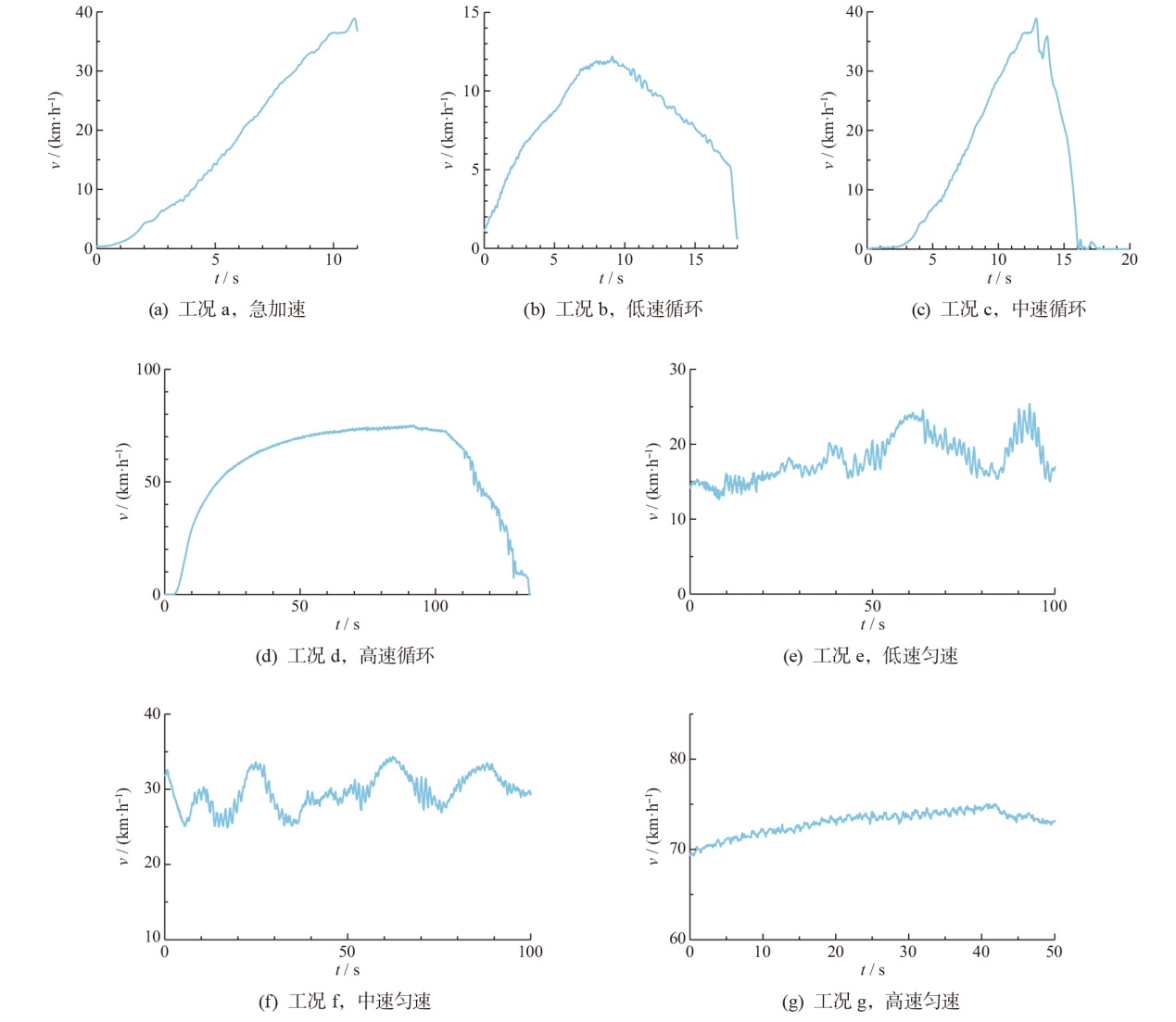
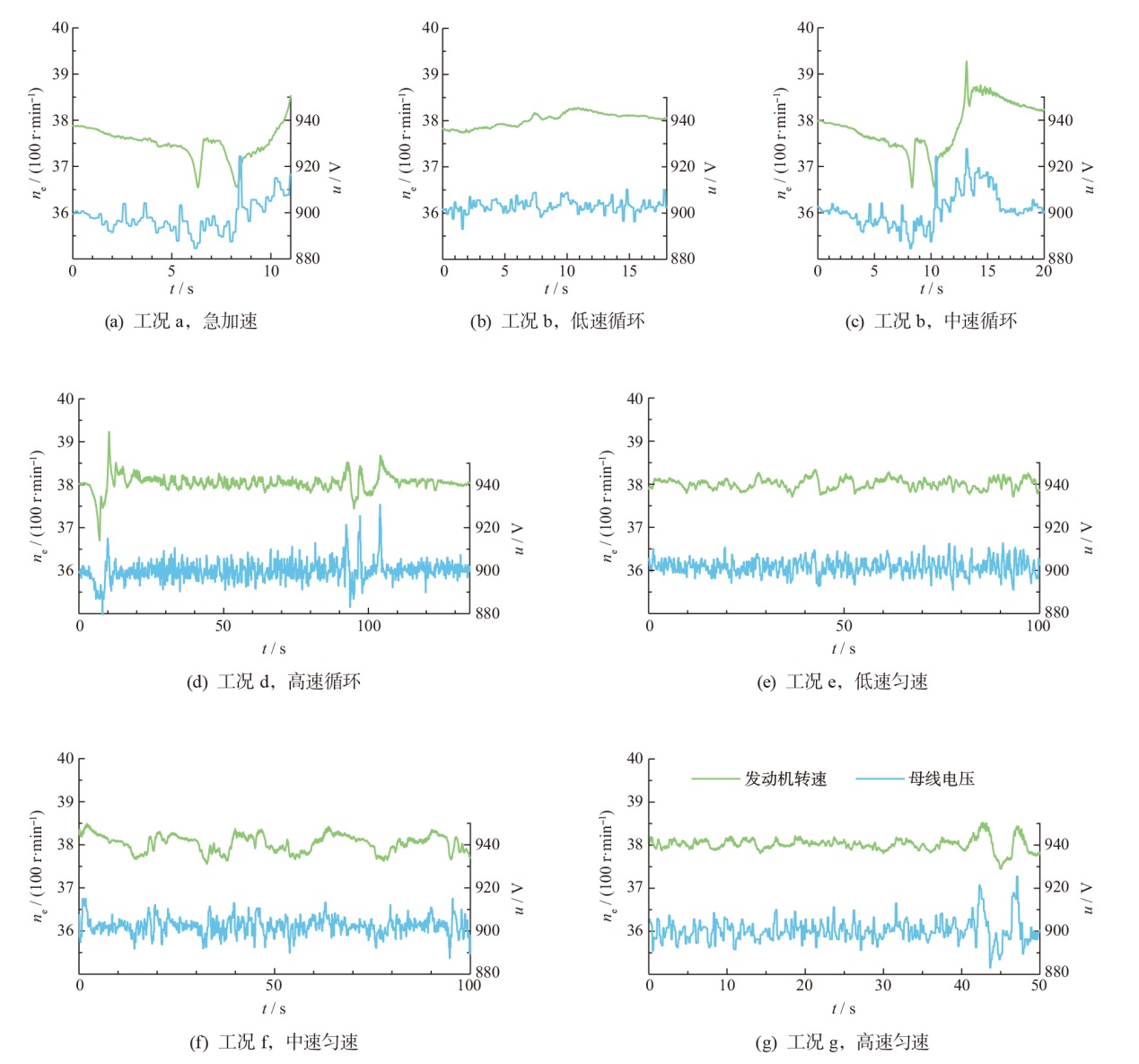
| 工况名称 | 工况代码 | v / (km·h-1) | ne / (r·min-1) | uref / V | |||||
|---|---|---|---|---|---|---|---|---|---|
| 四分位数* | 最大值 | 均值±标准差 | 最大值 | 均值±标准差 | 最大值 | ||||
| 急加速 | a | 17(6, 30) | 38.88 | 3 751±32 | 3 853 | 898±7 | 924 | ||
| 低速循环 | b | 9(6, 11) | 12.20 | 3 802±15 | 3 828 | 903±3 | 910 | ||
| 中速循环 | c | 9(0, 26) | 38.88 | 3 788±52 | 3 928 | 902±8 | 928 | ||
| 高速循环 | d | 66(45, 73) | 75.00 | 3 804±20 | 3 923 | 900±5 | 931 | ||
| 低速匀速 | e | 17(16, 20) | 25.40 | 3 801±12 | 3 834 | 902±4 | 913 | ||
| 中速匀速 | f | 30(28, 31) | 34.38 | 3 804±20 | 3 849 | 902±4 | 915 | ||
| 高速匀速 | g | 73(72, 74) | 75.00 | 3 802±15 | 3 852 | 900±5 | 926 | ||
| 工况名称 | 工况代码 | v / (km·h-1) | ne / (r·min-1) | uref / V | |||||
|---|---|---|---|---|---|---|---|---|---|
| 四分位数* | 最大值 | 均值±标准差 | 最大值 | 均值±标准差 | 最大值 | ||||
| 急加速 | a | 17(6, 30) | 38.88 | 3 751±32 | 3 853 | 898±7 | 924 | ||
| 低速循环 | b | 9(6, 11) | 12.20 | 3 802±15 | 3 828 | 903±3 | 910 | ||
| 中速循环 | c | 9(0, 26) | 38.88 | 3 788±52 | 3 928 | 902±8 | 928 | ||
| 高速循环 | d | 66(45, 73) | 75.00 | 3 804±20 | 3 923 | 900±5 | 931 | ||
| 低速匀速 | e | 17(16, 20) | 25.40 | 3 801±12 | 3 834 | 902±4 | 913 | ||
| 中速匀速 | f | 30(28, 31) | 34.38 | 3 804±20 | 3 849 | 902±4 | 915 | ||
| 高速匀速 | g | 73(72, 74) | 75.00 | 3 802±15 | 3 852 | 900±5 | 926 | ||
| 指标 | 权重 | 评价结果/ % | ||||||
|---|---|---|---|---|---|---|---|---|
| 工况→a | b | c | d | e | f | g | ||
| u1 | 0.18 | 24.29 | 3.48 | 37.41 | 20.08 | 3.87 | 11.94 | 10.95 |
| u2 | 0.17 | 3.09 | 0.49 | 3.09 | 4.07 | 1.04 | 2.61 | 2.69 |
| u3 | 0.06 | 0.67 | 21.76 | 2.50 | 22.88 | 9.57 | 6.84 | 20.64 |
| u4 | 0.13 | 0.00 | 0.00 | 0.00 | 0.00 | 0.00 | 1.47 | 0.00 |
| u5 | 0.09 | 1.34 | 0.35 | 1.18 | 0.34 | 0.26 | 0.46 | 0.28 |
| u6 | 0.17 | 3.83 | 0.73 | 3.83 | 3.41 | 0.89 | 1.28 | 1.45 |
| u7 | 0.13 | 0.62 | 0.37 | 0.64 | 0.36 | 0.34 | 0.40 | 0.41 |
| u8 | 0.07 | 2.71 | 1.14 | 3.07 | 3.42 | 1.41 | 1.67 | 2.83 |
| 总评价结果/分 | 3.06 | 1.22 | 3.13 | 3.32 | 1.11 | 2.29 | 2.45 | |
| 指标 | 权重 | 评价结果/ % | ||||||
|---|---|---|---|---|---|---|---|---|
| 工况→a | b | c | d | e | f | g | ||
| u1 | 0.18 | 24.29 | 3.48 | 37.41 | 20.08 | 3.87 | 11.94 | 10.95 |
| u2 | 0.17 | 3.09 | 0.49 | 3.09 | 4.07 | 1.04 | 2.61 | 2.69 |
| u3 | 0.06 | 0.67 | 21.76 | 2.50 | 22.88 | 9.57 | 6.84 | 20.64 |
| u4 | 0.13 | 0.00 | 0.00 | 0.00 | 0.00 | 0.00 | 1.47 | 0.00 |
| u5 | 0.09 | 1.34 | 0.35 | 1.18 | 0.34 | 0.26 | 0.46 | 0.28 |
| u6 | 0.17 | 3.83 | 0.73 | 3.83 | 3.41 | 0.89 | 1.28 | 1.45 |
| u7 | 0.13 | 0.62 | 0.37 | 0.64 | 0.36 | 0.34 | 0.40 | 0.41 |
| u8 | 0.07 | 2.71 | 1.14 | 3.07 | 3.42 | 1.41 | 1.67 | 2.83 |
| 总评价结果/分 | 3.06 | 1.22 | 3.13 | 3.32 | 1.11 | 2.29 | 2.45 | |
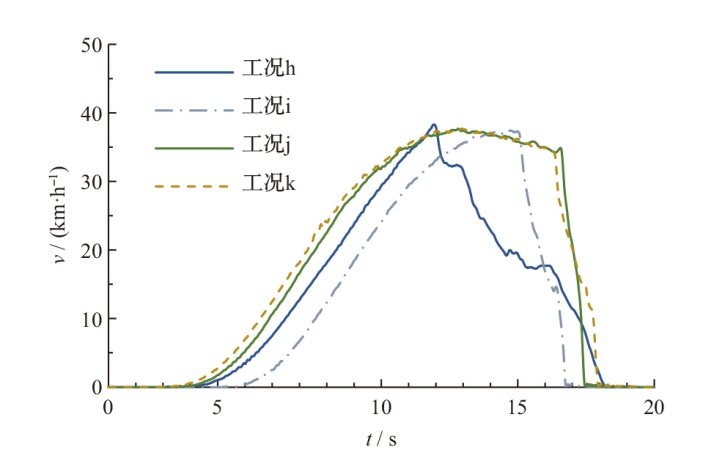
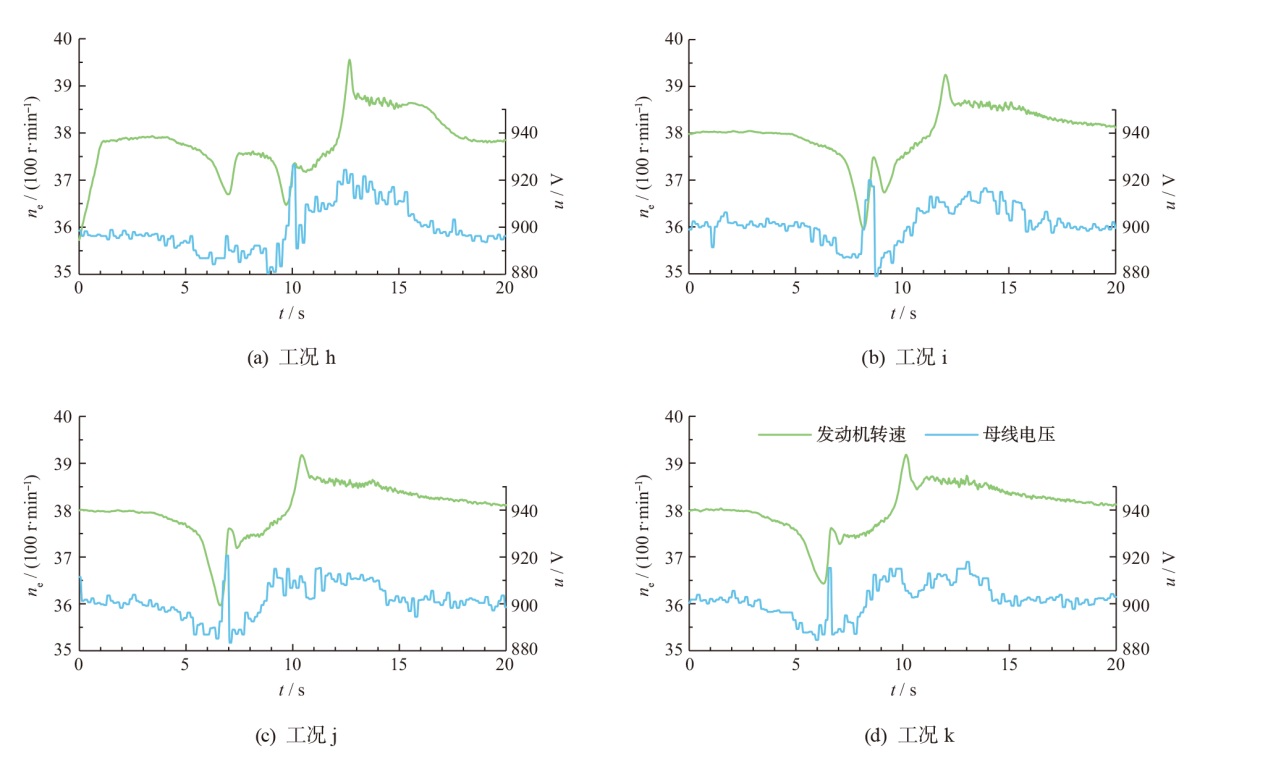
| 工况代码 | v / (km·h-1) | ne / (r·min-1) | uref / V | |||||
|---|---|---|---|---|---|---|---|---|
| 四分位数* | 最大值 | 均值±标准差 | 最大值 | 均值±标准差 | 最大值 | |||
| h | 12(0, 23) | 38.30 | 3 781±46 | 3 956 | 899±9 | 926 | ||
| i | 5(0, 27) | 37.40 | 3 800±55 | 3 925 | 901±8 | 920 | ||
| j | 17(0, 35) | 37.66 | 3 803±54 | 3 918 | 901±7 | 921 | ||
| k | 19(1, 35) | 37.70 | 3 804±50 | 3 918 | 901±7 | 918 | ||
| 工况代码 | v / (km·h-1) | ne / (r·min-1) | uref / V | |||||
|---|---|---|---|---|---|---|---|---|
| 四分位数* | 最大值 | 均值±标准差 | 最大值 | 均值±标准差 | 最大值 | |||
| h | 12(0, 23) | 38.30 | 3 781±46 | 3 956 | 899±9 | 926 | ||
| i | 5(0, 27) | 37.40 | 3 800±55 | 3 925 | 901±8 | 920 | ||
| j | 17(0, 35) | 37.66 | 3 803±54 | 3 918 | 901±7 | 921 | ||
| k | 19(1, 35) | 37.70 | 3 804±50 | 3 918 | 901±7 | 918 | ||
| 指标 | 权重 | 评价结果 / % | |||
|---|---|---|---|---|---|
| 工况→h | i | j | k | ||
| u1 | 0.18 | 14.74 | 13.65 | 13.78 | 18.89 |
| u2 | 0.17 | 2.29 | 3.41 | 2.34 | 2.66 |
| u3 | 0.06 | 7.31 | 5.62 | 12.24 | 6.91 |
| u4 | 0.13 | 0.01 | 0.30 | 0.00 | 0.00 |
| u5 | 0.09 | 1.25 | 1.02 | 1.03 | 1.04 |
| u6 | 0.17 | 4.09 | 5.38 | 5.35 | 4.62 |
| u7 | 0.13 | 0.95 | 0.62 | 0.59 | 0.61 |
| u8 | 0.07 | 2.93 | 2.33 | 2.29 | 2.34 |
| 总评价/ 分 | 3.08 | 3.10 | 3.09 | 3.06 | |
| 指标 | 权重 | 评价结果 / % | |||
|---|---|---|---|---|---|
| 工况→h | i | j | k | ||
| u1 | 0.18 | 14.74 | 13.65 | 13.78 | 18.89 |
| u2 | 0.17 | 2.29 | 3.41 | 2.34 | 2.66 |
| u3 | 0.06 | 7.31 | 5.62 | 12.24 | 6.91 |
| u4 | 0.13 | 0.01 | 0.30 | 0.00 | 0.00 |
| u5 | 0.09 | 1.25 | 1.02 | 1.03 | 1.04 |
| u6 | 0.17 | 4.09 | 5.38 | 5.35 | 4.62 |
| u7 | 0.13 | 0.95 | 0.62 | 0.59 | 0.61 |
| u8 | 0.07 | 2.93 | 2.33 | 2.29 | 2.34 |
| 总评价/ 分 | 3.08 | 3.10 | 3.09 | 3.06 | |
| [1] | 许敏, 张亦嘉. 中国混合动力汽车动力总成技术进展[J]. 汽车安全与节能学报, 2024, 15(3): 269-294. |
| XU Min, ZHANG Yijia. Advancements in the powertrain technology of hybrid electric vehicles in China[J]. J Automo Safe Energy, 2024, 15(3): 269-294. (in Chinese) | |
| [2] | 陈德鑫, 石兴磊, 杨启, 等. 重型车变速器传动效率的规律及评价方法[J]. 汽车安全与节能学报, 2016, 7(4): 433-441. |
| CHEN Dexin, SHI Xinglei, YANG Qi, et al. Rule and evaluation method of transmission efficiency for heavy vehicle[J]. J Automo Safe Energy, 2016, 7(4): 433-441. (in Chinese) | |
| [3] |
魏巍, 彭卉, 刘旭, 等. 液力传动车辆闭锁充油动态缓冲特性优化[J]. 兵工学报, 2019, 40(7): 1358-1364.
doi: 10.3969/j.issn.1000-1093.2019.07.004 |
| WEI Wei, PENG Hui, LIU Xu, et al. Research on dynamic oil-filling cushioning properties of locking clutch in a hydrodynamic transmission vehicle[J]. Acta Arma, 2019, 40(7): 1358-1364. (in Chinese) | |
| [4] | 邹渊, 陈晓玲, 李东阁, 等. 串联式混合动力推土机驱动系参数匹配设计[J]. 机械工程学报, 2014, 50(1): 70-75. |
| ZOU Yuan, CHEN Xiaoling, LI Dongge, et al. Parameter matching design and control optimization for series hybrid tracked bulldozer[J]. J Mech Eng, 2014, 50(1): 70-75. (in Chinese) | |
| [5] |
邹天刚, 闫清东, 盖江涛, 等. 基于扁平电机的轻混式履带车辆综合传动方案[J]. 兵工学报, 2021, 42(10): 2233-2241.
doi: 10.3969/j.issn.1000-1093.2021.10.019 |
| ZOU Tiangang, YAN Qingdong, GAI Jiangtao, et al. The scheme of lightweight integrated mixing transmission based on flat motor for tracked vehicle[J]. Acta Arma, 2021, 42(10): 2233-2241. (in Chinese) | |
| [6] |
YANG Liuquan, WANG Weida, YANG Chao, et al. Time-delay-aware power coordinated control approach for series hybrid electric vehicles[J]. Energy, 2024, 294(1): 130934-130948.
doi: 10.1016/j.energy.2024.130934 URL |
| [7] | Gao F, Bozhko S, Asher G, et al. An improved voltage compensation method for droop-controlled system in DC microgrid[C]// IECON 2014-40th Annu Conf IEEE Indu Electr Soc, IEEE, 2014: 1240-1246. |
| [8] | 吴鸣, 赵婷婷, 赵凤展, 等. 微电网运行效果评价指标体系及评价方法[J]. 电网技术, 2018, 42(3): 690-697. |
| WU Ming, ZHAO Tingting, ZHAO Fengzhan, et al. Evaluation index system of microgrid operation effect and corresponding evaluation method[J]. Power Syst Techn, 2018, 42(3): 690-697. (in Chinese) | |
| [9] | 朱兰, 杨淑红, 唐陇军, 等. 微网规划综合评价精细化指标体系研究[J]. 现代电力, 2018, 35(3): 54-61. |
| ZHU Lan, YANG Shuhong, TANG Longjun, et al. Study on fine index system for comprehensive evaluation of microgrid planning[J]. Modern Electr Power, 2018, 35(3): 54-61. (in Chinese) | |
| [10] | 牛焕娜, 窦伟, 李春毅, 等. 基于模糊神经网络的微电网荷储协调智能控制方法[J]. 高电压技术, 2024, 50(7): 3019-3028. |
| NIU Huanna, DOU Wei, LI Chunyi, et al. Intelligent control method of load and storage coordination in microgrid based on fuzzy neural network[J]. High Volt Eng, 2024, 50(7): 3019-3028. (in Chinese) | |
| [11] |
陈楚靓, 李晓露, 纪坤华, 等. 考虑源荷储匹配的配电网集群划分与优化运行[J]. 电力建设, 2023, 44(9): 80-93.
doi: 10.12204/j.issn.1000-7229.2023.09.008 |
|
CHEN Chujing, LI Xiaolu, JI Kunhua, et al. Distribution network cluster partition and optimal operation considering source-load-storage matching[J]. Electr Power Constr, 2023, 44(9): 80-93. (in Chinese)
doi: 10.12204/j.issn.1000-7229.2023.09.008 |
|
| [12] | YANG Liuquan, WANG Weida, YANG Chao, et al. An adaptive receding horizon-based flexible mode switching control strategy of parallel hybrid electric vehicles[J]. Contr Eng Pract, 2023, 136: Paper No 105537. |
| [13] |
CHEN Ruihu, YANG Chao, HAN Lijin, et al. Power reserve predictive control strategy for hybrid electric vehicle using recognition-based long short-term memory network[J]. J Power Sources, 2022, 520(0): 230865-230878.
doi: 10.1016/j.jpowsour.2021.230865 URL |
| [14] |
盖江涛, 生辉, 周广明, 等. 串联式混合动力履带车辆急加速工况功率平衡控制策略[J]. 兵工学报, 2021, 42(10): 2180-2188.
doi: 10.3969/j.issn.1000-1093.2021.10.013 |
| GAI Jiangtao, SHENG Hui, ZHOU Guangming, et al. Power balance control strategy of series hybrid tracked vehicle under rapid acceleration[J]. Acta Arma, 2021, 42(10): 2180-2188. (in Chinese) | |
| [15] |
YANG Liuquan, WANG Weida, YANG Chao, et al. Time-delay-aware power coordinated control approach for series hybrid electric vehicles[J]. Energy, 2024, 294(1): 130934-130946.
doi: 10.1016/j.energy.2024.130934 URL |
| [16] | YANG Chao, CHEN Ruihu, WANG Weida, et al. Cyber-physical optimization-based fuzzy control strategy for plug-in hybrid electric buses using iterative modified particle swarm optimization[J]. IEEE Trans Intell Vehi, 2023, 8(5): 1-13. |
| [17] |
赵健, 张亮, 李岙然, 等. 基于系统工程方法的装甲装备可靠性指标分配[J]. 兵工学报, 2022, 43(S1): 196-202.
doi: 10.12382/bgxb.2022.A024 |
|
ZHAO Jian, ZHANG Liang, LI Aoran, et al. Reliability index distribution of armored equipment based on system engineering method[J]. Acta Armamentarii, 2022, 43(S1): 196-202. (in Chinese)
doi: 10.12382/bgxb.2022.A024 |
|
| [18] | 张志强, 徐斌, 何勇灵, 等. 基于AHP评价方法的发动机性能评价[J]. 兵工学报, 2008, 29(5): 625-628. |
| ZHANG Zhiqiang, XU Bin, HE Yongling, et al. Engine performance evaluation based on analytic hierarchy process[J]. Acta Armamentarii, 2008, 29(5): 625-628. (in Chinese) | |
| [19] | 臧翰林, 李艳玲. 基于群层次分析法的雷达导引头抗干扰性能评估[J]. 探测与控制学报, 2018, 40(6): 110-114, 120. |
| ZANG Hanlin, LING Yanling, ECCM Performance evaluation of radar seeker based on group AHP[J]. J Detec Contr, 2018, 40(6): 110-114, 120. (in Chinese) | |
| [20] | 王化吉, 宗长富, 管欣, 等. 基于模糊层次分析法的汽车操纵稳定性主观评价指标权重确定方法[J]. 机械工程学报, 2011, 47(24): 83-90. |
| WANG Huaji, ZONG Changfu, GUAN Xin, et al. Method of determining weights of subjective evaluation indexes for car handling and stability based on fuzzy analytic hierarchy process[J]. J Mech Eng, 2011, 47(24): 83-90. (in Chinese) |
| [1] | 张韬, 陈玉国, 秦玉福, 王言子, 王阳, 马瑞. 基于多目标优化的轻型商用车线控制动系统结构参数设计[J]. 汽车安全与节能学报, 2025, 16(4): 548-557. |
| [2] | 刘熠, 宫新乐, 唐云, 胡嫚, 马捷, 秦毅, 吴飞, 蒲华燕, 罗均. 面向无人驾驶车辆节能的迭代优化预测控制方法[J]. 汽车安全与节能学报, 2023, 14(1): 80-88. |
| [3] | 林国庆, 逯超, 韩龙飞, 王睿希. 汽车自动紧急制动系统行人测试与评价方法[J]. 汽车安全与节能学报, 2020, 11(3): 296-304. |
| [4] | 韩大双, 马志雄, 朱西产, 曾宇凡. 用于自动驾驶汽车的汽车—骑车人事故场景分析 [J]. 汽车安全与节能学报, 2020, 11(2): 220-226. |
| [5] | 许述财,黄杨,付海龙,王戈,张金换. 爆炸冲击载荷下乘员小腿伤害评价指标的对比分析[J]. JASE, 2016, 07(04): 371-376. |
| [6] | 陈德鑫,石兴磊,杨启,陈曦. 重型车变速器传动效率的规律及评价方法[J]. JASE, 2016, 07(04): 433-441. |
| [7] | 王锋,赵清江,乐中耀,李阳. 基于全宽可变形壁障测试的车对车正碰撞的相容性[J]. 汽车安全与节能学报, 2015, 6(01): 30-36. |
| [8] | 江浩斌,徐哲,唐斌,耿国庆. 基于电磁离合器的重型车辆节能型电控液压转向系统[J]. 汽车安全与节能学报, 2014, 5(02): 201-208. |
| 阅读次数 | ||||||
|
全文 |
|
|||||
|
摘要 |
|
|||||
