欢迎访问《汽车安全与节能学报》,

汽车安全与节能学报 ›› 2026, Vol. 17 ›› Issue (4): 438-449.DOI: 10.3969/j.issn.1674-8484.2026.04.002
陈硕( ), 张风奇*(), 付叶雨, 解少博
收稿日期:2026-06-01
修回日期:2026-07-16
出版日期:2026-08-30
发布日期:2026-09-01
通讯作者:
*张风奇,教授。E-mail:fengqizhang@chd.edu.cn。
作者简介:陈硕(2001—),男(汉),山东,硕士研究生。E-mail:2024122042@chd.edu.cn。
基金资助:
CHEN Shuo(), ZHANG Fengqi*(), FU Yeyu, XIE Shaobo
Received:2026-06-01
Revised:2026-07-16
Online:2026-08-30
Published:2026-09-01
摘要:
针对分布式驱动电动汽车在低附着、对开及附着突变路面下易发生横摆失稳的问题,该文提出一种基于路面附着系数估计的横摆稳定性控制策略。该策略针对不同工况下附着信息可观性差异,构建双模型并行无迹Kalman滤波(UKF)路面附着系数在线估计方法,并将估计结果用于参考横摆角速度、质心侧偏角约束修正及滑模切换增益自适应设计;同时,在下层驱动力矩分配中建立基于附着约束的四轮驱动力矩优化分配策略。结果表明:相比常规滑模控制策略,所提方法使横摆角速度峰值平均下降15.19%,质心侧偏角峰值平均下降22.90%。说明该策略能够实时适应路面附着变化,有效提升复杂路面下车辆操纵稳定性。
中图分类号:
陈硕, 张风奇, 付叶雨, 解少博. 基于路面附着系数估计的分布式驱动电动汽车横摆稳定性控制[J]. 汽车安全与节能学报, 2026, 17(4): 438-449.
CHEN Shuo, ZHANG Fengqi, FU Yeyu, XIE Shaobo. Yaw stability control of distributed-drive electric vehicles based on road adhesion coefficient estimation[J]. Journal of Automotive Safety and Energy, 2026, 17(4): 438-449.
| 整车质量,m | 1 447.2 kg |
|---|---|
| 横摆转动惯量,Iz | 1 536.7 kg·m2 |
| 质心到前轴距离,a | 1.015 m |
| 质心到后轴距离,b | 1.895 m |
| 前轮侧偏刚度,Cf | -85 kN / rad |
| 后轮侧偏刚度,Cr | -59 kN / rad |
| 轮距,Wd | 1.675 m |
| 车轮半径,R | 0.325 m |
| 整车质量,m | 1 447.2 kg |
|---|---|
| 横摆转动惯量,Iz | 1 536.7 kg·m2 |
| 质心到前轴距离,a | 1.015 m |
| 质心到后轴距离,b | 1.895 m |
| 前轮侧偏刚度,Cf | -85 kN / rad |
| 后轮侧偏刚度,Cr | -59 kN / rad |
| 轮距,Wd | 1.675 m |
| 车轮半径,R | 0.325 m |
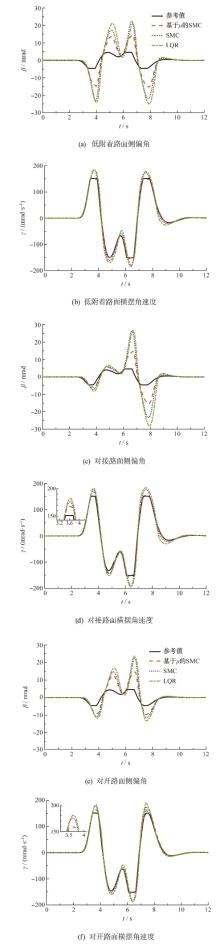
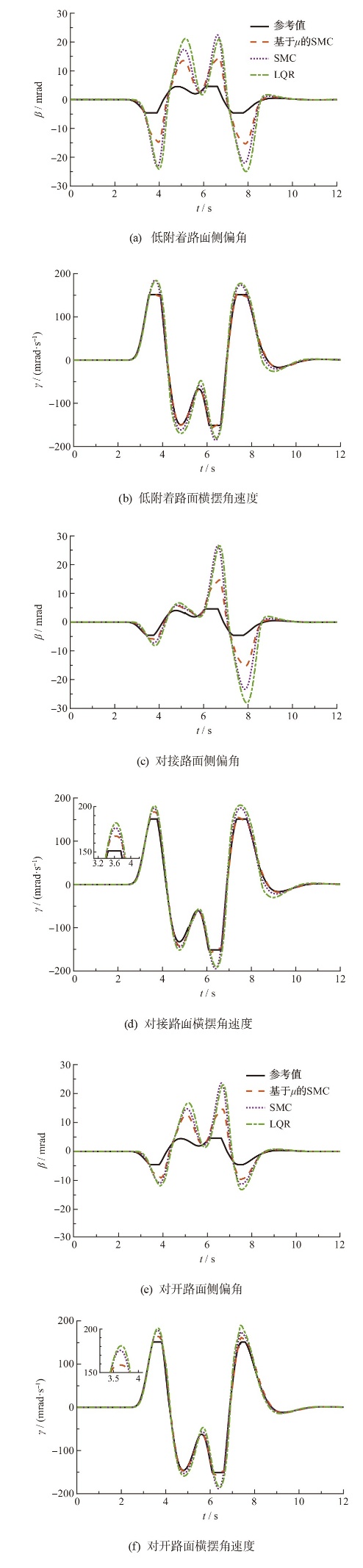
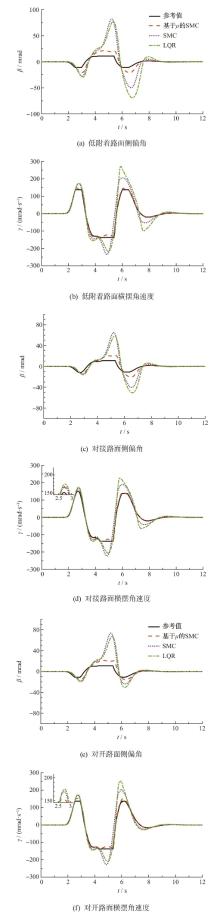
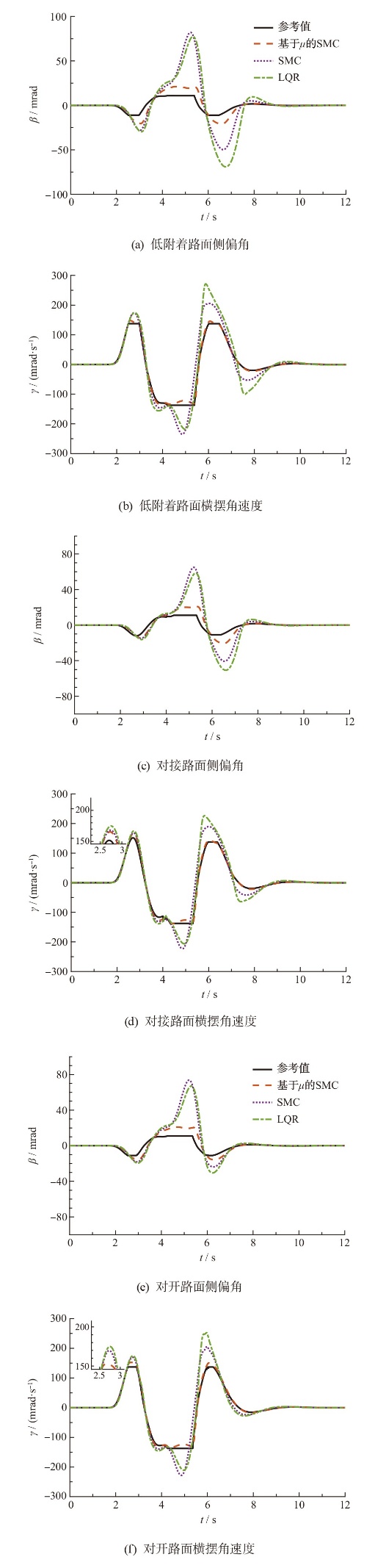
| 工况 | β峰值降低率/ % | γ峰值降低率/ % | |
|---|---|---|---|
| SMC相比 LQR | 低速、低附着 | 15.26 | 11.03 |
| 低速、对开 | 15.11 | 6.94 | |
| 低速、对接 | 15.64 | 7.53 | |
| 高速、低附着 | 34.51 | 28.41 | |
| 高速、对开 | 20.06 | 16.11 | |
| 高速、对接 | 27.24 | 17.20 | |
| 基于μ的 SMC相比 SMC | 低速、低附着 | 17.19 | 10.97 |
| 低速、对开 | 8.34 | 4.52 | |
| 低速、对接 | 22.54 | 10.26 | |
| 高速、低附着 | 36.97 | 25.37 | |
| 高速、对开 | 25.04 | 16.90 | |
| 高速、对接 | 27.34 | 23.09 |
| 工况 | β峰值降低率/ % | γ峰值降低率/ % | |
|---|---|---|---|
| SMC相比 LQR | 低速、低附着 | 15.26 | 11.03 |
| 低速、对开 | 15.11 | 6.94 | |
| 低速、对接 | 15.64 | 7.53 | |
| 高速、低附着 | 34.51 | 28.41 | |
| 高速、对开 | 20.06 | 16.11 | |
| 高速、对接 | 27.24 | 17.20 | |
| 基于μ的 SMC相比 SMC | 低速、低附着 | 17.19 | 10.97 |
| 低速、对开 | 8.34 | 4.52 | |
| 低速、对接 | 22.54 | 10.26 | |
| 高速、低附着 | 36.97 | 25.37 | |
| 高速、对开 | 25.04 | 16.90 | |
| 高速、对接 | 27.34 | 23.09 |
| 控制算法 | 工况 | RMSE (β) rad | RMSE (γ) (rad·s-1) | ay峰值 g |
|---|---|---|---|---|
| LQR | 低速、低附着 | 0.006 84 | 0.013 83 | 0.285 2 |
| 低速、对开 | 0.005 49 | 0.013 34 | 0.349 6 | |
| 低速、对接 | 0.005 91 | 0.012 99 | 0.322 6 | |
| 高速、低附着 | 0.005 62 | 0.014 43 | 0.348 9 | |
| 高速、对开 | 0.019 35 | 0.032 96 | 0.480 5 | |
| 高速、对接 | 0.009 35 | 0.021 81 | 0.412 7 | |
| SMC | 低速、低附着 | 0.005 86 | 0.007 04 | 0.284 9 |
| 低速、对开 | 0.004 90 | 0.008 58 | 0.332 4 | |
| 低速、对接 | 0.005 35 | 0.008 69 | 0.296 7 | |
| 高速、低附着 | 0.004 91 | 0.008 96 | 0.345 1 | |
| 高速、对开 | 0.016 24 | 0.027 09 | 0.435 1 | |
| 高速、对接 | 0.008 33 | 0.019 36 | 0.409 1 | |
| 基于μ的SMC | 低速、低附着 | 0.004 21 | 0.004 84 | 0.277 7 |
| 低速、对开 | 0.004 15 | 0.007 12 | 0.324 0 | |
| 低速、对接 | 0.004 03 | 0.005 29 | 0.283 9 | |
| 高速、低附着 | 0.004 54 | 0.006 47 | 0.327 2 | |
| 高速、对开 | 0.004 90 | 0.005 44 | 0.361 1 | |
| 高速、对接 | 0.004 82 | 0.005 83 | 0.349 3 |
| 控制算法 | 工况 | RMSE (β) rad | RMSE (γ) (rad·s-1) | ay峰值 g |
|---|---|---|---|---|
| LQR | 低速、低附着 | 0.006 84 | 0.013 83 | 0.285 2 |
| 低速、对开 | 0.005 49 | 0.013 34 | 0.349 6 | |
| 低速、对接 | 0.005 91 | 0.012 99 | 0.322 6 | |
| 高速、低附着 | 0.005 62 | 0.014 43 | 0.348 9 | |
| 高速、对开 | 0.019 35 | 0.032 96 | 0.480 5 | |
| 高速、对接 | 0.009 35 | 0.021 81 | 0.412 7 | |
| SMC | 低速、低附着 | 0.005 86 | 0.007 04 | 0.284 9 |
| 低速、对开 | 0.004 90 | 0.008 58 | 0.332 4 | |
| 低速、对接 | 0.005 35 | 0.008 69 | 0.296 7 | |
| 高速、低附着 | 0.004 91 | 0.008 96 | 0.345 1 | |
| 高速、对开 | 0.016 24 | 0.027 09 | 0.435 1 | |
| 高速、对接 | 0.008 33 | 0.019 36 | 0.409 1 | |
| 基于μ的SMC | 低速、低附着 | 0.004 21 | 0.004 84 | 0.277 7 |
| 低速、对开 | 0.004 15 | 0.007 12 | 0.324 0 | |
| 低速、对接 | 0.004 03 | 0.005 29 | 0.283 9 | |
| 高速、低附着 | 0.004 54 | 0.006 47 | 0.327 2 | |
| 高速、对开 | 0.004 90 | 0.005 44 | 0.361 1 | |
| 高速、对接 | 0.004 82 | 0.005 83 | 0.349 3 |
| [1] | 牛强, 魏文军. 分布式驱动电车的多智能体协同驱动防滑控制[J]. 现代制造工程, 2025(8): 63-70. |
| NIU Qiang, WEI Wenjun. Multi-agent cooperative drive anti-slip control for distributed drive electric vehicle[J]. Mode Manufact Engi, 2025(8): 63-70. (in Chinese) | |
| [2] | 李琴, 汤建明, 张博远, 等. 分布式驱动电动汽车多执行器容错控制研究[J]. 汽车工程, 2023, 45(12): 2251-2259. |
| LI Qin, TANG Jianming, ZHANG Boyuan, et al. Research on fault-tolerant control of multi-actuator for distributed drive electric vehicles[J]. Autom Engineering, 2023, 45(12): 2251-2259. (in Chinese) | |
| [3] | 李壮. 分布式驱动电动汽车自适应巡航与转矩分配协同控制研究[D]. 南宁: 广西大学, 2025. |
| LI Zhuang. Research on cooperative control of adaptive cruise and torque distribution for distributed drive electric vehicles[D]. Nanning: Guangxi University, 2025. (in Chinese) | |
| [4] | ZHANG Xudong, Göhlich D. Integrated traction control strategy for distributed drive electric vehicles with impro-vement of economy and longitudinal driving stability[J]. Energies, 2017, 10(1): 126. |
| [5] | 刘秋生, LAZARO Joan P. 紧急制动下基于DYC与AFS的横摆稳定性控制研究[J]. 计算机测量与控制, 2025, 33(8): 206-215, 241. |
| LIU Qiusheng, LAZARO Joan P. Research on yaw stability control based on DYC and AFS during emergency braking[J]. Comput Measu Contr, 2025, 33(8): 206-215, 241. (in Chinese) | |
| [6] | 王震坡, 丁晓林, 张雷. 四轮轮毂电机驱动电动汽车驱动防滑控制关键技术综述[J]. 机械工程学报, 2019, 55(12): 99-120. |
| WANG Zhenpo, DING Xiaolin, ZHANG Lei. Overview on key technologies of acceleration slip regulation for four-wheel-independently-actuated electric vehicles[J]. J Mech Engi, 2019, 55(12): 99-120. (in Chinese) | |
| [7] | Šabanovič E, Žuraulis V, Prentkovskis O, et al. Identifica-tion of road-surface type using deep neural networks for friction coefficient estimation[J]. Sensors, 2020, 20(3): 612. |
| [8] | 张雷, 关可人, 丁晓林, 等. 基于图像识别与动力学融合的路面附着系数估计方法[J]. 汽车工程, 2023, 45(7): 1222-1234, 1262. |
| ZHANG Lei, GUAN Keren, DING Xiaolin, et al. Tire-road friction estimation method based on image recogni-tion and dynamics fusion[J]. Autom Engineering, 2023, 45(7): 1222-1234, 1262. (in Chinese) | |
| [9] | SHAO Liang, JIN Chi, Lex C, et al. Robust road friction estimation during vehicle steering[J]. Vehi Syst Dyna, 2019, 57(4): 493-519. |
| [10] | YIN Yuming, Li S E, Tang K, et al. Approximate optimal filter design for vehicle system through actor-critic reinfor-cement learning[J]. Autom Innov, 2022, 5(4): 415-426. |
| [11] | XU Ying, Chen B, CHI Cheng. Estimation of road friction coefficient and vehicle states by 3-DOF dynamic model and HSRI model based on information fusion[J]. Asian J Contr, 2018, 20(3): 1067-1076. |
| [12] | Wielitzka M, Ortmaier T. Credibility of state and friction coefficient estimation in vehicle dynamics using UKF[C]// 2019 IEEE 58th Conf Deci Contr (CDC). IEEE, 2019: 3922-3927. |
| [13] | Asiabar A N, Kazemi R. A direct yaw moment controller for a four in-wheel motor drive electric vehicle using adaptive sliding mode control[J]. Proc Institut Mech Engi, Part K: J Multi-Body Dyna, 2019, 233(3): 549-567. |
| [14] | 刘学成, 刘俊, 李汉杰. 基于相平面法的车辆直接横摆力矩控制研究[J]. 合肥工业大学学报(自然科学版), 2019, 42(11): 1455-1461. |
| LIU Xuecheng, LIU Jun, LI Hanjie. Research on direct yaw moment control of vehicle based on phase plane method[J]. J Hefei Univ Tech (Nat Sci), 2019, 42(11): 1455-1461. (in Chinese) | |
| [15] | 张一西, 赵轩, 马建, 等. 基于NFTSMC的分布式驱动电动汽车稳定性控制[J]. 汽车安全与节能学报, 2023, 14(2): 212-223. |
| ZHANG Yixi, ZHAO Xuan, MA Jian, et al. Stability control of distributed drive electric vehicles based on the nonsingular fast terminal sliding mode control (NFTSMC)[J]. J Autom Safe Energ, 2023, 14(2): 212-223. (in Chinese) | |
| [16] | JIN Lisheng, ZHOU Heping, XIE Xianyi, et al. A direct yaw moment control frame through model predictive control considering vehicle trajectory tracking performance and handling stability for autonomous driving[J]. Contr Engi Pract, 2024, 148: 105947. |
| [17] | LIU Hui, LIU Cong, HAN Lijin, et al. Handling and stability integrated control of AFS and DYC for distributed drive electric vehicles based on risk assessment and prediction[J]. IEEE Trans Intel Transport Syst, 2022, 23(12): 23148-23163. |
| [18] | WU Xiru, HUANG Yuyuan. Adaptive fractional-order non-singular terminal sliding mode control based on fuzzy wavelet neural networks for omnidirectional mobile robot manipulator[J]. ISA Transactions, 2022, 121: 258-267. |
| [19] | 连晋毅, 王坤, 任艳强. 分布驱动式纯电动汽车直接横摆力矩控制研究[J]. 机械设计与制造, 2023(11): 149-155. |
| LIAN Jinyi, WANG Kun, REN Yanqiang. Research on direct yaw moment control of distributed drive pure electric vehicle[J]. Mach Desig Manuf, 2023(11): 149-155. (in Chinese) | |
| [20] | YANG Zhi, CHEN Yunxing, CHENG Qingsi, et al. Research on yaw stability control for distributed-drive pure electric pickup trucks[J]. World Elect Vehi J. 2025, 16(9): 534. |
| [21] | LIU Shuiku, ZHANG Haichuan, WANG Shu, et al. Hiera-rchical torque vectoring control strategy of distributed driving electric vehicles considering stability and economy[J]. Sensors. 2025, 25(13): 3933. |
| [22] | 邓浩楠, 赵治国, 赵坤, 等. 四驱车辆交互式多模型自适应无迹卡尔曼滤波路面附着系数估计[J]. 汽车工程, 2024, 46(8): 1357-1369. |
| DENG Haonan, ZHAO Zhiguo, ZHAO Kun, et al. Estima-tion of road adhesion coefficient using interactive multiple model adaptive Unscented Kalman Filter for 4WID vehicles[J]. Autom Engineering, 2024, 46(8): 1357-1369. (in Chinese) |
| [1] | 张志勇, 杜宸胄, 易晟, 于辉. 考虑噪声和初始状态不确定性的车辆状态UKF估计[J]. 汽车安全与节能学报, 2025, 16(3): 414-424. |
| [2] | 范小彬, 彭佳星. 紧急转向工况轮毂电机电动汽车多目标转矩分配策略[J]. 汽车安全与节能学报, 2025, 16(2): 217-225. |
| [3] | 卢彦博, 梁晋豪, 殷国栋, 冯吉伟, 王凡勋. 轮毂电机失效下分布式驱动电动汽车主动转向容错控制策略[J]. 汽车安全与节能学报, 2024, 15(4): 467-476. |
| [4] | 孙洪涛, 王晨, 赵庆堂, 王志文. 执行器攻击下自主无人车辆模糊滑模安全控制[J]. 汽车安全与节能学报, 2023, 14(6): 734-743. |
| [5] | 张一西, 赵轩, 马建, 王兴路, 胡月琦. 基于NFTSMC的分布式驱动电动汽车稳定性控制[J]. 汽车安全与节能学报, 2023, 14(2): 212-223. |
| [6] | 刘兆勇, 刘武东, 邵卫澍, 谭小强, 吴光强. 基于无迹Kalman滤波的车辆速度和质心侧偏角的估计[J]. 汽车安全与节能学报, 2023, 14(1): 31-37. |
| [7] | 陈德海, 王昱朝, 孙仕儒, 雷志军. 基于无迹Kalman滤波算法的电池内部温度估计[J]. 汽车安全与节能学报, 2022, 13(1): 186-193. |
| [8] | 高秀晶, 陶林君, 黄红武, 刘显贵. 复杂道路下自动驾驶车辆的横向运动鲁棒控制策略[J]. 汽车安全与节能学报, 2020, 11(4): 454-461. |
| [9] | 李磊, 李军, 张世义. 搭载改进滑模控制的自动驾驶汽车轨迹跟踪控制[J]. 汽车安全与节能学报, 2020, 11(4): 503-510. |
| [10] | 李学鋆, 章菊. 考虑路面附着系数和车速的 AFS 可变传动比设计[J]. 汽车安全与节能学报, 2020, 11(3): 329-336. |
| [11] | 裴晓飞,刘志厅,陈祯福,陈可际,杨波 . 分布式驱动电动汽车的差速转向控制及其适用性[J]. JASE, 2019, 10(4): 423-432. |
| [12] | 赵树恩,张雄,唐俊涛. 重型半挂汽车列车防侧翻分层递阶控制[J]. JASE, 2019, 10(4): 474-482. |
| [13] | 黄超,黄岩军,张健,Amir KHAJEPOUR. 电控液压可变气门驱动系统鲁棒控制器的设计( 英文)[J]. JASE, 2016, 07(01): 100-107. |
| [14] | 曾祥瑞, 黄开胜*, 孟凡博. 具有实时运算潜力的并联混合动力汽车模型预测控制[J]. 汽车安全与节能学报, 2012, 3(2): 165-172. |
| [15] | 傅洪, 陈全世, 田光宇. 基于滑模的直接转矩控制车用驱动电机的研究[J]. 汽车安全与节能学报, 2010, 1(1): 59-66. |
| 阅读次数 | ||||||
|
全文 |
|
|||||
|
摘要 |
|
|||||
