欢迎访问《汽车安全与节能学报》,

汽车安全与节能学报 ›› 2025, Vol. 16 ›› Issue (1): 66-76.DOI: 10.3969/j.issn.1674-8484.2025.01.007
易文韬1,2( ), 唐颖1, 雷飞兵1,*(), 曾董1, 蔡娅妮1, 罗斌尹1
收稿日期:2024-07-19
修回日期:2024-09-06
出版日期:2025-02-28
发布日期:2025-03-04
通讯作者:
* 雷飞兵,高级工程师。E-mail:lei.feibing@byd.com。
作者简介:易文韬(1995—),男(汉),湖北,博士后。E-mail:yiwentao1995@outlook.com。
YI Wentao1,2(), TANG Ying1, LEI Feibing1,*(), ZENG Dong1, CAI Yani1, LUO Binyin1
Received:2024-07-19
Revised:2024-09-06
Online:2025-02-28
Published:2025-03-04
摘要:
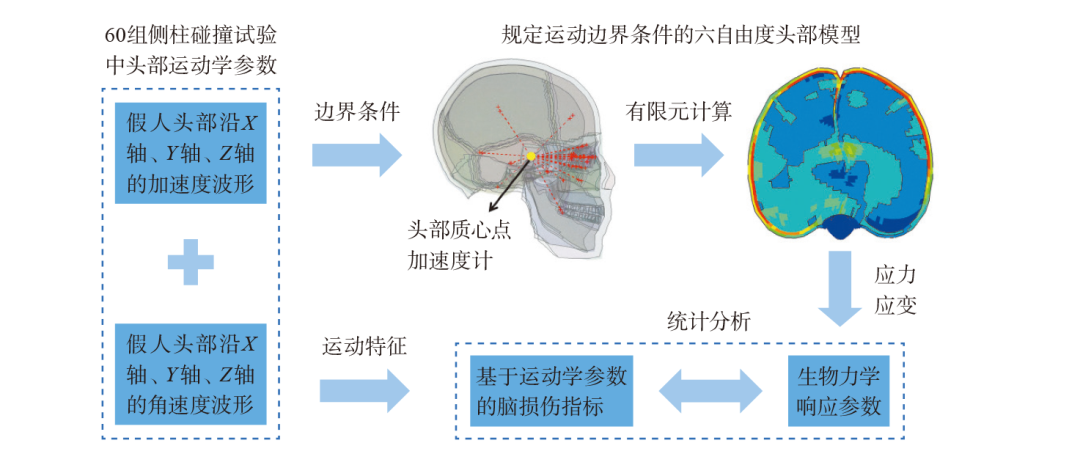
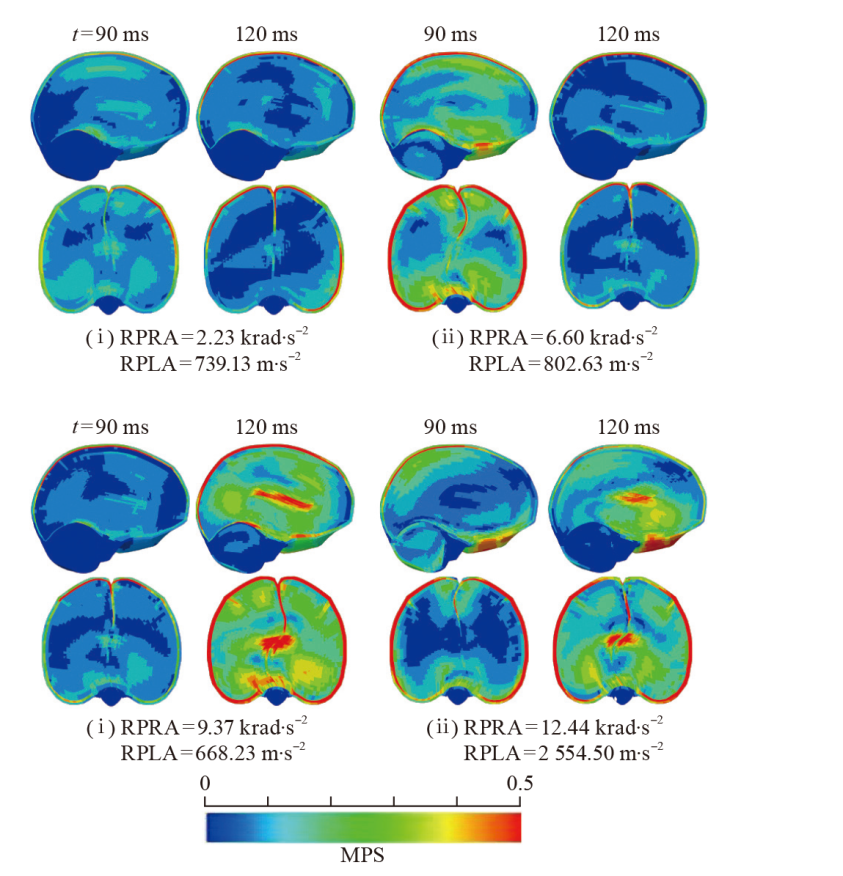
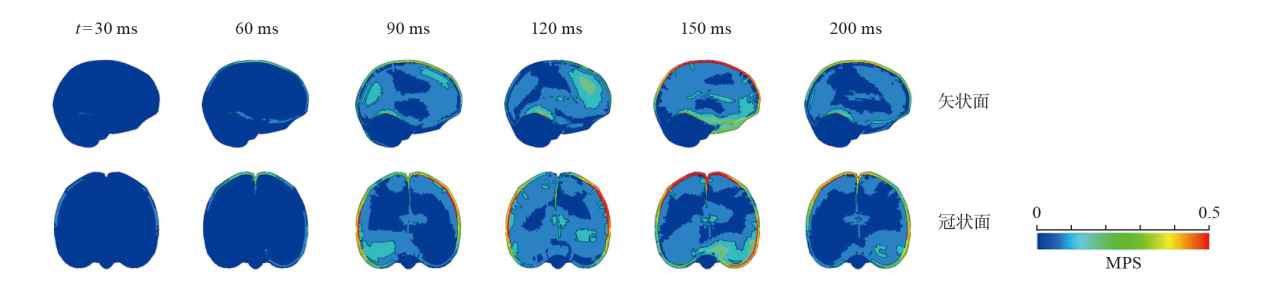
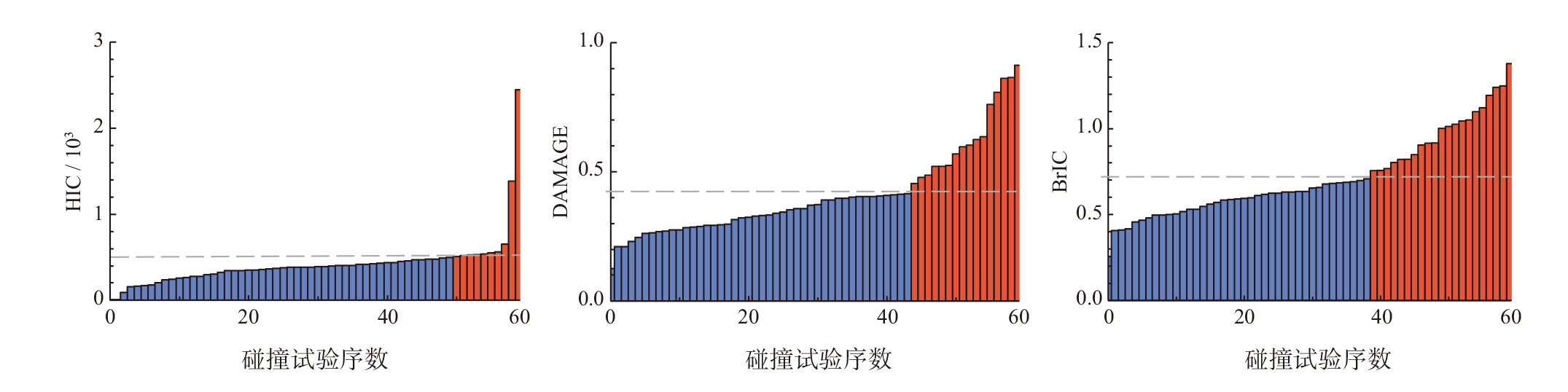
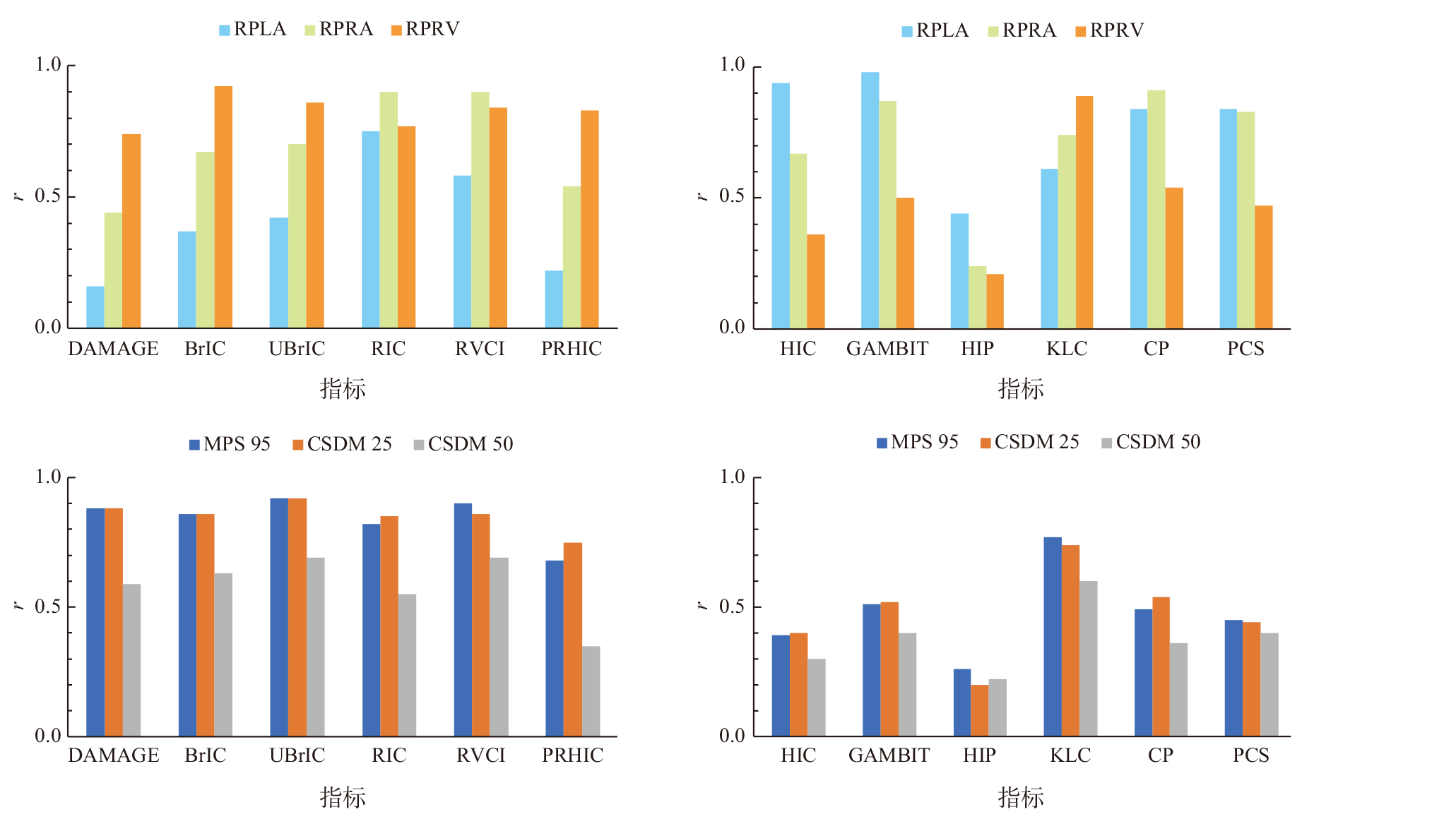
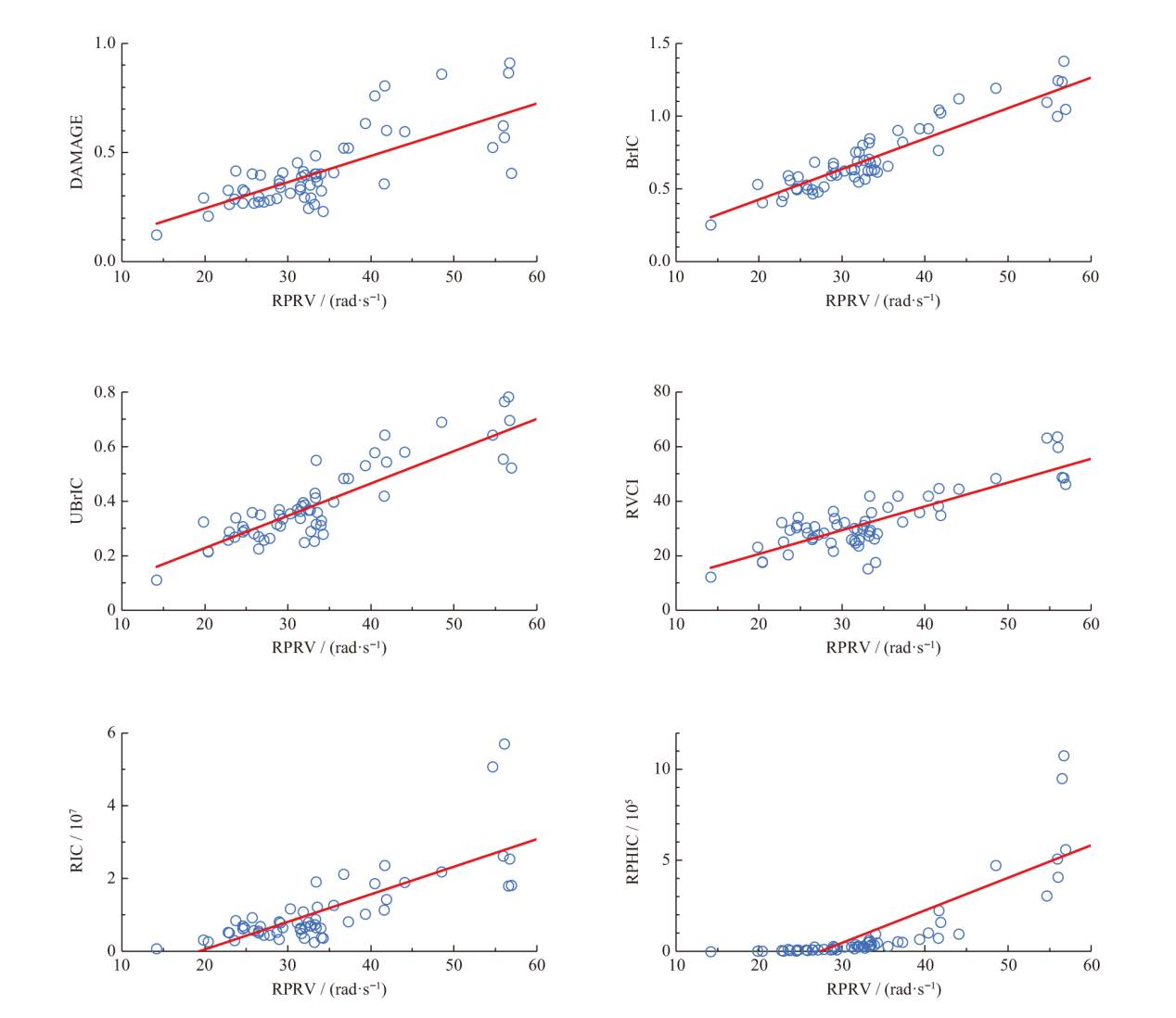
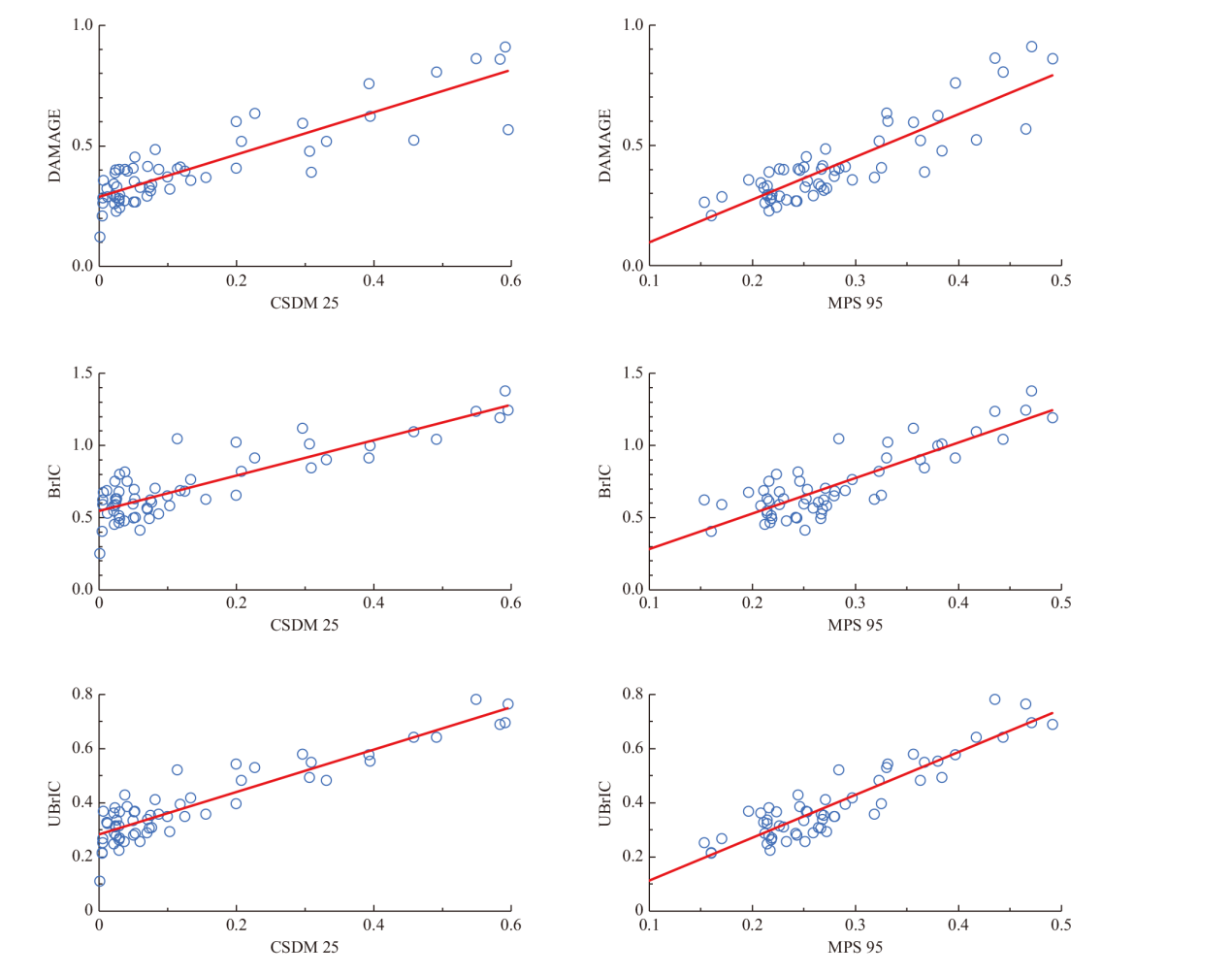
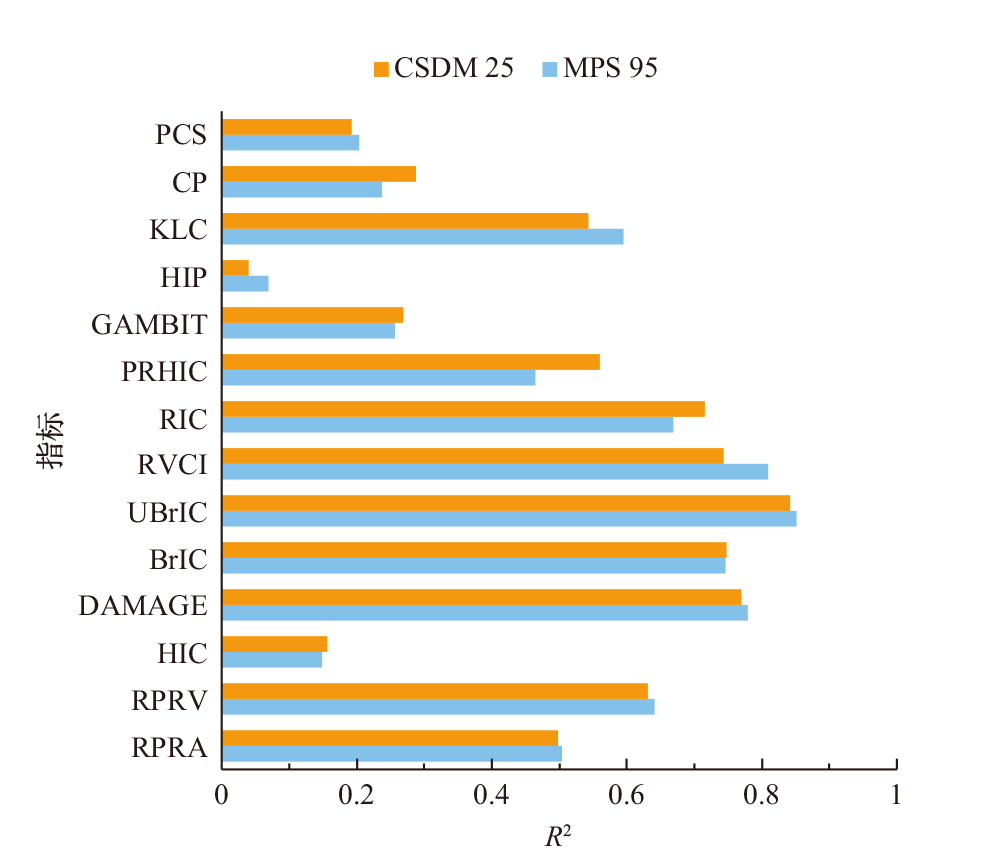
为完善相关脑损伤评估准则,探究了侧柱碰撞中头部运动学特征对弥散性脑损伤的影响。通过构建一种规定运动边界的六自由度头部模型,探究了60组侧柱碰撞试验中乘员头部运动学及生物力学响应,评估了现有脑损伤指标对弥散性损伤的预测效果。结果表明:不满足“弥散性轴索多轴一般评估”(DAMAGE)和“脑损伤准则”(BrIC)高性能阈值的试验占比分别为27%和35%。“通用脑损伤准则”(UBrIC)对95百分位最大主应变的决定系数R2为0.85,显著高于其他指标。多轴旋转载荷耦合作用导致脑组织应变集中,增加了侧柱工况弥散性脑损伤风险。UBrIC相对其他指标在侧柱工况下更能准确评估弥散性脑损伤风险。
中图分类号:
易文韬, 唐颖, 雷飞兵, 曾董, 蔡娅妮, 罗斌尹. 侧柱碰撞中头部运动学特征对弥散性脑损伤的影响[J]. 汽车安全与节能学报, 2025, 16(1): 66-76.
YI Wentao, TANG Ying, LEI Feibing, ZENG Dong, CAI Yani, LUO Binyin. Effects of head kinematic characteristics on diffuse brain injury in side pole impact[J]. Journal of Automotive Safety and Energy, 2025, 16(1): 66-76.
| 指标 | 均值 | 标准差 | 离群最小值 | 离群最大值 |
|---|---|---|---|---|
| HIC | 418.7 | 324.4 | 88.0 | 2 446.0 |
| DAMAGE | 0.41 | 0.17 | 0.12 | 0.91 |
| BrIC | 0.72 | 0.24 | 0.26 | 1.38 |
| UBrIC | 0.39 | 0.14 | 0.11 | 0.78 |
| RVCI | 32.70 | 10.88 | 12.26 | 63.54 |
| RIC | 1.10×10⁷ | 1.03×10⁷ | 8.73×10⁵ | 5.72×10⁷ |
| HIP | 24 264 | 6 437 | 670 | 35 291 |
| PRHIC | 1.15×10⁵ | 2.26×10⁵ | 400.33 | 1.08×10⁶ |
| GAMBIT | 0.32 | 0.16 | 0.13 | 1.15 |
| KLC | 0.25 | 0.06 | 0.12 | 0.41 |
| CP | 0.080 | 0.210 | 0.000 61 | 1.000 |
| PCS | 63.11 | 5.52 | 53.05 | 88.46 |
| 指标 | 均值 | 标准差 | 离群最小值 | 离群最大值 |
|---|---|---|---|---|
| HIC | 418.7 | 324.4 | 88.0 | 2 446.0 |
| DAMAGE | 0.41 | 0.17 | 0.12 | 0.91 |
| BrIC | 0.72 | 0.24 | 0.26 | 1.38 |
| UBrIC | 0.39 | 0.14 | 0.11 | 0.78 |
| RVCI | 32.70 | 10.88 | 12.26 | 63.54 |
| RIC | 1.10×10⁷ | 1.03×10⁷ | 8.73×10⁵ | 5.72×10⁷ |
| HIP | 24 264 | 6 437 | 670 | 35 291 |
| PRHIC | 1.15×10⁵ | 2.26×10⁵ | 400.33 | 1.08×10⁶ |
| GAMBIT | 0.32 | 0.16 | 0.13 | 1.15 |
| KLC | 0.25 | 0.06 | 0.12 | 0.41 |
| CP | 0.080 | 0.210 | 0.000 61 | 1.000 |
| PCS | 63.11 | 5.52 | 53.05 | 88.46 |
| 指标 | RPLA | RPRA | RPRV | CSDM 10 | CSDM 20 | CSDM 25 | MPS 95 | MPS 100 | 应力σ |
|---|---|---|---|---|---|---|---|---|---|
| HIC | <0.001 | <0.001 | 0.005 | 0.020 | <0.001 | 0.002 | 0.002 | <0.001 | <0.001 |
| DAMAGE | 0.211 | <0.001 | <0.001 | <0.001 | <0.001 | <0.001 | <0.001 | <0.001 | <0.001 |
| BrIC | 0.003 | <0.001 | <0.001 | <0.001 | <0.001 | <0.001 | <0.001 | <0.001 | <0.001 |
| UBrIC | <0.001 | <0.001 | <0.001 | <0.001 | <0.001 | <0.001 | <0.001 | <0.001 | <0.001 |
| RVCI | <0.001 | <0.001 | <0.001 | <0.001 | <0.001 | <0.001 | <0.001 | <0.001 | <0.001 |
| RIC | <0.001 | <0.001 | <0.001 | <0.001 | <0.001 | <0.001 | <0.001 | <0.001 | <0.001 |
| PRHIC | 0.098 | <0.001 | <0.001 | 0.007 | <0.001 | <0.001 | <0.001 | <0.001 | <0.001 |
| GAMBIT | <0.001 | <0.001 | <0.001 | <0.001 | <0.001 | <0.001 | <0.001 | <0.001 | <0.001 |
| HIP | <0.001 | 0.063 | 0.114 | 0.086 | 0.052 | 0.126 | 0.042 | 0.002 | 0.008 |
| KLC | <0.001 | <0.001 | <0.001 | <0.001 | <0.001 | <0.001 | <0.001 | <0.001 | <0.001 |
| CP | <0.001 | <0.001 | <0.001 | 0.004 | <0.001 | <0.001 | <0.001 | <0.001 | <0.001 |
| PCS | <0.001 | <0.001 | <0.001 | 0.002 | <0.001 | <0.001 | <0.001 | <0.001 | <0.001 |
| 指标 | RPLA | RPRA | RPRV | CSDM 10 | CSDM 20 | CSDM 25 | MPS 95 | MPS 100 | 应力σ |
|---|---|---|---|---|---|---|---|---|---|
| HIC | <0.001 | <0.001 | 0.005 | 0.020 | <0.001 | 0.002 | 0.002 | <0.001 | <0.001 |
| DAMAGE | 0.211 | <0.001 | <0.001 | <0.001 | <0.001 | <0.001 | <0.001 | <0.001 | <0.001 |
| BrIC | 0.003 | <0.001 | <0.001 | <0.001 | <0.001 | <0.001 | <0.001 | <0.001 | <0.001 |
| UBrIC | <0.001 | <0.001 | <0.001 | <0.001 | <0.001 | <0.001 | <0.001 | <0.001 | <0.001 |
| RVCI | <0.001 | <0.001 | <0.001 | <0.001 | <0.001 | <0.001 | <0.001 | <0.001 | <0.001 |
| RIC | <0.001 | <0.001 | <0.001 | <0.001 | <0.001 | <0.001 | <0.001 | <0.001 | <0.001 |
| PRHIC | 0.098 | <0.001 | <0.001 | 0.007 | <0.001 | <0.001 | <0.001 | <0.001 | <0.001 |
| GAMBIT | <0.001 | <0.001 | <0.001 | <0.001 | <0.001 | <0.001 | <0.001 | <0.001 | <0.001 |
| HIP | <0.001 | 0.063 | 0.114 | 0.086 | 0.052 | 0.126 | 0.042 | 0.002 | 0.008 |
| KLC | <0.001 | <0.001 | <0.001 | <0.001 | <0.001 | <0.001 | <0.001 | <0.001 | <0.001 |
| CP | <0.001 | <0.001 | <0.001 | 0.004 | <0.001 | <0.001 | <0.001 | <0.001 | <0.001 |
| PCS | <0.001 | <0.001 | <0.001 | 0.002 | <0.001 | <0.001 | <0.001 | <0.001 | <0.001 |
| [1] | Östh J, Bohman K, Jakobsson L. Head injury criteria assessment using head kinematics from crash tests and accident reconstructions[J]. Traf Injury Pre, 2023, 24(1): 56-61. |
| [2] | HSU Shiunyuan, WU Shaochun, RAU Chengshyuan, et al. Impact of adapting the abbreviated injury scale (AIS)-2005 from AIS-1998 on injury severity scores and clinical outcome[J]. Int’l J Envir Res Public Healt, 2019, 16(24): 5033. |
| [3] | Viano D C, Parenteau C S. Concussion, diffuse axonal injury, and AIS4+ head injury in motor vehicle crashes[J]. Traf Injury Pre, 2015, 16(8): 747-753. |
| [4] | Andriessen T M J C, Jacobs B, Vos P E. Clinical characteristics and pathophysiological mechanisms of focal and diffuse traumatic brain injury[J]. J Cell Mol Me, 2010, 14(10): 2381-2392. |
| [5] | Hajiaghamemar M, Margulies S S. Multi-scale white matter tract embedded brain finite element model predicts the location of traumatic diffuse axonal injury[J]. J Neurotraum, 2021, 38(1): 144-157. |
| [6] | Pintar F A, Maiman D J, Yoganandan N, et al. Injury patterns in side pole crashes[C]// Asso Adva Automotive Med, 2007, 51: 419. |
| [7] | Lissner H R, Lebow M, Evans F G. Experimental studies on the relation between acceleration and intracranial pressure changes in man[J]. Surg Gynecol Obste, 1960, 111: 329-338. |
| [8] | Kelkar R, Hasija V, Takhounts E G. Effect of angular acceleration on brain injury metric[C]// Proc IRCOBI Con, 2020: 8-11. |
| [9] | Reynier K A, Giudice J S, Chernyavskiy P, et al. Quantifying the effect of sex and neuroanatomical biomechanical features on brain deformation response in finite element brain models[J]. Ann Biomed Eng, 2022, 50(11): 1510-1519. |
| [10] | Rowson B, Duma S M. A review of head injury metrics used in automotive safety and sports protective equipment[J]. J Biomech Eng, 2022, 144(11): 110801. |
| [11] |
Gabler L F, Crandall J R, Panzer M B. Assessment of kinematic brain injury metrics for predicting strain responses in diverse automotive impact conditions[J]. Ann Biomed Eng, 2016, 44: 3705-3718.
pmid: 27436295 |
| [12] | ZHAN Xiang Hao, LI Yi Heng, LIU Yu Zhe, et al. The relationship between brain injury criteria and brain strain across different types of head impacts can be different[J]. J R Soc Interfac, 2021, 18(179): 20210260. |
| [13] | Greenwald R M, Gwin J T, Chu J J, et al. Head impact severity measures for evaluating mild traumatic brain injury risk exposure[J]. Neurosurger, 2008, 62(4): 789-798. |
| [14] |
Rowson S, Duma S M. Brain injury prediction: assessing the combined probability of concussion using linear and rotational head acceleration[J]. Ann Biomed Eng, 2013, 41(5): 873-882.
doi: 10.1007/s10439-012-0731-0 pmid: 23299827 |
| [15] | Newman J. A generalized acceleration model for brain injury threshold (GAMBIT)[C]// Proc Int’l IRCOBI Con, 1986, 121-131. |
| [16] | Newman J A, Shewchenko N, Welbourne E. A proposed new biomechanical head injury assessment function-the maximum power index[R]. SAE Technical Pape, 2000, 2000-01-SC16. |
| [17] | YANG Sai Chao, TANG Ji Si, NIE Bing Bing, et al. Assessment of brain injury characterization and influence of modeling approaches[J]. Sci Re, 2022, 12: 13597. |
| [18] | Rrcman A, Mclachlin S D, Cronin D S. Spinal cord boundary conditions affect brain tissue strains in impact simulations[J]. Ann Biomed Eng, 2023, 51(4): 783-793. |
| [19] | Gepner B D, Perez R D, Forman J L, et al. Evaluation of GHBMC, THUMS and SAFER human body models in frontal impacts in reclined postures[C]// Proc IRCOBI Con, 2022: 116-143. |
| [20] | Ellahi A, Gupta S, Bose D, et al. A high-fidelity biomechanical modeling framework for injury prediction during frontal car crash[J]. Comput Methods Biomech Biomed Eng, 2023, 28(1): 13-24. |
| [21] |
Atsumi N, Nakahira Y, Tanaka E, et al. Human brain modeling with its anatomical structure and realistic material properties for brain injury prediction[J]. Ann Biomed Eng, 2018, 46: 736-748.
doi: 10.1007/s10439-018-1988-8 pmid: 29404847 |
| [22] | ZHANG Liying, YANG King H, KING Albert I. A proposed injury threshold for mild traumatic brain injury[J]. J Biomech Eng, 2004, 126(2): 226-236. |
| [23] | Deck C, Willinger R. Improved head injury criteria based on head FE model[J]. Int’l J Crashworthines, 2008, 13(6): 667-678. |
| [24] | Bandak F A, Eppinger R H. A three-dimensional finite element analysis of the human brain under combined rotational and translational accelerations[J]. SAE Tran, 1994, 103(6): 1708-1726. |
| [25] |
Gabler L F, Crandall J R, Panzer M B. Development of a second-order system for rapid estimation of maximum brain strain[J]. Ann Biomed Eng, 2019, 47: 1971-1981.
doi: 10.1007/s10439-018-02179-9 pmid: 30515603 |
| [26] |
Kimpara H, Iwamoto M. Mild traumatic brain injury predictors based on angular accelerations during impacts[J]. Ann Biomed Eng, 2012, 40(1): 114-126.
doi: 10.1007/s10439-011-0414-2 pmid: 21994065 |
| [27] | Kleiven S. Predictors for traumatic brain injuries evaluated through accident reconstructions[R]. SAE Tech Pape, 2007-22-0003. |
| [28] | Kimpara H, Nakahira Y, Iwamoto M, et al. Head injury prediction methods based on 6 degree of freedom head acceleration measurements during impact[J]. Int J Autom Eng, 2011, 2(2): 13-19. |
| [29] | Takhounts E G, Craig M J, Moorhouse K, et al. Development of brain injury criteria (BrIC)[R]. SAE Tech Pape, 2013-22-0010. |
| [30] |
Gabler L F, Crandall J R, Panzer M B. Development of a metric for predicting brain strain responses using head kinematics[J]. Ann Biomed Eng, 2018, 46: 972-985.
doi: 10.1007/s10439-018-2015-9 pmid: 29594689 |
| [31] | Yanaoka T, Dokko Y, Takahashi Y. Investigation on an injury criterion related to traumatic brain injury primarily induced by head rotation[R]. SAE Tech Pape, 2015-01-1439. |
| [32] | Iwamoto M, Nakahira Y, Tamura A, et al. Development of advanced human models in THUMS[C]. Proceedings of 6th European LS-DYNA Users' Conference. 2007: 47-56. |
| [33] | EURO NCAP. Assessment protocol - AOP[S/OL]. (2024-01-01). https://www.euroncap.com/media/79871/euro-ncap-assessment-protocol-aop-v93.pdf |
| [34] | Barbat S, Li X. NHTSA’s proposed frontal oblique impact test protocol: Analyses and evaluation[J]. SAE Int’l J Trans Safet, 2017, 5(2): 2017-01-1475. |
| [35] | Takhounts E G, Hasija V, Ridella S A, et al. Kinematic rotational brain injury criterion (BRIC)[C]// Proc 22nd Enha Safety Vehi Con, 2011 (11-0263): 1-10. |
| [36] | LI Shun Feng, LI Qing Ming. Head responses subjected to frontal translational acceleration loads[J]. Int J Mech Sc, 2022, 231(1): 107598. |
| [37] |
Ghazi K, WU Shaoju, ZHAO Wei, et al. Effective head impact kinematics to preserve brain strain[J]. Ann Biomed Eng, 2021, 49(10): 2777-2790.
doi: 10.1007/s10439-021-02840-w pmid: 34341899 |
| [38] |
Levy Y, Bian K, Patterson L, et al. Head kinematics and injury metrics for laboratory hockey-relevant head impact experiments[J]. Ann Biomed Eng, 2021, 49(10): 2914-2923.
doi: 10.1007/s10439-021-02855-3 pmid: 34472000 |
| [39] | Long C R, Yuen S C K, Nurick G N. Analysis of a car door subjected to side pole impact[J]. Lat Am J Solids Struc, 2019, 16(08): e226. |
| [1] | 李宜轩, 吴肖, 唐凯, 李政. 小偏置碰撞测试中纯电动车辆侧滑策略研究[J]. 汽车安全与节能学报, 2025, 16(6): 867-876. |
| [2] | 邓功勋, 蔡娅妮, 雷飞兵, 刘恒金, 漆露霖, 樊瑜波. 汽车碰撞强度和先进约束系统参数对乘员损伤的影响[J]. 汽车安全与节能学报, 2025, 16(5): 698-706. |
| [3] | 李昊, 周浩. 基于声学频谱-时域信息融合的噪声环境中应急车辆检测[J]. 汽车安全与节能学报, 2025, 16(4): 529-538. |
| [4] | 朱慧婷, 牟燕燕, 兰晹, 项磊, 杨洁, 程志华, 王军良, 杨娜. 追尾碰撞下车用机械按摩座椅对乘员损伤的防护效果[J]. 汽车安全与节能学报, 2025, 16(4): 539-547. |
| [5] | 高超俊, 李祎承, 蔡英凤, 王海, 蒋金. 基于融合感知的自动驾驶汽车AEB控制研究[J]. 汽车安全与节能学报, 2025, 16(4): 629-637. |
| [6] | 房熙博, 宁一高, 赵轩, 周猛. 基于SQP和GRNN的商用客车动力学参数自适应辨识[J]. 汽车安全与节能学报, 2025, 16(4): 648-656. |
| [7] | 刘煜, 张辉达, 邬晓凡, 蒋韩, 李桂兵. 多种碰撞工况下的中国与西方体征驾驶员响应对比分析[J]. 汽车安全与节能学报, 2025, 16(3): 376-385. |
| [8] | 邹铁方, 付玺郡, 李艳春. 基于投影警示的智能汽车分级预警制动系统[J]. 汽车安全与节能学报, 2025, 16(3): 405-413. |
| [9] | 刘国盛, 苏欣儿, 王建锋, 刘臻玮. 基于深度生成网络的夜间车道线检测方法[J]. 汽车安全与节能学报, 2025, 16(3): 452-462. |
| [10] | 韩勇, 徐国超, 李明旺, 潘迪, 张海洋. 非法规侧面碰撞工况下近远端乘员损伤风险[J]. 汽车安全与节能学报, 2025, 16(1): 57-65. |
| [11] | 狄亚格, 周健, 陆杰, 秦嘉, 魏妤沁, 王淙进, 郝朝阳, 缪雪龙. 基于整车动力学的EMB线控制动系统功能安全概念设计[J]. 汽车安全与节能学报, 2024, 15(6): 830-838. |
| [12] | 聂进, 张翔, 张越, 王丙雨, 易向贤, 周伍. 货车-两轮车碰撞事故典型场景提取及关联规则分析[J]. 汽车安全与节能学报, 2024, 15(4): 503-510. |
| [13] | 姜健, 王平. 融合注意力机制的残差型双向LSTM汽车电机轴承诊断[J]. 汽车安全与节能学报, 2024, 15(4): 511-519. |
| [14] | 侯志平, 朱海涛, 刘灿灿, 杨佳璘. 基于自适应自编码器假人力学响应降维和重构方法[J]. 汽车安全与节能学报, 2024, 15(3): 337-343. |
| [15] | 刘贽, 林淼, 代兵, 王文霞, 孟庆南, 莫富灏. 基于中国汽车-行人事故数据的老龄人与青壮年行人损伤特征对比分析[J]. 汽车安全与节能学报, 2024, 15(2): 154-160. |
| 阅读次数 | ||||||
|
全文 |
|
|||||
|
摘要 |
|
|||||
