欢迎访问《汽车安全与节能学报》,

汽车安全与节能学报 ›› 2024, Vol. 15 ›› Issue (6): 895-904.DOI: 10.3969/j.issn.1674-8484.2024.06.011
李昕光1( ), 孙崇效2, 曲大义1, 于文昌1, 胡含2
收稿日期:2023-11-01
修回日期:2024-05-01
出版日期:2024-12-31
发布日期:2025-01-01
作者简介:李昕光(1978—),女(汉),山东,副教授。 E-mail:xinguangli@qut.edu.cn。
基金资助:
LI Xinguang1(), SUN Chongxiao2, QU Dayi1, YU Wenchang1, HU Han2
Received:2023-11-01
Revised:2024-05-01
Online:2024-12-31
Published:2025-01-01
摘要:
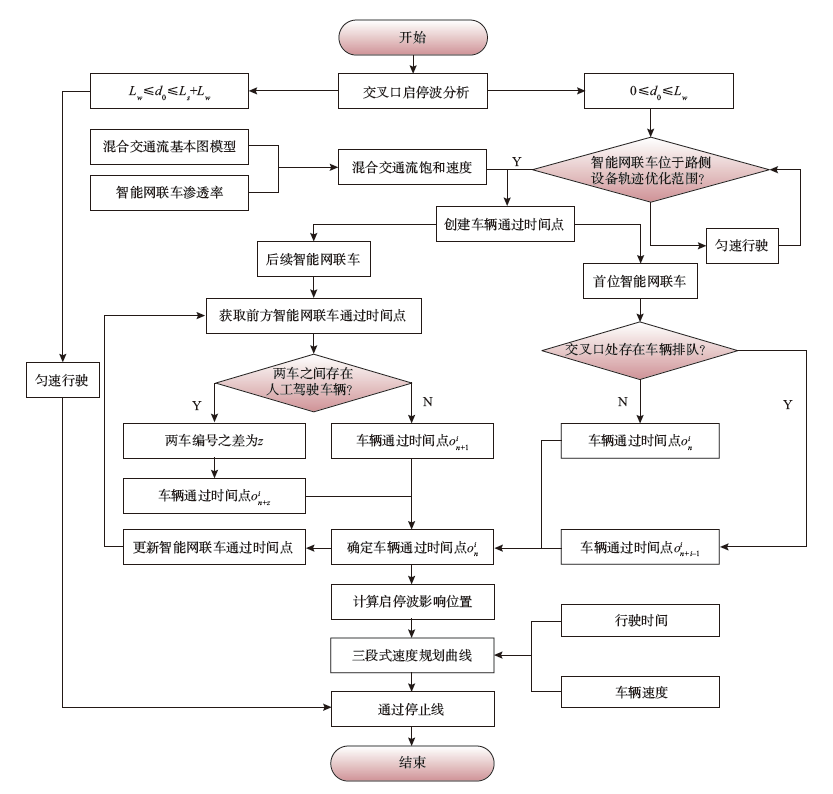
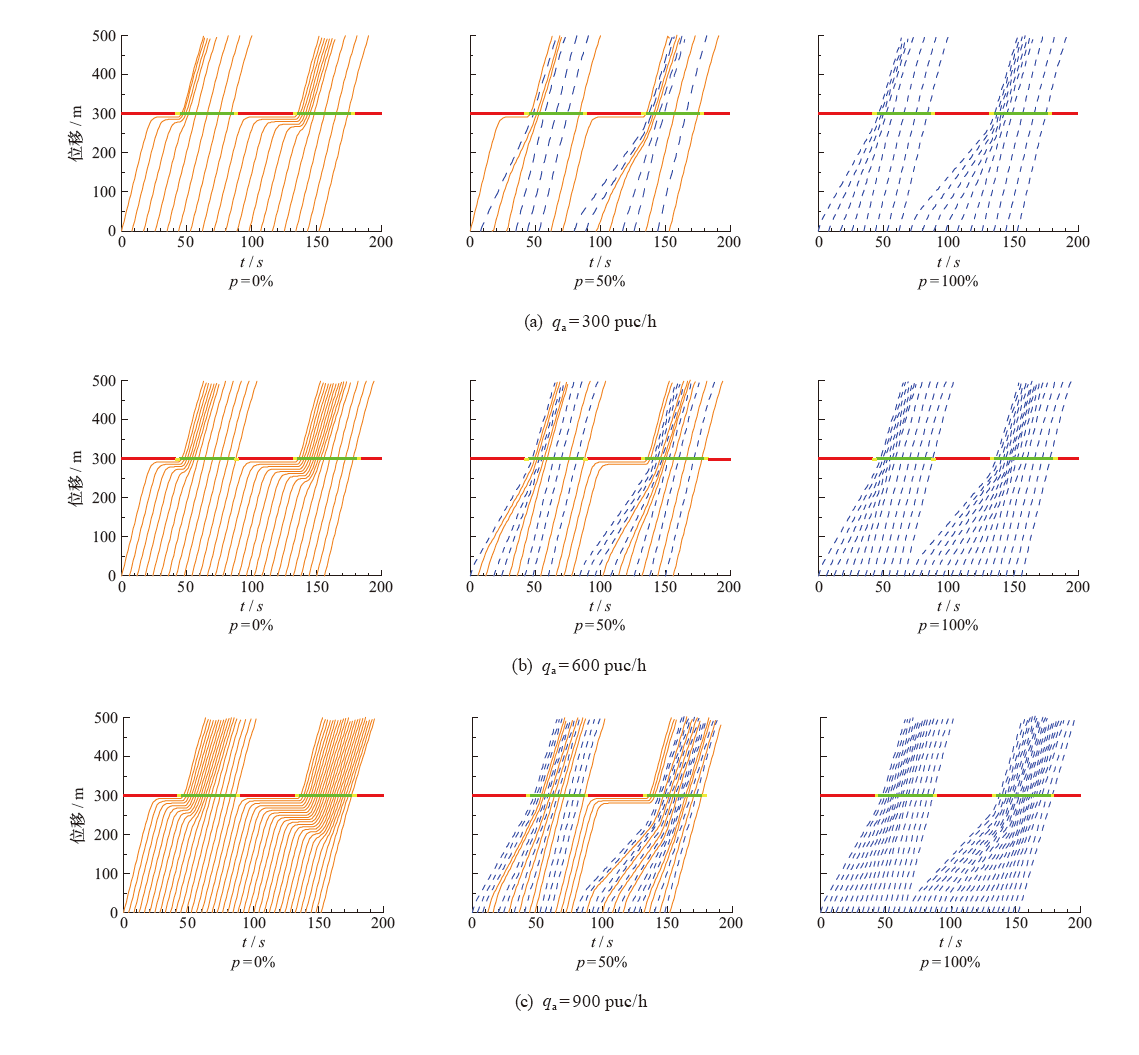
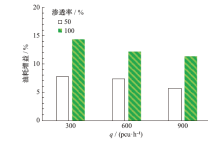
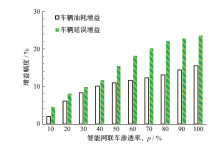
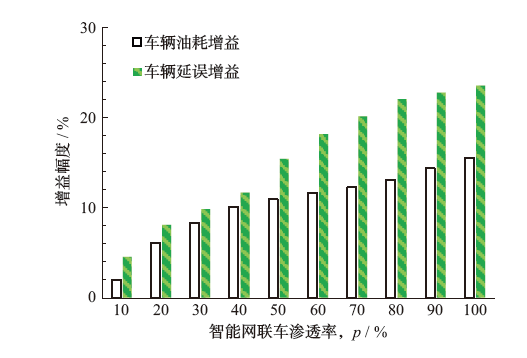
为了避免车辆在交叉口频繁停车启动的现象,减少车辆的燃油消耗与污染排放,该文提出了考虑交叉口启停波的智能网联车混行生态驾驶策略。对交叉口启停波影响范围进行分析,划分车辆通过交叉口的通行方式;通过混合交通流基本图模型计算饱和速度,根据饱和速度创建并选择车辆通过时间点,结合交叉口启停波计算智能网联车轨迹优化终点时刻和位置;根据三段式速度规划曲线模型优化智能网联车行驶轨迹,并将驾驶策略与自由驾驶在不同交通流量与渗透率条件下进行对比仿真实验。结果表明:随着渗透率的增大,采用生态驾驶策略车辆所产生的平均燃油消耗、污染物排放与延误时间逐渐降低;在相同渗透率条件下,低交通流量的油耗增益幅度始终大于高交通流量的油耗增益幅度。在600 pcu/h交通流量与100%渗透率的情况下,采用生态驾驶策略车辆油耗减少15.57%,延误减少23.57%。
中图分类号:
李昕光, 孙崇效, 曲大义, 于文昌, 胡含. 考虑交叉口启停波的智能网联车混行生态驾驶策略[J]. 汽车安全与节能学报, 2024, 15(6): 895-904.
LI Xinguang, SUN Chongxiao, QU Dayi, YU Wenchang, HU Han. Eco-driving strategy for mixed traffic flow of connected automated vehicles considering intersection start-stop wave[J]. Journal of Automotive Safety and Energy, 2024, 15(6): 895-904.
| 仿真时间 | 1 200 s | 路侧设备通信范围 | 300 m |
|---|---|---|---|
| 驾驶人反应时间,τ | 1 s | 道路最高限速,vmax | 50 km / h |
| 信号周期,S | 90 s | 车辆最大加速度,amax | 2.5 m / s2 |
| 红灯时间,Tr | 42 s | 车辆最大减速度,amim | -2.5 m / s2 |
| 绿灯时间,Tg | 42 s | 车身长度,l | 4.5 m |
| 黄灯时间,Ty | 3 s | 最小车间距,S0 | 1.5 m |
| 仿真时间 | 1 200 s | 路侧设备通信范围 | 300 m |
|---|---|---|---|
| 驾驶人反应时间,τ | 1 s | 道路最高限速,vmax | 50 km / h |
| 信号周期,S | 90 s | 车辆最大加速度,amax | 2.5 m / s2 |
| 红灯时间,Tr | 42 s | 车辆最大减速度,amim | -2.5 m / s2 |
| 绿灯时间,Tg | 42 s | 车身长度,l | 4.5 m |
| 黄灯时间,Ty | 3 s | 最小车间距,S0 | 1.5 m |
| 交通流 (pcu·h-1) | 网联车渗透率 % | 平均燃油消耗量 (g·s-1) | CO2排放量 (g·s-1) | CO排放量 (g·s-1) | HC排放量 (g·s-1) | NOx排放量 (g·s-1) |
|---|---|---|---|---|---|---|
| 300 | 0 | 0.465 3 | 8.127 9 | 0.041 6 | 0.004 7 | 0.004 8 |
| 50 | 0.433 7 | 7.577 7 | 0.037 1 | 0.004 6 | 0.004 1 | |
| 100 | 0.392 1 | 6.853 2 | 0.031 9 | 0.004 5 | 0.003 3 | |
| 600 | 0 | 0.494 2 | 8.764 5 | 0.044 2 | 0.005 0 | 0.005 2 |
| 50 | 0.457 7 | 8.119 2 | 0.038 8 | 0.005 1 | 0.004 2 | |
| 100 | 0.433 7 | 7.695 0 | 0.035 8 | 0.005 0 | 0.003 7 | |
| 900 | 0 | 0.535 6 | 9.431 6 | 0.047 5 | 0.005 5 | 0.005 4 |
| 50 | 0.505 0 | 8.540 1 | 0.040 0 | 0.005 5 | 0.004 2 | |
| 100 | 0.474 5 | 8.359 9 | 0.038 6 | 0.005 5 | 0.004 0 |
| 交通流 (pcu·h-1) | 网联车渗透率 % | 平均燃油消耗量 (g·s-1) | CO2排放量 (g·s-1) | CO排放量 (g·s-1) | HC排放量 (g·s-1) | NOx排放量 (g·s-1) |
|---|---|---|---|---|---|---|
| 300 | 0 | 0.465 3 | 8.127 9 | 0.041 6 | 0.004 7 | 0.004 8 |
| 50 | 0.433 7 | 7.577 7 | 0.037 1 | 0.004 6 | 0.004 1 | |
| 100 | 0.392 1 | 6.853 2 | 0.031 9 | 0.004 5 | 0.003 3 | |
| 600 | 0 | 0.494 2 | 8.764 5 | 0.044 2 | 0.005 0 | 0.005 2 |
| 50 | 0.457 7 | 8.119 2 | 0.038 8 | 0.005 1 | 0.004 2 | |
| 100 | 0.433 7 | 7.695 0 | 0.035 8 | 0.005 0 | 0.003 7 | |
| 900 | 0 | 0.535 6 | 9.431 6 | 0.047 5 | 0.005 5 | 0.005 4 |
| 50 | 0.505 0 | 8.540 1 | 0.040 0 | 0.005 5 | 0.004 2 | |
| 100 | 0.474 5 | 8.359 9 | 0.038 6 | 0.005 5 | 0.004 0 |

| 网联车渗透率 % | 平均燃油消耗量(g·s-1) | CO2排放量 (g·s-1) | CO排放量 (g·s-1) | HC排放量 (g·s-1) | NOx排放量 (g·s-1) | 延误时间 s |
|---|---|---|---|---|---|---|
| 0 | 0.494 2 | 8.764 5 | 0.044 2 | 0.005 0 | 0.005 2 | 34.599 3 |
| 10 | 0.484 5 | 8.669 3 | 0.043 5 | 0.005 1 | 0.005 0 | 33.043 3 |
| 20 | 0.464 4 | 8.110 6 | 0.040 3 | 0.004 8 | 0.004 6 | 31.804 4 |
| 30 | 0.453 2 | 7.957 8 | 0.038 5 | 0.004 9 | 0.004 2 | 31.202 5 |
| 40 | 0.444 4 | 7.883 4 | 0.037 9 | 0.004 9 | 0.004 1 | 30.566 2 |
| 50 | 0.440 3 | 7.810 7 | 0.037 3 | 0.004 9 | 0.004 0 | 29.263 6 |
| 60 | 0.436 7 | 7.747 4 | 0.037 1 | 0.004 9 | 0.004 0 | 28.309 0 |
| 70 | 0.433 7 | 7.693 1 | 0.036 9 | 0.004 8 | 0.004 0 | 27.632 0 |
| 80 | 0.429 4 | 7.618 5 | 0.036 3 | 0.004 8 | 0.003 9 | 26.961 1 |
| 90 | 0.423 3 | 7.509 5 | 0.034 9 | 0.004 8 | 0.003 6 | 26.714 7 |
| 100 | 0.417 2 | 7.402 6 | 0.034 4 | 0.004 8 | 0.003 6 | 26.444 7 |
| 网联车渗透率 % | 平均燃油消耗量(g·s-1) | CO2排放量 (g·s-1) | CO排放量 (g·s-1) | HC排放量 (g·s-1) | NOx排放量 (g·s-1) | 延误时间 s |
|---|---|---|---|---|---|---|
| 0 | 0.494 2 | 8.764 5 | 0.044 2 | 0.005 0 | 0.005 2 | 34.599 3 |
| 10 | 0.484 5 | 8.669 3 | 0.043 5 | 0.005 1 | 0.005 0 | 33.043 3 |
| 20 | 0.464 4 | 8.110 6 | 0.040 3 | 0.004 8 | 0.004 6 | 31.804 4 |
| 30 | 0.453 2 | 7.957 8 | 0.038 5 | 0.004 9 | 0.004 2 | 31.202 5 |
| 40 | 0.444 4 | 7.883 4 | 0.037 9 | 0.004 9 | 0.004 1 | 30.566 2 |
| 50 | 0.440 3 | 7.810 7 | 0.037 3 | 0.004 9 | 0.004 0 | 29.263 6 |
| 60 | 0.436 7 | 7.747 4 | 0.037 1 | 0.004 9 | 0.004 0 | 28.309 0 |
| 70 | 0.433 7 | 7.693 1 | 0.036 9 | 0.004 8 | 0.004 0 | 27.632 0 |
| 80 | 0.429 4 | 7.618 5 | 0.036 3 | 0.004 8 | 0.003 9 | 26.961 1 |
| 90 | 0.423 3 | 7.509 5 | 0.034 9 | 0.004 8 | 0.003 6 | 26.714 7 |
| 100 | 0.417 2 | 7.402 6 | 0.034 4 | 0.004 8 | 0.003 6 | 26.444 7 |
| [1] | 杨澜, 赵祥模, 吴国垣. 智能网联汽车协同生态驾驶策略综述[J]. 交通运输工程学报, 2020, 20(5): 58-72. |
| YANG Lan, ZHAO Xiangmo, WU Guohuan, et al. A review of cooperative eco-driving strategies for intelligent connected vehicles[J]. J Transport Engineering, 2020, 20(5): 58-72. (in Chinese) | |
| [2] | 陈志军, 张晶明, 熊盛光. 智能网联车辆生态驾驶研究现状及展望[J]. 交通信息与安全, 2022, 40(4): 13-25. |
| CHEN Zhijun, ZHANG Jingming, XIONG Shengguan et al. Current status and outlook of research on eco-driving of intelligent connected vehicles[J]. Traf Info Safe, 2022, 40(4): 13-25. (in Chinese) | |
| [3] |
卢凯, 张杰华, 邓兴栋. 基于车速与信号协同优化的区域绿波协调控制模型[J]. 中国公路学报, 2021, 34(7): 31-41.
doi: 10.19721/j.cnki.1001-7372.2021.07.002 |
| LU Kai, ZHANG Jiehua, DENG Xingdong, et al. A coordinated control model of regional green wave based on cooperative optimization of vehicle speed and signal[J]. China J Highw Transport, 2021, 34(7): 31-41. (in Chinese) | |
| [4] |
王昊, 彭显玥. 临界饱和状态交通干线协调控制模型[J]. 中国公路学报, 2022, 35(7): 228-240.
doi: 10.19721/j.cnki.1001-7372.2022.07.019 |
|
WANG Hao, PENG Xianyue. Coordinated control model for traffic arteries in critical saturation state[J]. Chin J Highw Transport, 2022, 35(7): 228-240. (in Chinese)
doi: 10.19721/j.cnki.1001-7372.2022.07.019 |
|
| [5] | 冉斌, 谭华春, 张健. 智能网联交通技术发展现状及趋势[J]. 汽车安全与节能学报, 2018, 9(2): 119-130. |
| RAN Bin, TAN Huachun, ZHANG Jian, et al. Development status and trend of connected automated vehicle highway system[J]. Autom Safe Energ, 2018, 9(2): 119-130. | |
| [6] | TANG Tieqiao, YI Zhiyan, ZHANG Jian, et al. A speed guidance strategy for multiple signalized intersections based on car-following model[J]. Phys A: Statist Mech Its Appl, 2018, 496: 399-409. |
| [7] | LI Xiaopeng, GHIASI Amir, XU Zhigang, et al. A piecewise trajectory optimization model for connected automated vehicles: Exact optimization algorithm and queue propagation analysis[J]. Transport Res Part B: Methodolog, 2018, 118: 429-456. |
| [8] | 黄意然, 宋国华, 彭飞. 考虑排队长度的信号交叉口生态驾驶轨迹优化[J]. 交通运输工程与信息学报, 2022, 20(3): 43-56. |
| HUANG Yiran, SONG Guohua, PENG Fei, et al. Trajectory optimization for eco-driving taking into account queuing length at signalized intersections[J]. J Transport Engi Info, 2022, 20(3): 43-56. (in Chinese) | |
| [9] | LIN Qingfeng, LI Shengbo Eben, DU Xuejin, et al. Minimize the fuel consumption of connected vehicles between two red-signalized intersections in urban traffic[J]. IEEE Trans Vehi Tech, 2018, 67(10): 9060-9072. |
| [10] | XIN Qi, FU Rui, YUAN Wei, et al. Predictive intelligent driver model for eco-driving using upcoming traffic signal information[J]. Phys A: Statist Mech Its Appl, 2018, 508: 806-823. |
| [11] | LIU Meiqi, WANG Meng, Serge H. Optimal platoon trajectory planning approach at arterials[J]. Transport Res Record, 2019, 2673(9): 214-226. |
| [12] | 刘显贵, 王晖年, 洪经纬. 网联环境下交叉口车速控制策略及优化[J]. 交通运输系统工程与信息, 2021, 21(2): 82-90. |
| LIU Xiangui, WANG Huinian, HONG Jingwei, et al. Signal intersection speed control strategy and optimization in a networked environment[J]. Transport Syst Engi Info, 2021, 21(2): 82-90. (in Chinese) | |
| [13] |
罗瑞发, 郝慧君, 徐桃让, 等. 考虑时延的网联车混合交通流基本图模型[J]. 华南理工大学学报(自然科学版), 2023, 51(1): 106-113.
doi: 10.12141/j.issn.1000-565X.210702 |
| LUO Ruifa, HAO Huijun, XU Taorang, et al. Fundamental diagram model of mixed traffic flow of connected vehicles considering time delay.[J]. J South Chin Univ Tech (Nat Sci Edit), 2023, 51(1): 106-113. (in Chinese) | |
| [14] | SUN Pengyuan, Daisik N, Jayakrishnan R, et al. An eco-driving algorithm based on vehicle to infrastructure (V2I) communications for signalized intersections[J]. Transport Res Part C, 2022, 144: 103876. |
| [15] |
杜煜, 上官伟, 柴琳果. 交叉口基于出发时刻预测的生态驾驶方法[J]. 中国公路学报, 2022, 35(6): 277-288.
doi: 10.19721/j.cnki.1001-7372.2022.06.023 |
|
DU Yi, SHANGGUAN Wei, CHAI Linguo, et al. An ecological driving method based on departure moment prediction at signalized intersections[J]. Chin J Highw Transport, 2022, 35(6): 277-288. (in Chinese)
doi: 10.19721/j.cnki.1001-7372.2022.06.023 |
|
| [16] | 于少伟, 秦瑞伶, 关京京. 利用通行能力余量的智能网联车队生态驾驶模型[J]. 山东大学学报(工学版), 2022, 52(6): 23-29, 49. |
| YU Shaowei, QIN Reiling, GUAN Jingjing, et al. An eco-driving model for intelligent networked fleets using capacity margin[J]. J Shandong Univ (Engi Edit), 2022, 52(6): 23-29, 49. (in Chinese) | |
| [17] | 羊钊, 刘攀, 朱仁伟. 基于冲击波理论的交叉口最大广义排队长度计算方法[J]. 长安大学学报(自然科学版), 2015, 35(S1): 154-159. |
| YANG Zhao, LIU Pan, ZHU Renwei, et al. Estimation of the maximum queue length at signalized intersections based on shockwave theory[J]. J Chang'an Univ (Nat Sci Edit), 2015, 35(S1): 154-159. (in Chinese) | |
| [18] | 孙崇效, 李昕光, 胡含. 考虑二次排队的智能网联车生态驾驶策略[J]. 交通运输工程与信息学报, 2023, 21(4): 92-102. |
| SUN Chongxiao, LI Xinguang, HU Han, et al. An eco-driving strategy for intelligent connected vehicles considering secondary queuing[J]. J Transport Engi Info, 2023, 21(4): 92-102. (in Chinese) | |
| [19] | 王文璇, 阎莹, 吴兵. 智能网联信息下车辆跟驰模型构建及行为影响分析[J]. 同济大学学报(自然科学版), 2022, 50(12): 1734-1742. |
| WANG Wenxuan, YAN Ying, WU Bing. Development and performance of a cooperative adaptive cruise control car-following model[J]. J Tongji Univ (Nat Sci), 2022, 50(12): 1734-1742. (in Chinese) |
| [1] | 梁雨琛, 段伟建, 张诗, 朱兴林, 徐进. 不同类型互通立交匝道上驾驶人心理负荷的差异[J]. 汽车安全与节能学报, 2025, 16(6): 851-858. |
| [2] | 吴庆富, 袁满荣, 郝帅杰, 刘嘉伟, 牛世峰, 刘金峰. 紧急状况下驾驶人应激反应的特性指标[J]. 汽车安全与节能学报, 2025, 16(1): 43-49. |
| [3] | 张立成, 押境田, 彭琨, 杨冉. 车辆急动度对神经网络油耗预测性能影响研究[J]. 汽车安全与节能学报, 2025, 16(1): 117-126. |
| [4] | 张富椿, 尹燕莉, 马永娟, 肖杭洋, 陈海鑫, 余凯. 网联混合动力汽车队列的生态驾驶与能量管理分层控制[J]. 汽车安全与节能学报, 2025, 16(1): 159-169. |
| [5] | 姚荣涵, 徐文韬, 林子敬, 王立冰. 公交-合乘车道优化设计的多目标双层规划模型[J]. 汽车安全与节能学报, 2024, 15(5): 711-722. |
| [6] | 徐婷, 陈姝屹, 彭冲, 陈亦新, 梁泽恺, 赵磊. 商用重载车尾气排放与驾驶行为的参数关系[J]. 汽车安全与节能学报, 2023, 14(3): 365-374. |
| [7] | 邹铁方, 吴良伟, 胡林, 聂冰冰, 王方. 自行车座高对骑车人脊背前倾角和头部损伤的影响[J]. 汽车安全与节能学报, 2022, 13(1): 95-103. |
| [8] | 帅石金, 王志, 马骁, 徐宏明, 何鑫, 王建昕. 碳中和背景下内燃机低碳和零碳技术路径及关键技术[J]. 汽车安全与节能学报, 2021, 12(4): 417-439. |
| [9] | 张锐, 姚恩建, 张永生. 电动汽车混入条件下多方式动态交通分配模型[J]. 汽车安全与节能学报, 2021, 12(4): 540-550. |
| [10] | 付雪青, 王宝森, 杨建军, 高海洋, 何邦全, 赵华, 郭文翠, 刘双喜. 基于双状态动态规划混动汽车坡道生态驾驶策略[J]. 汽车安全与节能学报, 2021, 12(3): 373-379. |
| [11] | 王字满,戴晓宇,李佳峰,吴 晗,李雁飞 . 柴油喷雾初始阶段喷孔内流及油束破碎特性[J]. JASE, 2019, 10(2): 241-248. |
| [12] | 谢溪凌,肖建波,张 昊,谭玉莹,倪明安,刘 阳,张志富,郑卫刚. 考虑时段交通流交通灯工作状态的智能优化[J]. 汽车安全与节能学报, 2012, 3(3): 251-256. |
| 阅读次数 | ||||||
|
全文 |
|
|||||
|
摘要 |
|
|||||
