欢迎访问《汽车安全与节能学报》,

汽车安全与节能学报 ›› 2023, Vol. 14 ›› Issue (4): 421-430.DOI: 10.3969/j.issn.1674-8484.2023.04.003
李海岩( ), 胡静, 贺丽娟*(), 吕文乐, 崔世海, 阮世捷
收稿日期:2022-12-08
修回日期:2023-06-04
出版日期:2023-08-31
发布日期:2023-08-31
通讯作者:
*贺丽娟(1979—),女(汉),河北,副教授。E-mail:helijuan@tust.edu.cn。
作者简介:李海岩(1971—),女(汉),天津,教授。E-mail:lihaiyan@tust.edu.cn。
基金资助:
LI Haiyan(), HU Jing, HE Lijuan*(), LV Wenle, CUI Shihai, RUAN Shijie
Received:2022-12-08
Revised:2023-06-04
Online:2023-08-31
Published:2023-08-31
摘要:
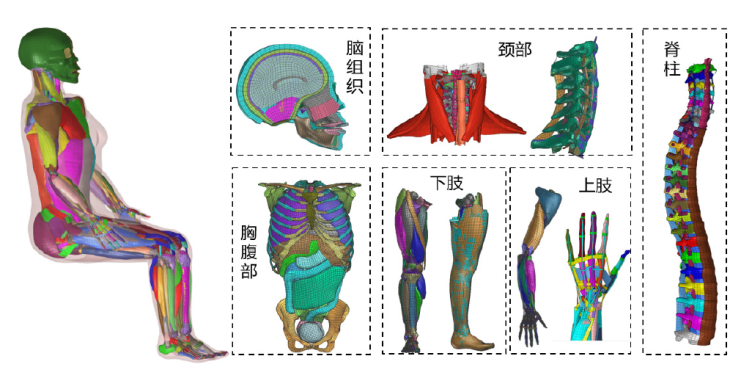
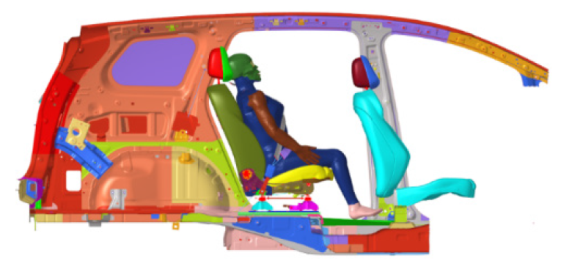
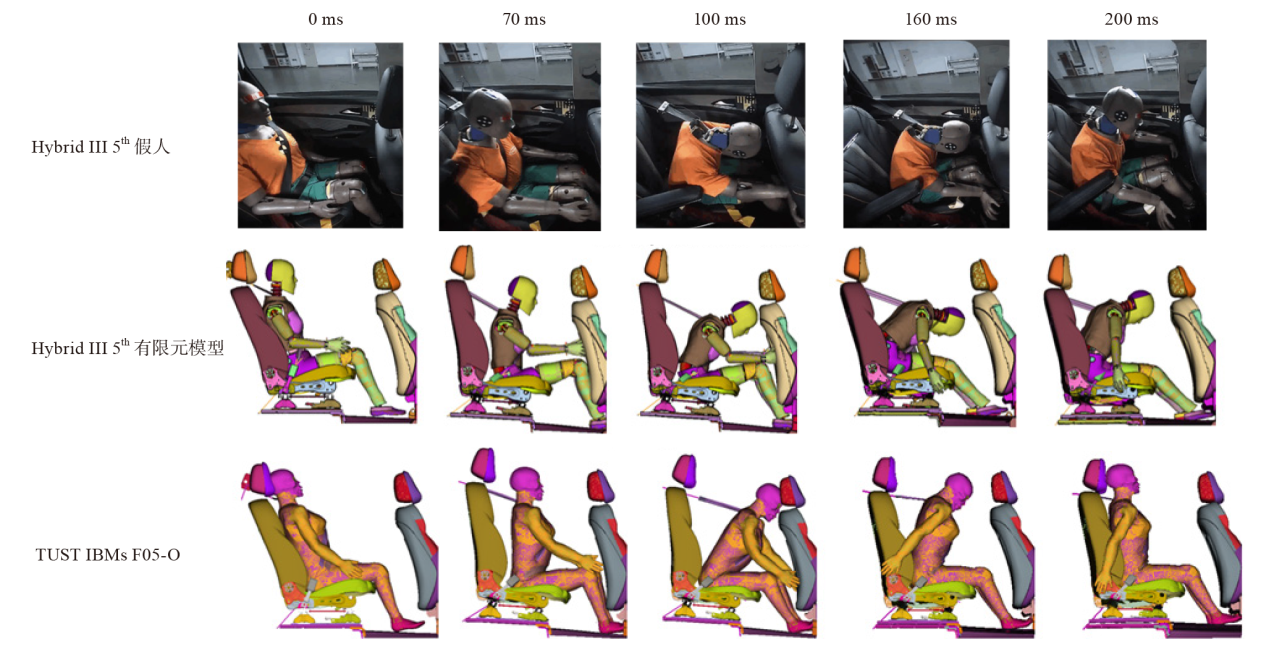
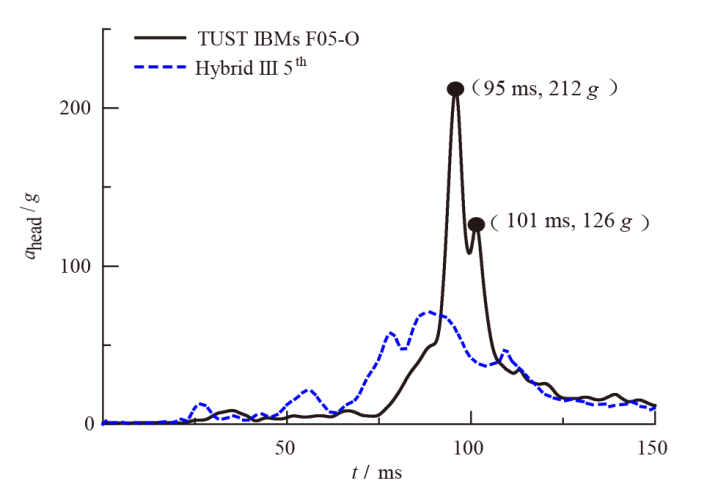
研究后排小身材女性乘员在正面100%碰撞试验中的损伤风险,为提升汽车约束系统的防护性能提供参考数据。应用已验证的符合中国人体特征的第五百分位女性乘员损伤仿生模型(TUST IBMs F05-O)搭载某款经验证的汽车有限元模型,依据C-NCAP(2021年版)正面100%重叠刚性壁障碰撞试验要求,着重对乘坐于后排的小身材女性乘员进行头部、颈部、胸腹部及腰椎损伤分析。结果表明:TUST IBMs F05-O模型脊柱的高生物逼真度能充分表现头颈部围绕安全带的侧向屈曲运动;头部与前排座椅碰撞造成头颈部严重损伤,胸部黏性准则 (VC) 值为0.34,且压缩量较高,肺部受挤压而造成损伤,腰椎损伤指标 (LSI)及腰椎损伤评定参数 (Lfx) 未超出相应的损伤阈值。应用具有高生物逼真度的第五百分位中国女性乘员损伤仿生模型进行汽车碰撞仿真试验,对智能座舱和零重力座椅开发、汽车主被动安全一体研究及未来数字测评方法等针对中国小身材女性乘员的安全防护研究具有重要的应用价值。
中图分类号:
李海岩, 胡静, 贺丽娟, 吕文乐, 崔世海, 阮世捷. 正面100%碰撞试验中后排小身材女性乘员损伤分析[J]. 汽车安全与节能学报, 2023, 14(4): 421-430.
LI Haiyan, HU Jing, HE Lijuan, LV Wenle, CUI Shihai, RUAN Shijie. Analysis on the rear passenger injuries of the 5th percentile Chinese female occupant in 100% frontal impact[J]. Journal of Automotive Safety and Energy, 2023, 14(4): 421-430.
| 损伤指标 | TUST IBMs F05-O | Hybrid III 5th | 损伤阈值 | |
|---|---|---|---|---|
| 运动学 | HIC15 | 2 518 | 508 | 高性能:500,低性能:700 |
| a3-ms | 174.2 g | 70 g | 高性能:72 g,低性能:80 g | |
| BrIC | 1.33 | — | BrIC = 1,AIS4级脑损伤概率为45%。 | |
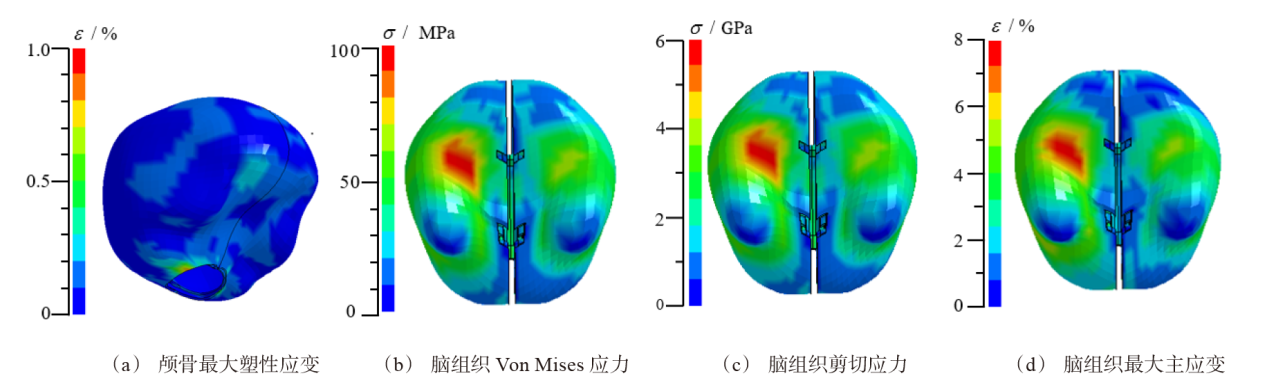
| 生物力学 | 颅骨最大塑性应变 | 1.1 % | — | 1.5%,颅骨骨折。 |
| 脑组织Von Mises应力 | 13.8 kPa | — | 6~11 kPa脑挫伤,15 kPa轻微脑震荡, 38 kPa重度脑损伤[ | |
| 脑组织剪切应力 | 7.96 kPa | — | 6 kPa,25%出现轻度脑损伤;7.8 kPa,50%出现轻度脑损伤;10 kPa,80%出现轻度脑损伤;25 kPa,100%出现中度脑损伤[ | |
| 最大主应变 | 8.18 % | — | 10%,可逆伤害;20%,大脑神经系统功能缺陷[ 25%脑组织神经系统结构失效[ | |
| 损伤指标 | TUST IBMs F05-O | Hybrid III 5th | 损伤阈值 | |
|---|---|---|---|---|
| 运动学 | HIC15 | 2 518 | 508 | 高性能:500,低性能:700 |
| a3-ms | 174.2 g | 70 g | 高性能:72 g,低性能:80 g | |
| BrIC | 1.33 | — | BrIC = 1,AIS4级脑损伤概率为45%。 | |
| 生物力学 | 颅骨最大塑性应变 | 1.1 % | — | 1.5%,颅骨骨折。 |
| 脑组织Von Mises应力 | 13.8 kPa | — | 6~11 kPa脑挫伤,15 kPa轻微脑震荡, 38 kPa重度脑损伤[ | |
| 脑组织剪切应力 | 7.96 kPa | — | 6 kPa,25%出现轻度脑损伤;7.8 kPa,50%出现轻度脑损伤;10 kPa,80%出现轻度脑损伤;25 kPa,100%出现中度脑损伤[ | |
| 最大主应变 | 8.18 % | — | 10%,可逆伤害;20%,大脑神经系统功能缺陷[ 25%脑组织神经系统结构失效[ | |
| 损伤指标 | TUST IBMs F05-O | Hybrid III 5th | 损伤阈值 | |
|---|---|---|---|---|
| 运动学 | Fx / kN | 2.36 | 1.07 | 高性能:1.2;低性能:1.95 |
| Fz / kN | 2.15 | 2.18 | 高性能:1.7 ;低性能:2.62 | |
| My / Nm | 49.0 | 73.8 | 高性能:36 ;低性能:49 | |
| Nij | 0.94 | 1.1 | 1 | |
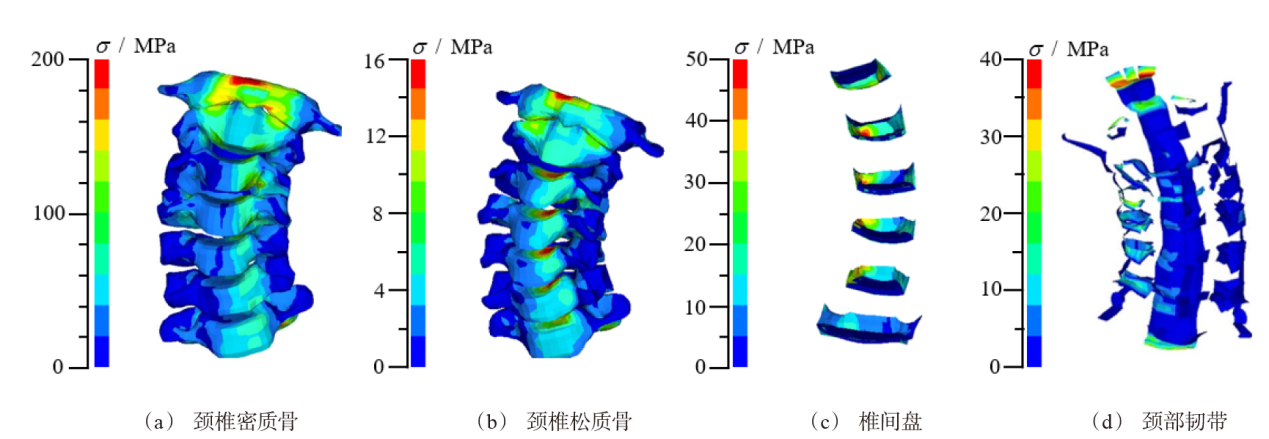
| 生物力学 | 颈椎Von Mises应力 | 密质骨201 MPa,松质骨16 MPa。 | — | 密质骨236 MPa,松质骨59 MPa[ |
| 椎间盘Von Mises应力 | 51 MPa。 | — | 30 MPa[ | |
| 颈部韧带伸长失效值 | 棘间韧带1.12倍,后纵韧带1.09倍,黄韧带1.16倍,前纵韧带1.03倍,囊韧带1.08倍。 | — | 棘间韧带1.87倍,后纵韧带1.55倍,黄韧带2.05倍,前纵韧带1.57倍,囊韧带2.5倍[ | |
| 损伤指标 | TUST IBMs F05-O | Hybrid III 5th | 损伤阈值 | |
|---|---|---|---|---|
| 运动学 | Fx / kN | 2.36 | 1.07 | 高性能:1.2;低性能:1.95 |
| Fz / kN | 2.15 | 2.18 | 高性能:1.7 ;低性能:2.62 | |
| My / Nm | 49.0 | 73.8 | 高性能:36 ;低性能:49 | |
| Nij | 0.94 | 1.1 | 1 | |
| 生物力学 | 颈椎Von Mises应力 | 密质骨201 MPa,松质骨16 MPa。 | — | 密质骨236 MPa,松质骨59 MPa[ |
| 椎间盘Von Mises应力 | 51 MPa。 | — | 30 MPa[ | |
| 颈部韧带伸长失效值 | 棘间韧带1.12倍,后纵韧带1.09倍,黄韧带1.16倍,前纵韧带1.03倍,囊韧带1.08倍。 | — | 棘间韧带1.87倍,后纵韧带1.55倍,黄韧带2.05倍,前纵韧带1.57倍,囊韧带2.5倍[ | |
| 损伤指标 | TUST IBMs F05-O | Hybrid III 5th | 损伤阈值 | |
|---|---|---|---|---|
| 运动学 | 胸部压缩量 / mm | 32 mm | 30 | 高性能限值18,低性能限值42 |
| 胸部VC值 / (m·s-1) | 0.34 | 0.2 | 高性能限值0.5 ,低性能限值1 | |
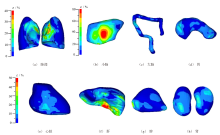
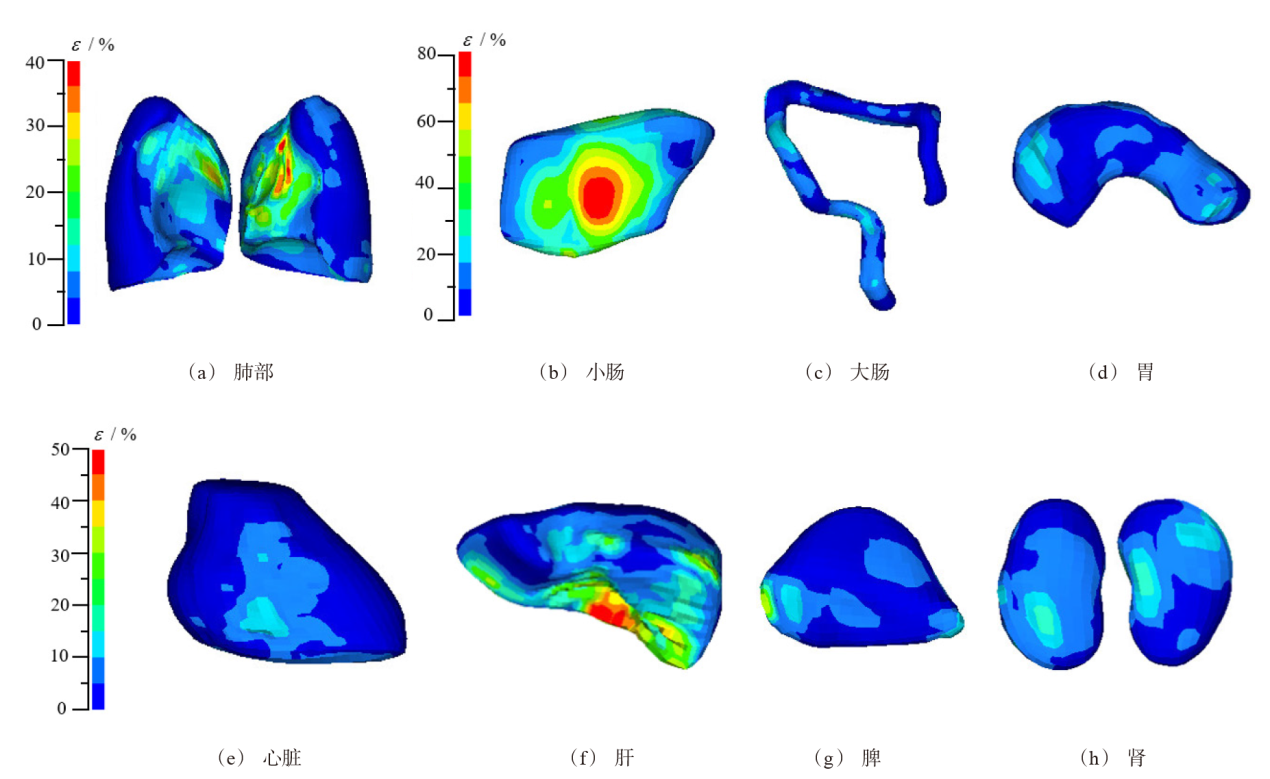
| 肺部第一主应变/ % | 左肺30.7,右肺40.0 | ― | 28.4 [ | |
| 生物力学 | 心脏、肝、脾、肾脏 第一主应变 / % | 心脏18.1,肝46.1,左肾8.4,脾29.6,右肾23.4 | ― | 30[ |
| 大肠、小肠、胃第一主应变 / % | 大肠75.2,小肠40.6,胃58.3 | ― | 130[ | |
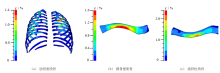
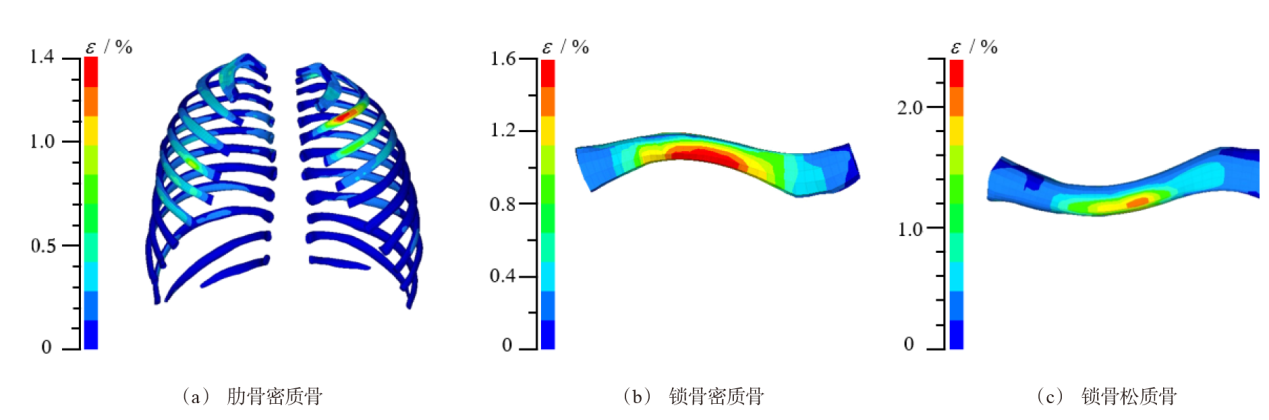
| 肋骨密质骨最大塑性应变 / % | 1.3 | ― | 2[ | |
| 锁骨失效应变 / % | 锁骨密质骨1.6,锁骨松质骨2.2 | ― | 锁骨密质骨2~3,骨折;锁骨松质骨8~15[ | |
| 锁骨失效力、力矩 | 失效载荷530 N;失效力矩14.42 Nm | ― | 平均失效载荷为(732±175) N,骨折;平均失效力矩为(28.3±7.8) Nm[ | |
| 损伤指标 | TUST IBMs F05-O | Hybrid III 5th | 损伤阈值 | |
|---|---|---|---|---|
| 运动学 | 胸部压缩量 / mm | 32 mm | 30 | 高性能限值18,低性能限值42 |
| 胸部VC值 / (m·s-1) | 0.34 | 0.2 | 高性能限值0.5 ,低性能限值1 | |
| 肺部第一主应变/ % | 左肺30.7,右肺40.0 | ― | 28.4 [ | |
| 生物力学 | 心脏、肝、脾、肾脏 第一主应变 / % | 心脏18.1,肝46.1,左肾8.4,脾29.6,右肾23.4 | ― | 30[ |
| 大肠、小肠、胃第一主应变 / % | 大肠75.2,小肠40.6,胃58.3 | ― | 130[ | |
| 肋骨密质骨最大塑性应变 / % | 1.3 | ― | 2[ | |
| 锁骨失效应变 / % | 锁骨密质骨1.6,锁骨松质骨2.2 | ― | 锁骨密质骨2~3,骨折;锁骨松质骨8~15[ | |
| 锁骨失效力、力矩 | 失效载荷530 N;失效力矩14.42 Nm | ― | 平均失效载荷为(732±175) N,骨折;平均失效力矩为(28.3±7.8) Nm[ | |
| L1 | L2 | L3 | L4 | L5 | |
|---|---|---|---|---|---|
| 轴向力,Fz / kN | 1.94 | 1.87 | 1.62 | 1.34 | 1.14 |
| 弯曲力矩,Mx / Nm | 9.29 | 6.89 | 7.44 | 7.61 | 8.05 |
| 弯曲力矩,My / Nm | 24.9 | 26.8 | 28.0 | 26.2 | 25.8 |
| 合成力矩,Mr / Nm | 26.5 | 27.67 | 28.97 | 27.28 | 27.02 |
| 椎体截面积,CSA / mm2 | 1 311 | 1 435 | 1 577 | 1 622 | 1 779 |
| 腰椎损伤指标,LSI | 2.26 | 2.23 | 2.08 | 1.82 | 1.65 |
| 腰椎骨折风险, Lfx/ (N·m-2) | 1.32 | 1.16 | 0.91 | 0.74 | 0.57 |
| L1 | L2 | L3 | L4 | L5 | |
|---|---|---|---|---|---|
| 轴向力,Fz / kN | 1.94 | 1.87 | 1.62 | 1.34 | 1.14 |
| 弯曲力矩,Mx / Nm | 9.29 | 6.89 | 7.44 | 7.61 | 8.05 |
| 弯曲力矩,My / Nm | 24.9 | 26.8 | 28.0 | 26.2 | 25.8 |
| 合成力矩,Mr / Nm | 26.5 | 27.67 | 28.97 | 27.28 | 27.02 |
| 椎体截面积,CSA / mm2 | 1 311 | 1 435 | 1 577 | 1 622 | 1 779 |
| 腰椎损伤指标,LSI | 2.26 | 2.23 | 2.08 | 1.82 | 1.65 |
| 腰椎骨折风险, Lfx/ (N·m-2) | 1.32 | 1.16 | 0.91 | 0.74 | 0.57 |
| [1] | Brumbelow M L, Jermakian J S. Injury risks and crashworthiness benefits for females and males: Which differences are physiological?[J]. Traf Inju Prev, 2022, 23(1): 11-16. |
| [2] | Forman J, Poplin G S, Shaw C G, et al. Automobile injury trends in the contemporary fleet Belted occupants in frontal collisions[J]. Traf Inju Prev, 2019, 20(3): 1-6. |
| [3] | ZHANG Yaohui, JU Chunxian, YUE Guohui, et al. Simulation analysis of the rear seat female in front impact[C]// 3rd Int’l Conf Digit Manufact Autom. IEEE, 2012. |
| [4] |
周华, 彭一峻, 刘卓异, 等. 约束系统对不同体型女性驾驶人的保护研究[J]. 中国安全科学学报, 2019, 29(4): 76-82.
doi: 10.16265/j.cnki.issn1003-3033.2019.04.013 |
| ZHOU Hua, PENG Yijun, LIU Zhuoyi, et al. A study on protection of restraint system on female drivers with different body types[J]. Chin Safe Sci J, 2019, 29(4): 76-82. (in Chinese) | |
| [5] | 张雄, 韩为铎, 赵佳庆. 正面碰撞波形对后排女性乘员伤害影响研究[C]// 2021中国汽车工程学会年会论文集(4), 2021: 677-682. |
| ZHANG Xiong, HAN Weiduo, ZHAO Jiaqing. Research on the influence of frontal crash waveform on the rear female occupant injury[C]// 2021 SAE China Congress (4), 2021: 677-682. (in Chinese) | |
| [6] | Kurano Y, Hikida K, Hibara S, et al. Two-dimensional degenerated model of next-generation crash test dummy THOR 5F[J]. Int’l J Autom Engi, 2020, 11(3): 94-100. |
| [7] | XU Tao, SHNEG Xiaoming, ZHANG Tianyi, et al. Development and validation of dummies and human models used in crash test[J]. Appl Bionics Biomech, 2018, Pt.2: 1-12. |
| [8] | Ghosh P, Gyanadutta S, Ravi K C, et al. Deriving anthropometrically-correct 5th percentile female from subject-specific female CAD model[C]// Int’l Res Counl Biomech Inju Conf, 2014: 477-478. |
| [9] | 杨洁. 基于THUMS的东西方5百分位女性碰撞响应差异分析[D]. 北京: 清华大学, 2016. |
| YANG Jie. Study of differences of dynamic responses between eastern and western 5th percentile female based on THUMS[D]. Beijing: Tsinghua University, 2016. (in Chinese) | |
| [10] | 黎和俊, 杨震, 周大永, 等. 混Ⅲ假人、GHBMC人体模型以及中国人体模型的正碰损伤差异[J]. 中国机械工程, 2021, 32(15): 1836-1843. |
| LI Hejun, YANG Zhen, ZHOU Dayong, et al. Differences of injury response among hybrid III dummy,GHBMC model and Chinese human body model in frontal crash[J]. Chin Mech Engi, 2021, 32(15): 1836-1843. (in Chinese) | |
| [11] | 阮世捷, 李超, 崔世海, 等. 颅骨厚度对颅内生物力学响应的影响[J]. 医用生物力学, 2021, 36(4): 560-567. |
| RUAN Shijie, LI Chao, CUI Shihai, et al. The influence of skull thickness on intracranial biomechanical response[J]. J Biomech, 2021, 36(4): 560-567. (in Chinese) | |
| [12] | 李海岩, 孙孝海, 贺丽娟, 等. 具有详实解剖学结构的国人第5百分位女性胸腹部有限元模型开发及验证[J]. 医用生物力学, 2022, 37(1): 91-97. |
| LI Haiyan, SUN Xiaohai, HE Lijuan, et al. Development and validation for thoracic-abdominal finite element model of Chinese 5th percentile female with detailed anatomical structure[J]. J Medi Biomech, 2022, 37(1): 91-97. (in Chinese) | |
| [13] | 李海岩, 李广明, 贺丽娟, 等. 汽车追尾碰撞中颈部姿态对生物力学响应的影响[J]. 汽车安全与节能学报, 2022, 13(1): 55-62. |
| LI Haiyan, LI Guangming, HE Lijuan, et al. Effect of neck posture on biomechanical response in rear end collision[J]. Autom Safe Energ, 2022, 13(1): 55-62. (in Chinese) | |
| [14] | 阮世捷, 梁亚妮, 李海岩, 等. 国人第5百分位女性行人下肢生物力学计算模型开发及应用[J]. 医用生物力学, 2022, 37(6): 1056-1063. |
| RUAN Shijie, LIANG Yani, LI Haiyan, et al. Development and application for biomechanical computational model of lower extremity of 5th percentile Chinese female pedestrian[J]. J Medi Biomech, 2022, 37(6): 1056-1063. (in Chinese) | |
| [15] | Takhounts E G, Craig M J, Moorhouse K, et al. Development of brain injury criteria (BrIC)[J]. Stap Car Crash J, 2013, 57: 243-266. |
| [16] | Baumgartner D, Willinger R, Shewchenko N, et al. Tolerance limits for mild traumatic brain injury derived from numerical head impact replication[C]// Int’l IRCOBI Conf Biomechan Impacts. Isle of Man, UK: IRCOBI, 2001: 353-355. |
| [17] | ZHANG Liying, YANG Kaihui, King A I, et al. A proposed injury threshold for mild traumatic brain injury[J]. Biomech Engi, 2004, 126(2): 226-236. |
| [18] | Galbraith J A, Thibault L E, Matteson D R, et al. Mechanical and electrical responses of the squid giant axon to simple elongation[J]. J Biomech Engi, 1993, 115(1): 13-22. |
| [19] | Morrison B, Cater H L, Wang C, et al. A tissue level tolerance criterion for living brain developed with an in vitro model of traumatic mechanical loading[J]. Stap Car Crash J, 2003, 47: 93-105. |
| [20] | Mizuno K, HAN Yong, CHEN Yiwei. Automobile Crash Safety[M]. Beijing: China Communications Press, 2016: 18-19. |
| [21] | Carter D R, Hayes W C. The compressive behavior of bone as a two-phase porous structure[J]. J Bone Joint Surg, 1977, 59-A (7): 954-962. |
| [22] | Kasra M, Parnianpour M, Shirazi-Adl A, et al. Effect of strain rate on tensile properties of sheep disc annulus fibrosus[J]. Tech Health Care:Offi J Euro Soc Engi Medi, 2004, 12(4): 333-342. |
| [23] |
Chazal J, Tanguy A, Bourges M, et al. Biomechanical properties of spinal ligaments and a histological study of the supraspinal ligament in traction[J]. J Biomech, 1985, 18(3): 167-176.
pmid: 3997901 |
| [24] | Gayzik F S. Development of a finite element based injury metric for pulmonary contusion[D]. Winston-Salem: Wake Forest University, 2008. |
| [25] | Shigeta K, Kitagawa Y, Yasuki T, et al. Development of next generation human FE model capable of organ injury prediction[C]// The 21st Int’l Tech Conf Enhan Safe Vehi. Germany: Stuttgart, 2009: 1-20. |
| [26] |
Melvin J W, Stalnaker R L, Roberts V L, et al. Impact injury mechanisms in abdominal organs[J]. Endocrinology, 1973, 138(12): 5231-5237.
doi: 10.1210/endo.138.12.5602 URL |
| [27] | Yamada H, Evans G F. Strength of Biological Materials[M]. Philadelphia: Baltimore Williams & Wilkins, 1970, 108(3): 582. |
| [28] | Kemper A R, Stitzel J D, Mcnally C, et al. Biomechanical response of the human clavicle: the effects of loading direction on bending properties[J]. Appl Biomechan, 2009, 25(2): 165-174. |
| [29] | ZHANG Qi, Kerrigan J, Kindig M, et al. Axial injury tolerance of the clavicle and the effect of age and gender[C]// Injur Biomechan Symp. America: Columbus, 2013: 1-17. |
| [30] | LI Zhuoping, Kindig M W, Kerrigan J R, et al. Development and validation of a subject-specific finite element model of a human clavicle[J]. Comput Method Biomech Biomed Engi, 2013, 16(7-9): 819-829. |
| [31] | YE Xin, Gaewsky J P, Jones D A, et al. Computational modeling and analysis of thoracolumbar spine fractures in frontal crash reconstruction[J]. Traf Inju Prev, 2018, 19(Suppla2): 1-25. |
| [32] | Tushak S K, Gepner B D, Forman J L, et al. Human lumbar spine injury risk in high-rate combined compression and flexion loading[J]. Anna Biomed Engi, 2023, 51: 1216-1225. |
| [1] | 朱慧婷, 牟燕燕, 兰晹, 项磊, 杨洁, 程志华, 王军良, 杨娜. 追尾碰撞下车用机械按摩座椅对乘员损伤的防护效果[J]. 汽车安全与节能学报, 2025, 16(4): 539-547. |
| 阅读次数 | ||||||
|
全文 |
|
|||||
|
摘要 |
|
|||||
